

Seattle doesn’t announce itself the way other cities do. There is no sprawl of billboards on the approach, no skyline that punches you from 30 miles out. You come in through trees, water, and gray sky, and then suddenly the city is right there: cranes, glass, the Space Needle off to the left, and a waterfront that looks like it belongs in Scandinavia. If you are bringing a corporate group here for a team building event, you are working with a city that rewards planners who pay attention to the details.
This guide is written for the people doing the actual planning. Not a list of tourist attractions. Specifics.
Understand What Kind of City You Are Dealing With
Seattle is a walking city in a way that surprises people who expect the Pacific Northwest to feel suburban. The downtown core, Belltown, Pioneer Square, Capitol Hill, and the Seattle Center campus are all connected on foot or by light rail. You can move a corporate group through multiple distinct neighborhoods in a single afternoon without anyone getting in a car.
That said, Seattle is also a city of hills. Real hills. Capitol Hill earns its name. Queen Anne is steeper. If your group includes anyone with mobility considerations, factor elevation into every route. Flat corridors exist, particularly along the waterfront and through Pioneer Square, but the moment you move east or north from downtown, you are going uphill.
The geography is the other variable that shapes everything. Seattle sits on a narrow isthmus between Puget Sound to the west and Lake Washington to the east. Water is visible from almost everywhere. That is not decorative. It changes the air, the light, the mood of an event. A team building experience in Seattle has a visual backdrop that most cities cannot offer: mountains, water, and evergreen forest, all visible from downtown.
Getting In
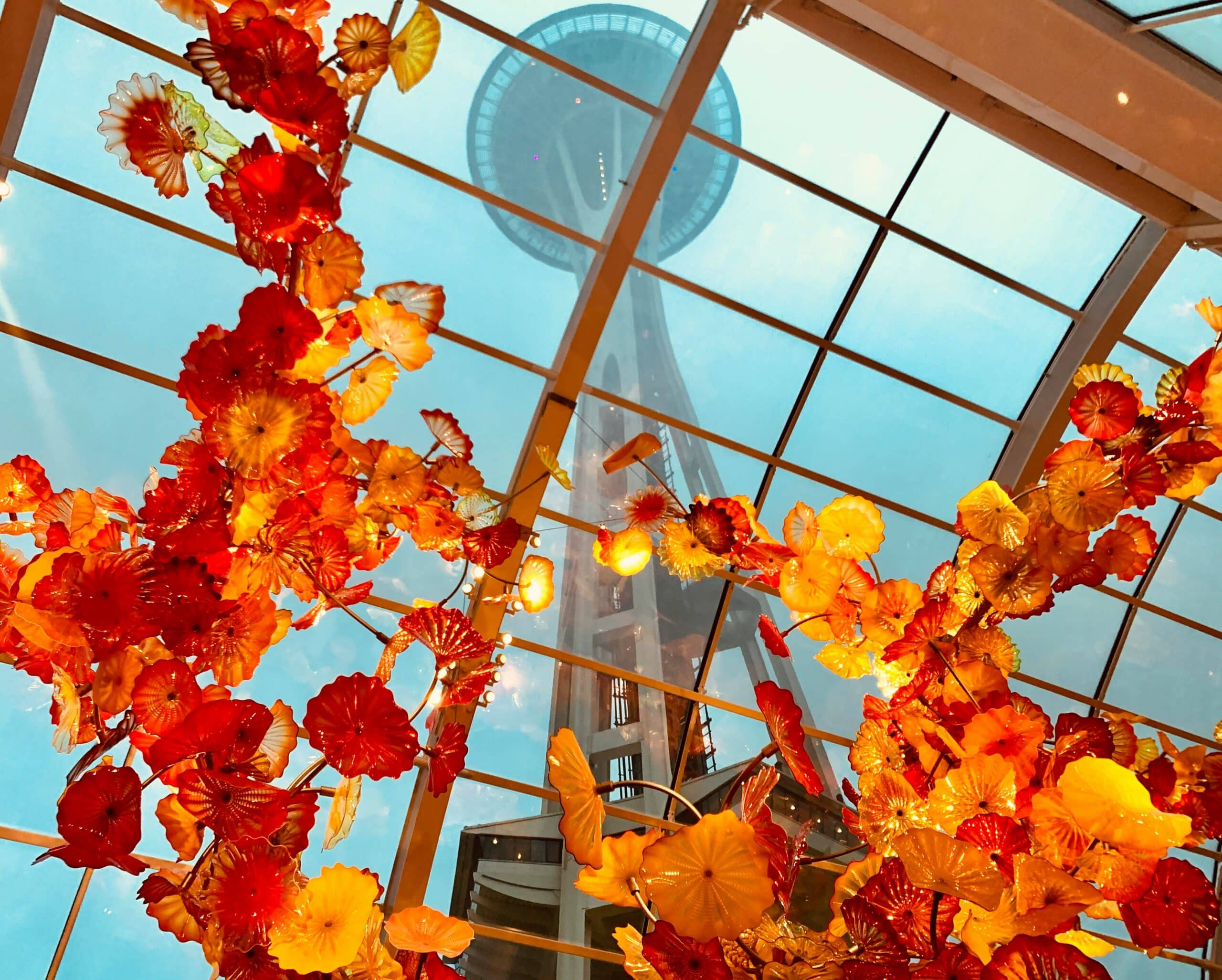
One airport serves the metro. Seattle-Tacoma International Airport (SEA) is about 14 miles south of downtown. With no traffic, the drive takes 25 minutes. During rush hour on I-5, that number can double.
The best option for most corporate groups is the Link Light Rail. The 1 Line runs directly from the airport to downtown Seattle in about 38 minutes, with trains departing every 8 to 10 minutes for most of the day. It stops at Pioneer Square, University Street, and Westlake, all within the downtown core. The fare is around three dollars. For a group flying in from multiple cities, this is the most reliable way to get everyone downtown without coordinating a fleet of rideshares through unpredictable I-5 traffic.
Rideshare from SEA to downtown runs approximately $50 to $70 depending on demand and traffic. Pickups are on the third floor of the parking garage. If your group has heavy luggage or tight schedules, rideshare works. For everyone else, the train is faster and cheaper.
The Neighborhoods Worth Knowing
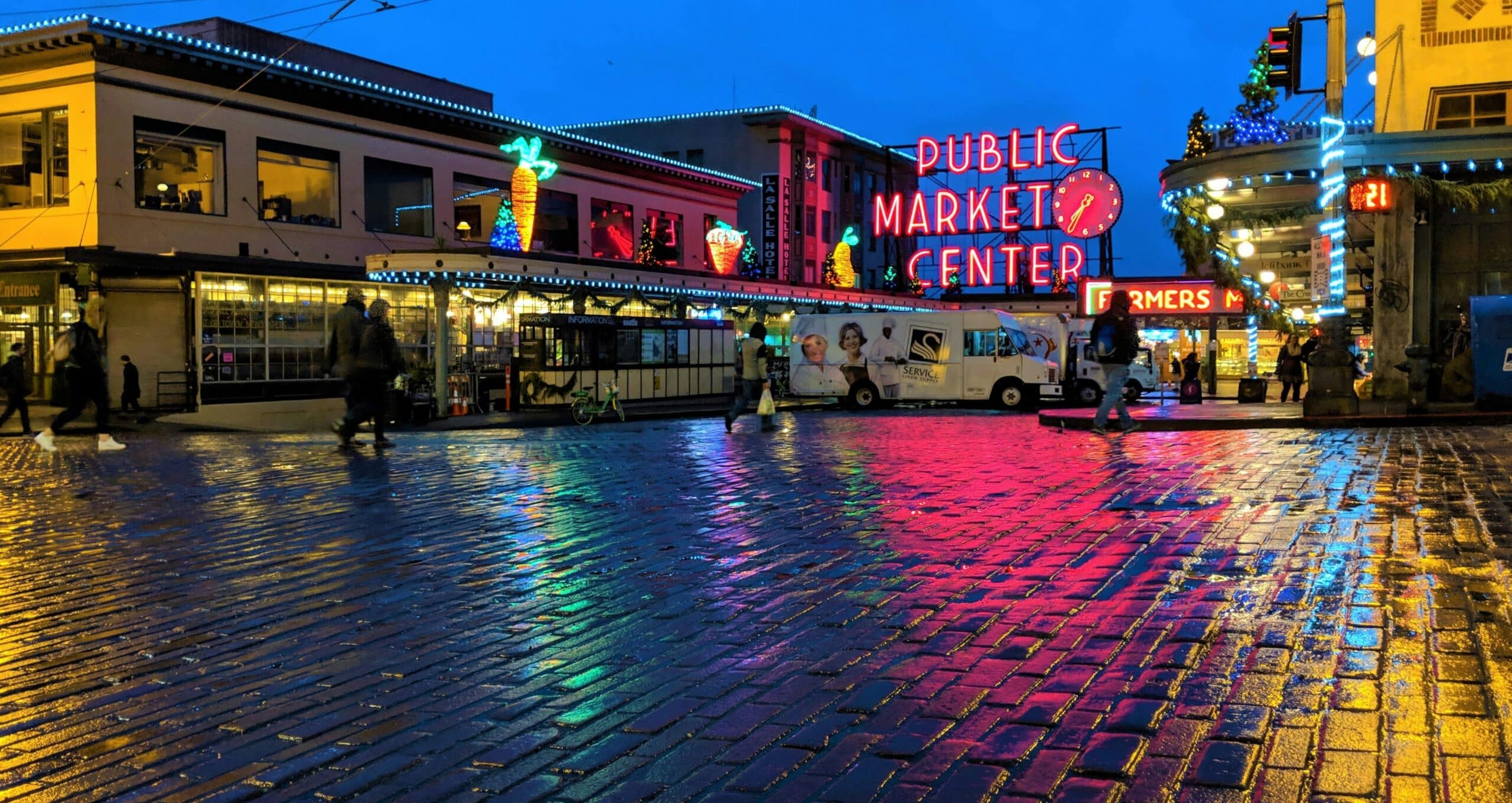
Downtown is the logistics base. The major hotels cluster here, including the Fairmont Olympic Hotel, the Lotte Hotel, and the Thompson Seattle. The Washington State Convention Center sits at the eastern edge. Pike Place Market anchors the western side, and the waterfront runs the full length of downtown’s western border. Downtown Seattle is compact enough that a corporate group staying here can reach most key venues on foot within 15 minutes.
Belltown sits immediately north of downtown and runs along the waterfront toward the Seattle Center. It is the city’s densest neighborhood: restaurants, bars, live music venues, and the Olympic Sculpture Park, a nine-acre open-air museum on the waterfront operated by the Seattle Art Museum. Belltown is walkable, flat along the waterfront corridor, and has enough restaurant density to handle a post-event dinner without a reservation crisis. For a team event that moves between the waterfront and the Seattle Center, Belltown is the connective tissue.
Pioneer Square is Seattle’s oldest neighborhood. Brick buildings from the 1890s, art galleries, and a street grid that predates the rest of downtown. The neighborhood sits just south of the downtown core and is home to Occidental Square, a tree-lined public plaza that works well as a rally point for city-wide team events. Pioneer Square has an edge that the rest of downtown lacks. It reads as historic and slightly gritty in a way that gives a team experience real texture.
Capitol Hill is the cultural center of Seattle. It is the city’s LGBTQ+ hub, its densest restaurant corridor, and the neighborhood with the most energy after dark. The Pike-Pine corridor between Broadway and 12th Avenue is the commercial core: coffee shops, cocktail bars, music venues, and the Starbucks Reserve Roastery. Capitol Hill is a 15-minute walk uphill from downtown or a quick ride on the Link Light Rail to Capitol Hill Station. For post-event dining and nightlife, this is the strongest option in the city.
South Lake Union is Seattle’s tech district. Amazon’s headquarters campus dominates the neighborhood. It is newer, cleaner, and more corporate than the rest of Seattle, anchored by The Museum of History and Industry (MOHAI) on the southern shore of Lake Union. For groups coming from tech companies, South Lake Union will feel familiar. For groups that want something with more character, it is better as a pass-through than a destination.
Fremont calls itself the Center of the Universe. That is written on a sign at the neighborhood’s main intersection, and the attitude matches. Fremont sits north of Lake Union and is home to the Fremont Troll, an 18-foot concrete sculpture under the Aurora Bridge, and a 16-foot statue of Lenin salvaged from Slovakia. The neighborhood is walkable, slightly eccentric, and anchored by Gas Works Park, a 19-acre park built on the remains of a former coal gasification plant on the north shore of Lake Union. The park offers one of the best skyline views in Seattle and works well as a staging area for team events.
Ballard is northwest of Fremont and has become one of Seattle’s strongest restaurant and brewery neighborhoods. The Hiram M. Chittenden Locks connect Puget Sound to Lake Union and Lake Washington, and watching the boats move through the locks is one of Seattle’s genuinely interesting free experiences. For a post-event meal with a brewery crawl attached, Ballard is the right call.
If you are planning an outdoor component and need venue-specific guidance, the top outdoor team building venues in Seattle, WA covers each location in detail: what kind of group it suits, what the logistics look like, and what to watch for.
The Thing About Seattle and Weather
Seattle’s reputation for rain is both earned and misleading. The city gets less total rainfall per year than New York, Houston, or Miami. What Seattle gets is persistent cloud cover and light drizzle spread across many days, particularly from October through April. It rarely pours. It just never quite stops.
Summer (June through September) is the window. Seattle summers are genuinely spectacular. Temperatures sit in the mid-60s to mid-70s, rain is rare, and the days are long: sunset does not come until after 9 PM in late June. The city comes alive between June and September in a way that feels like a different place from the gray months. If you have any flexibility on timing, this is when you book an outdoor team building event in Seattle.
Fall (October through November) brings the rain back gradually. October can still produce beautiful days, particularly early in the month. By mid-November, the city is fully into its wet season. Outdoor events in fall need a weather contingency plan, but the temperatures remain mild, usually in the 50s.
Winter (December through February) is gray, wet, and dark. Temperatures stay in the upper 30s to mid-40s, and sunset arrives before 4:30 PM in December. Snow is rare but does happen, and when it does, the city’s hilly terrain makes it genuinely disruptive. Seattle does not handle snow well. If you are booking a winter event, plan it indoors and do not schedule anything that depends on clear roads during a cold snap.
Spring (March through May) is Seattle’s slow thaw. March is still wet. April improves. May is often excellent: the cherry blossoms at the University of Washington campus draw crowds, temperatures reach the 60s, and the rain eases up. May is a strong month for an outdoor event if summer dates are not available.
The one weather variable that catches planners off guard is wind on the water. Puget Sound generates breezes that make waterfront venues feel 10 degrees cooler than inland spots, even in summer. Note this in your pre-event communication for any waterfront activity.
Getting Around Without Losing People
Link Light Rail is the backbone. The 1 Line runs from the airport through downtown (Pioneer Square, University Street, Westlake), up to Capitol Hill, the University District, and north to Lynnwood. For moving a corporate group between the airport, downtown, and Capitol Hill, light rail is the most reliable option. Trains run every 8 to 10 minutes during peak hours.
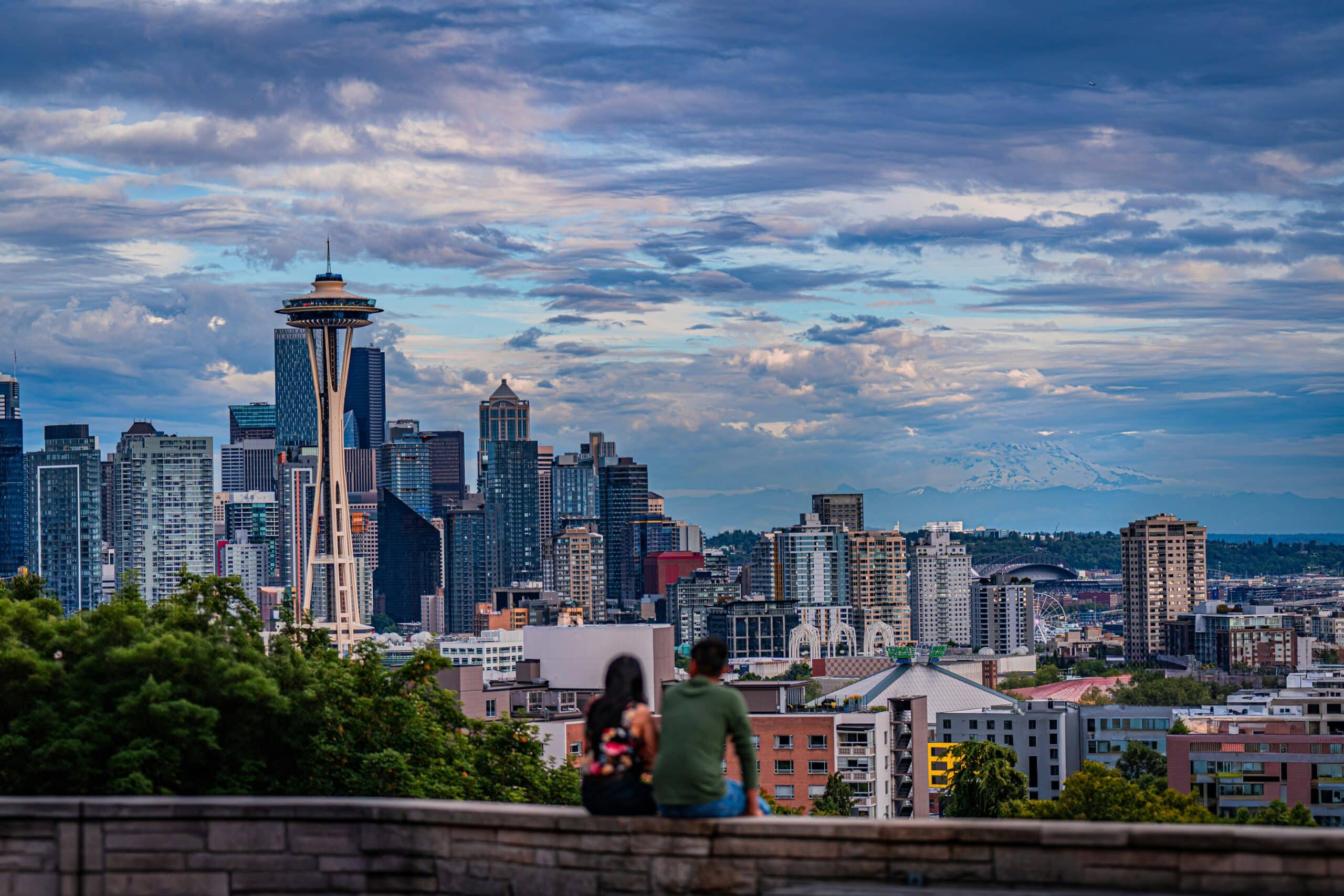
The Seattle Monorail runs between Westlake Center downtown and Seattle Center, where the Space Needle, the Museum of Pop Culture, and Climate Pledge Arena are located. The ride takes two minutes. It is a novelty, but it is also genuinely useful for moving a group to Seattle Center without walking.
Rideshare works well inside Seattle proper. Uber and Lyft are reliable in the core neighborhoods. Surge pricing during major events at Climate Pledge Arena or T-Mobile Park is real and worth accounting for.
Walking is the primary mode for most team events in Seattle. The downtown core, Belltown, Pioneer Square, and the waterfront are all connected by flat or manageable grades. A corporate group can cover substantial ground on foot if routes are planned to avoid the steepest hills.
Ferries deserve a mention. The Washington State Ferries terminal is on the downtown waterfront. The Bainbridge Island ferry is a 35-minute crossing with views of the Olympics, Puget Sound, and the Seattle skyline. It is not standard corporate event fare, but for a group that wants something different, a ferry ride as part of the day creates a moment that sticks.
One thing planners consistently underestimate: the hills between neighborhoods make distances feel longer than they look on a map. Capitol Hill is a 15-minute walk from downtown, but it is uphill the entire way. Build extra time into any schedule that involves moving a group on foot between elevations.
Where to Eat When the Event Ends
Seattle’s food identity is built on seafood, Pacific Northwest ingredients, and a coffee culture that predates the rest of the country by decades. The restaurant scene has depth and range that consistently surprises corporate groups expecting only fish and chips.
Canlis is the city’s defining fine dining restaurant, perched on the south slope of Queen Anne Hill with floor-to-ceiling views of Lake Union. It has been open since 1950 and remains the right call for a corporate dinner where the setting needs to match the occasion. Reservations are essential and should be made weeks in advance.
The Metropolitan Grill on Second Avenue downtown is Seattle’s premier steakhouse and handles corporate groups well. Private dining rooms are available. The atmosphere is classic and the clientele skews business.
Il Terrazzo Carmine in Pioneer Square has been serving classical Italian food since 1984 and is one of Seattle’s most reliable choices for a group dinner with character. The courtyard entrance through the alley sets the tone before anyone sits down.
Tavolàta has locations in Belltown and Capitol Hill and handles group dining particularly well. The Belltown location has a semi-private loft space that works for corporate groups up to 30. The handmade pasta is the draw.
The Walrus and the Carpenter in Ballard is an oyster bar that is worth the trip if your group appreciates seafood. It is small, so reservations are critical, but the quality is among the best in the city.
For a lunch option on event day, Pike Place Market is an obvious choice but a legitimate one. The market’s lower levels house sit-down restaurants with less tourist traffic. Pike Place Chowder is the quick-service standout.
What Seattle Does Differently as a Team Building City
Team building in Seattle, WA operates on a cultural foundation shaped by the industries that built this city: aerospace, software, coffee, and outdoor recreation. Seattle’s corporate culture is analytical, collaborative, and quietly competitive. People here solve problems. They build things. They are more likely to want to figure something out together than to race each other to a finish line.
That distinction matters when you design the day. Formats that reward creative problem-solving and strategic thinking land well here. Pure competition-for-competition’s-sake formats can feel shallow to a Seattle audience. The design challenge is creating an experience with real stakes that also has enough intellectual depth to hold the attention of people who debug code or engineer supply chains for a living.
The city’s layout creates natural advantages for city-wide team events. Downtown, Belltown, Pioneer Square, the waterfront, and the Seattle Center form a compact enough zone that groups can spread out across meaningfully different environments and regroup within a manageable radius. The variety of settings: the waterfront sculptures at Olympic Sculpture Park, the brick alleys of Pioneer Square, the bustle of Pike Place Market, the open lawns of Gas Works Park, gives a well-designed event visual variety that keeps engagement high across the full day.
A Few Things That Will Save You
Layers, not umbrellas. Seattleites do not use umbrellas. The rain here is a mist, not a downpour. A good waterproof shell layer is the correct advice for your pre-event communication. If you send a packing list that says “bring an umbrella,” your group will feel like tourists. Say “bring a light rain jacket” instead.
Do not underestimate the hills. A route that looks flat on Google Maps may include a 200-foot elevation change. Walk the route before the event or use a topographic map to confirm the grade.
Book accommodations early during conference season. The Washington State Convention Center draws large events year-round. When a major conference is in town, downtown hotel inventory tightens fast and rates spike. Check the convention center events calendar when setting dates.
Plan for ferry traffic if your event is on a Friday. Weekend ferry lines to Bainbridge Island and the San Juan Islands start building on Friday afternoon. If your event involves the waterfront or any areas near the ferry terminal, Friday afternoon foot traffic and vehicle congestion are worth planning around.
Coffee is not a perk. It is infrastructure. Seattle runs on coffee. Having quality coffee available throughout the event is not a nice-to-have. It is a logistics requirement. Seattle groups will notice if the coffee is bad. Source it locally.
Why Adventure Games Inc. Works in Seattle
The analytical culture, the walkable downtown core, the diversity of neighborhoods within a tight radius: Seattle gives a city-wide team experience the raw material it needs to feel genuinely engaging rather than mandatory.
Adventure Games Inc. designs experiences that match how Seattle actually operates: teams navigating real neighborhoods, solving problems under time pressure, making decisions together that reveal how people think when the stakes are real. The formats work for the kind of corporate groups Seattle produces, people who are smart, collaborative, and hard to impress with anything that feels generic.
If you are planning a Seattle team building event and want something your team will still be talking about at the next all-hands meeting, reach out to Adventure Games Inc.