

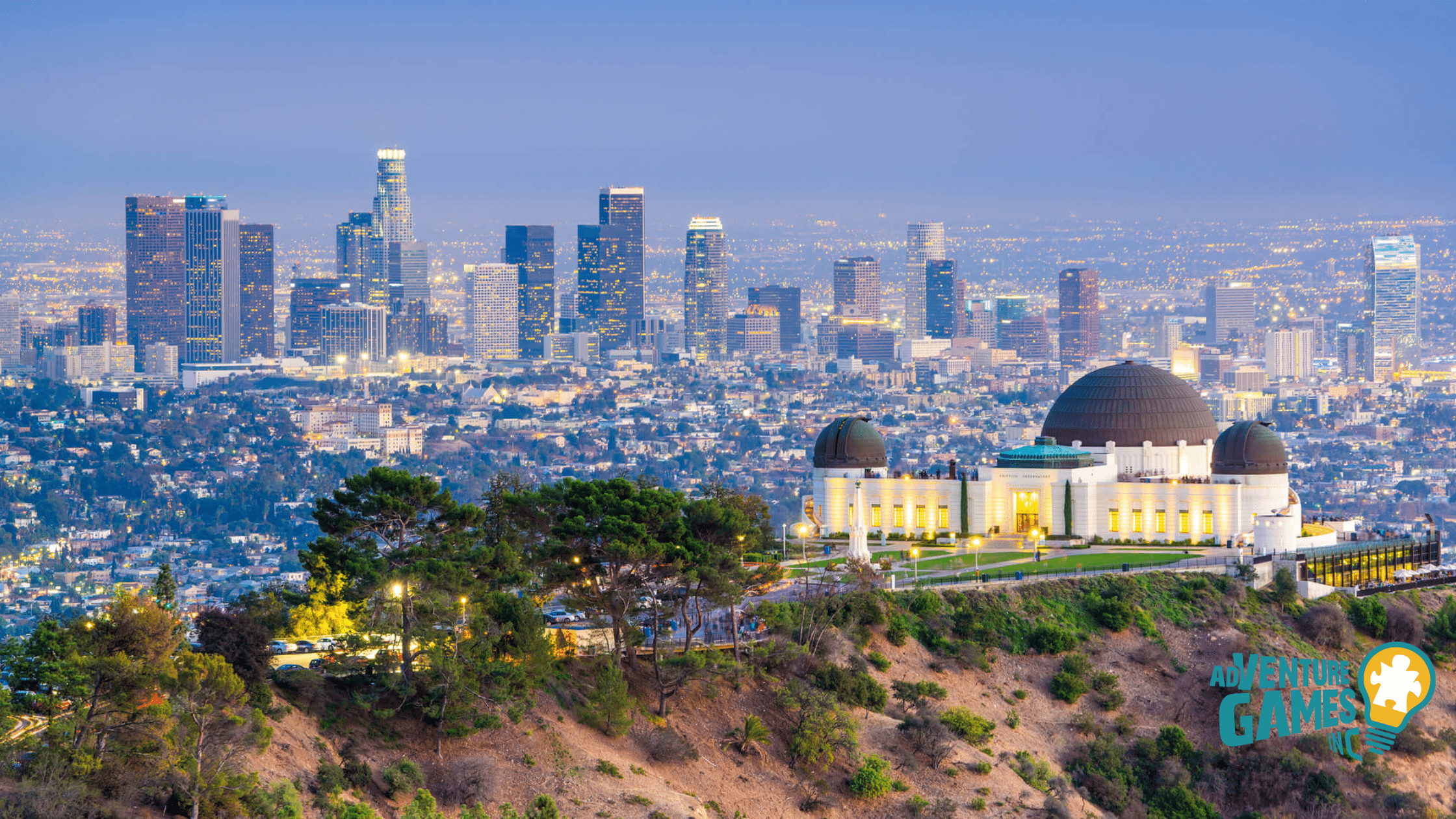
Los Angeles does not hand you anything. The city sprawls across 500 square miles of coastline, canyons, and concrete, and the distance between your hotel and your event venue can be 40 minutes or two hours depending on when you leave. If you’re bringing a corporate group to Los Angeles for a team building event, you need to understand the geography before you touch the itinerary.
This guide is written for planners who want specifics, not a tourism brochure.
Understand What Kind of City You’re Dealing With
Los Angeles is not one city. It is a collection of neighborhoods stitched together by freeways, each with its own identity, pace, and culture. Downtown feels nothing like Santa Monica. Silver Lake feels nothing like Beverly Hills. That is the operating reality, and it is also the opportunity: no other American city gives you this much environmental range within a single metro area.
The city is a driving city. Full stop. The grid makes sense on a map and breaks down in practice because the freeways are the real arterial system, and those freeways are congested more often than they are not. Plan around this and it works. Ignore it and your event falls apart before lunch.
Two airports matter for corporate groups. LAX is the primary international hub, located on the Westside about 18 miles southwest of downtown. Travel time from LAX to downtown ranges from 30 minutes to well over an hour depending entirely on traffic. The new Automated People Mover connecting terminals to the Metro system is changing the ground transportation picture, but most corporate groups will still use rideshare, shuttles, or car services.
Hollywood Burbank Airport is the insider move. It is smaller, faster through security, and closer to downtown, Hollywood, and the Valley. If your team is flying in from domestic hubs and Southwest serves their city, check Burbank first. The door-to-door time savings can be significant.
LA Metro rail and bus service exists and is expanding, but it does not serve most corporate event logistics well. The B Line subway connects Hollywood to downtown, and the E Line runs from Santa Monica through downtown, but the coverage gaps between lines are wide. For groups of ten or more, dedicated transportation is the right call.
The Neighborhoods Worth Knowing
Downtown Los Angeles (DTLA) is your logistics anchor. The major hotels are here: the InterContinental Los Angeles Downtown, the Westin Bonaventure, and several newer boutique options in the Arts District. DTLA has changed more than any other part of the city in the past decade. Gloria Molina Grand Park, a 12-acre civic green stretching from the Music Center to City Hall, functions as the city’s central gathering point: open lawns, food trucks, public art, and skyline views. The Arts District on the eastern edge of downtown is where the restaurant scene has exploded. Warehouse conversions, galleries, and some of the best food in the city sit within a few walkable blocks.
Santa Monica sits on the coast, about 16 miles west of downtown. The pace is different here: ocean air, the bluffs above the beach, the Third Street Promenade for walking and dining. For groups staying on the Westside, Santa Monica is a natural staging area. The problem is getting here from anywhere east during rush hour. Plan accordingly.
Hollywood is louder and more chaotic than most out-of-town groups expect. The tourist corridor along Hollywood Boulevard is not where you want to stage a corporate event. But the neighborhoods around it, including Los Feliz, Silver Lake, and East Hollywood, have genuine energy: independent restaurants, walkable streets, and proximity to Griffith Park, which is one of the best outdoor assets any American city has.
Pasadena is northeast of downtown, about 20 minutes without traffic, and operates at a completely different tempo. Old Town Pasadena has walkable dining, tree-lined streets, and a polished feel that works well for executive groups or client-facing events. The Langham Huntington handles corporate events at a high level.
Culver City is a mid-city hub that has become the epicenter of LA’s tech and creative industry cluster. Amazon, Apple TV, and several major studios have operations here. The dining scene along Washington Boulevard and in the Culver City Arts District is strong and still growing. For groups whose attendees are already in the Westside or mid-city zone, Culver City avoids the traffic penalty of pushing into downtown.
Venice and the Abbot Kinney corridor offer something no other LA neighborhood delivers: the canals, the boardwalk energy, the street art, and a stretch of independent shops and restaurants on Abbot Kinney Boulevard that has become one of the most photographed streets in the city. For a post-event dinner or a smaller group outing, Venice reads as genuinely unique.
If you’re planning an outdoor component and need venue-specific guidance, the top 5 outdoor team building venues in Los Angeles CA covers each location in detail: what kind of group it suits, what the permit process looks like, and what to watch for.
The Thing About Los Angeles and Weather
Nobody cancels a team building event in Los Angeles because of weather. That is the honest version.
The climate is the single biggest structural advantage Los Angeles has over every other major team building city in the country. You can run outdoor events in October, January, and March with roughly equal confidence. The dry season stretches from May through October with near-zero rainfall and temperatures that sit in the 70s and 80s along the coast and low 80s to 90s inland.
Summer (June through September) is warm and dry. Coastal areas stay comfortable in the mid-70s thanks to the marine layer, a fog bank that rolls in most mornings and burns off by noon. Inland areas, including downtown, the Valley, and Pasadena, run hotter: mid-80s to low 90s, occasionally higher during heat waves. The key planning variable in summer is the marine layer itself. Morning events on the coast may start under gray skies that look like overcast but clear by 11 AM. This trips up planners from other regions who see the forecast and panic. It is normal.
Fall (October through November) is the premium window. The marine layer thins, temperatures are warm but not hot, and the light turns golden in a way that makes every outdoor venue look better. October in Los Angeles is the equivalent of fall in Dallas: the time when the city runs best for outdoor events.
Winter (December through February) is mild by any national standard. Daytime temperatures range from the low 60s to low 70s. Rain is possible, and when it comes, it can be heavy, but rain days are infrequent enough that the odds are strongly in your favor. The National Weather Service Los Angeles forecast is worth monitoring if you are booking a winter event with outdoor components.
Spring (March through May) is excellent. Temperatures climb into the 70s, the hillsides turn green from winter rain, and the city is in a good rhythm before the summer tourist season hits. Late spring occasionally brings “June Gloom” early, with persistent morning marine layer along the coast.
The Santa Ana winds are the one weather variable that can genuinely disrupt outdoor plans. These hot, dry winds blow from the desert through the mountain passes, typically between October and March. When they arrive, temperatures spike, humidity drops to single digits, and fire risk increases. They are episodic and usually last two to three days. Check the forecast for wind advisories if your event has an outdoor component during those months.
Getting Around Without Losing People
LAX to Downtown: 30 minutes with no traffic. 60 to 90 minutes during weekday rush hour on the 110 or the 105 to 110. This is not an exaggeration. If your group is arriving between 3 PM and 7 PM on a weekday, budget accordingly.
Hollywood Burbank Airport to Downtown: 15 to 25 minutes. Dramatically easier.
LAX to Santa Monica: 20 minutes without traffic. 45 to 60 minutes during rush hour.
Downtown to Santa Monica: 30 minutes without traffic. 60 to 90 minutes between 4 PM and 7 PM. The 10 freeway westbound in the evening is one of the most congested corridors in the United States.
Rideshare: Uber and Lyft are reliable in every part of the city. Surge pricing during peak hours and major events is real and can be significant. For groups, pre-booked car services or shuttle vans are more predictable.
Parking: Available everywhere but expensive in high-demand areas. Downtown garages run $15 to $30 per day. Valet is standard at most restaurants and hotels and typically costs $10 to $20 per car.
The single most important planning principle in Los Angeles: do not schedule a group movement across the city between 3 PM and 7 PM on a weekday. Build your itinerary so that travel happens before 3 PM or after 7 PM, or keep the entire event within one neighborhood zone. This one decision will save more time and frustration than any other logistical choice you make.
Where to Eat When the Event Ends
Los Angeles has the deepest and most diverse restaurant scene in the country. The range is not a marketing claim. It is a structural reality driven by the city’s immigrant communities, its proximity to California agriculture, and a chef culture that treats every cuisine as worthy of serious execution.
Bestia in the Arts District is the right call when you need a restaurant that impresses a corporate group without feeling stuffy. Wood-fired Italian in a converted warehouse, with a courtyard that handles group dining well. Book well in advance. This restaurant stays full.
République on La Brea in Miracle Mile occupies a 1929 building originally constructed by Charlie Chaplin. The bakery and cafe operate during the day. Dinner is French-inspired California cuisine with a James Beard Award-winning pastry program. The space itself is the selling point for a corporate meal: high ceilings, exposed brick, a room that feels important without trying.
Bavel is from the same team behind Bestia, located nearby in the Arts District. Middle Eastern cuisine executed at a level that earned it a spot on multiple national best-of lists. The lamb neck shawarma and the pita program are worth the trip. Group dining options are available.
Gjelina on Abbot Kinney in Venice is the California-ingredient-driven restaurant that set the template for a generation of LA dining. Wood-fired pizzas, seasonal vegetables treated as seriously as protein, and a patio that feels like the best version of what people imagine when they think of eating in Los Angeles.
Grand Central Market in downtown is the move for a group lunch that does not require a reservation or a fixed menu. Over 40 vendors under one historic roof, open since 1917. Tacos, ramen, pupusas, Thai, coffee, and more, all at counter-service speed. Perfect for a midday break during an event when you need to feed people fast without sacrificing quality.
For a group dinner in Pasadena, Sushi Roku on Colorado Boulevard handles corporate groups and delivers quality Japanese cuisine in a setting that feels polished but not overdone.
What Los Angeles Does Differently as a Team Building City
Team building in Los Angeles, CA operates on a cultural foundation that is unique in the United States. Los Angeles was built by entertainment, technology, and creative industries. The people who work here are accustomed to high-stakes collaboration, tight deadlines, and the pressure of producing something that has to perform. Corporate groups in LA bring that energy to team events in a way that groups from finance-driven or government-driven cities often do not.
That changes how you design the day. Los Angeles teams do not need to be convinced that a team event can be meaningful. They need to be convinced that this particular event is worth their time. The bar for quality is higher here because the baseline cultural exposure to production value, storytelling, and experience design is higher. A generic trust-fall exercise will not land. An experience that feels like it was designed specifically for this group, in this city, with genuine stakes and real creative challenges, will.
The city’s physical layout also creates natural advantages for city-wide team formats. The compact walkable zones within DTLA, Santa Monica, Hollywood, and Pasadena give teams room to move through genuinely different environments without requiring long drives between checkpoints. The visual range is real: teams can go from urban plazas and street art to coastal bluffs and park trails within a single event format.
A Few Things That Will Save You
Traffic is not a variable. Treat it as a given. Every itinerary that involves moving a group across Los Angeles during peak hours needs a contingency plan. Better yet, build the schedule so the group never moves during peak hours.
Don’t try to do too much geography. Los Angeles is enormous. An itinerary that visits downtown, Venice, Hollywood, and Pasadena in one day sounds ambitious on paper and results in three hours of windshield time. Pick one or two zones and go deep.
Book hotels early if a major event is in town. Los Angeles hosts conventions, awards shows, premieres, and sporting events constantly. When a large convention is running at the Los Angeles Convention Center or a major awards show is in town, hotel availability in DTLA and surrounding areas tightens and prices spike. Check event calendars when you are setting dates.
The marine layer is not bad weather. If your team is arriving from the East Coast or Midwest and sees gray skies at 9 AM, that is normal coastal June through August. It burns off. Do not rearrange outdoor plans because of morning overcast on the coast.
Respect the neighborhoods. Each LA neighborhood has its own parking situation, noise level, and crowd density. A venue that works perfectly at 10 AM may be impossible to access at 7 PM on a Friday. Do your scouting at the same time of day you plan to run your event.
Why Adventure Games Inc. Works in Los Angeles
The creative culture, the walkable neighborhood cores, the year-round outdoor weather, and the sheer visual variety of the city give a well-designed team experience raw material that most cities cannot match.
Adventure Games Inc. designs experiences that fit how Los Angeles actually works: teams moving through a defined zone, competing under time pressure, making decisions together that reveal how people actually operate when stakes are real. The experience scales for large corporate groups and lands in a city that expects production quality and genuine engagement.
If you’re planning a Los Angeles team building event and want something your team will still be referencing at the next quarterly review, reach out to Adventure Games Inc.