

Miami does not wait for you to figure it out. The heat hits you walking off the jet bridge, the causeway traffic starts before you’ve left the airport, and the city runs at a rhythm that rewards preparation over improvisation. If you’re bringing a corporate group to Miami for a team building event, you need to understand how this city actually works before you start booking anything.
This guide is written for planners who want specifics, not a list of beaches and buzzwords.
Understand What Kind of City You’re Dealing With
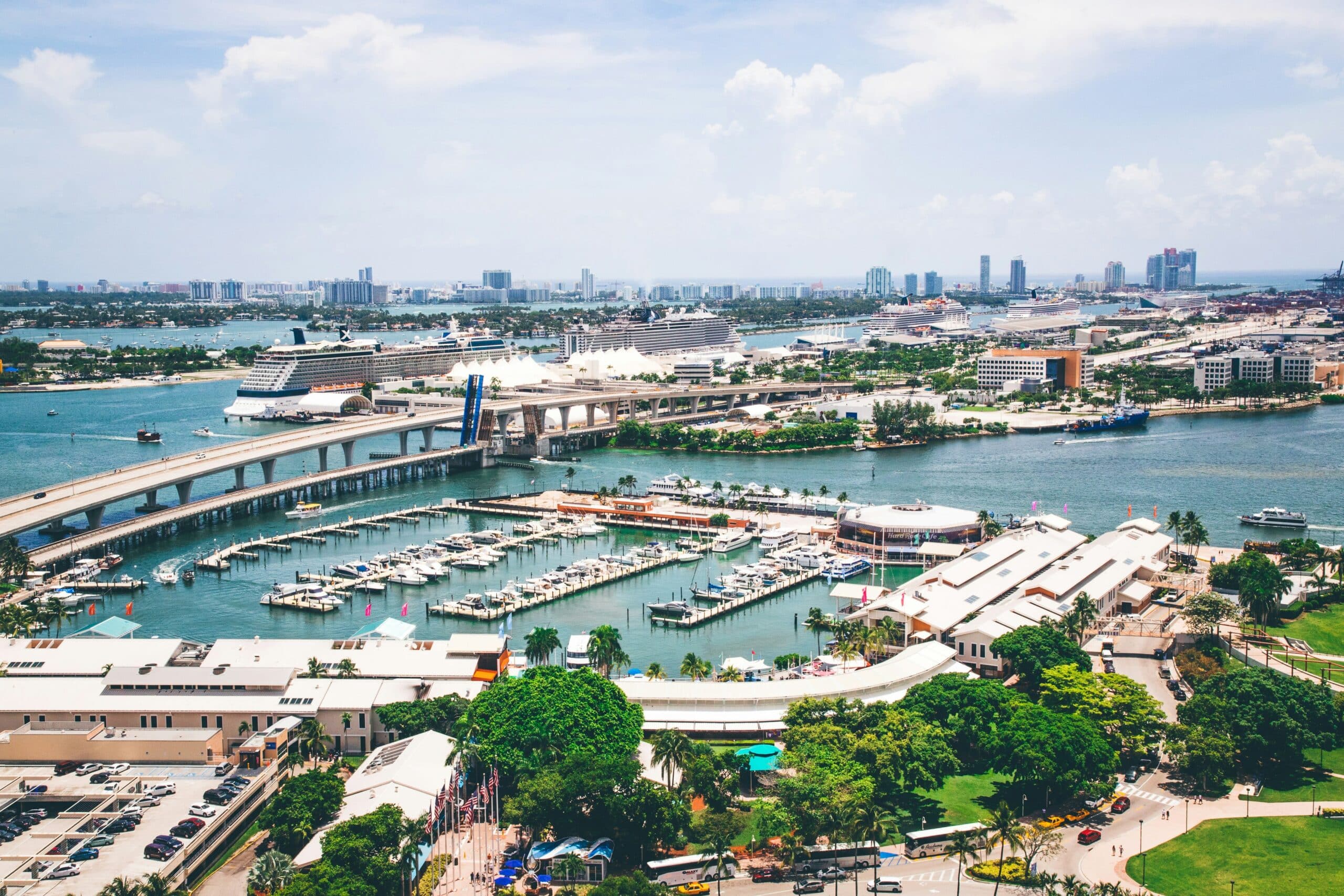
Miami is a international business hub disguised as a vacation destination. The skyline looks like a resort town until you realize that Brickell alone has more financial firms per square mile than most cities in the Southeast. Tech companies have been relocating here steadily since 2020. Latin American corporate offices treat Miami as their U.S. headquarters. The workforce is bilingual by default, multicultural by nature, and competitive in a way that has more in common with New York than with the rest of Florida.
That matters for team building because the corporate groups here are not looking for a break from intensity. They operate in it daily. The format you bring needs to match that energy or it will feel like a downgrade from regular work.
Miami is also a spread-out city built around causeways, expressways, and a coastline that stretches for miles. Downtown Miami, Brickell, Wynwood, Coconut Grove, Coral Gables, South Beach: these are not different blocks. They are functionally different cities with different energies, different price points, and different logistical considerations. Planning a Miami event means choosing your zone first and building everything around it.
Two airports serve the metro. Miami International Airport (MIA) is the primary hub, about 8 miles west of downtown, handling over 50 million passengers a year with direct flights to nearly 200 domestic and international destinations. Fort Lauderdale-Hollywood International Airport (FLL) sits about 30 miles north and serves as a major base for JetBlue and Southwest. If your team is flying in from multiple cities, check both airports. FLL is often cheaper and less congested, but the drive to Miami proper adds 45 minutes to an hour depending on traffic and time of day.
Metrorail connects the airport to downtown and south through Coral Gables and Coconut Grove. The Orange Line runs directly to the MIA station via the free MIA Mover shuttle. Metromover is a free elevated people mover that loops through downtown, Brickell, and the Omni area, genuinely useful for moving a group between those three zones without rideshare surge pricing. For everything else, most corporate groups will rely on Uber, Lyft, or chartered shuttles.
The Neighborhoods Worth Knowing
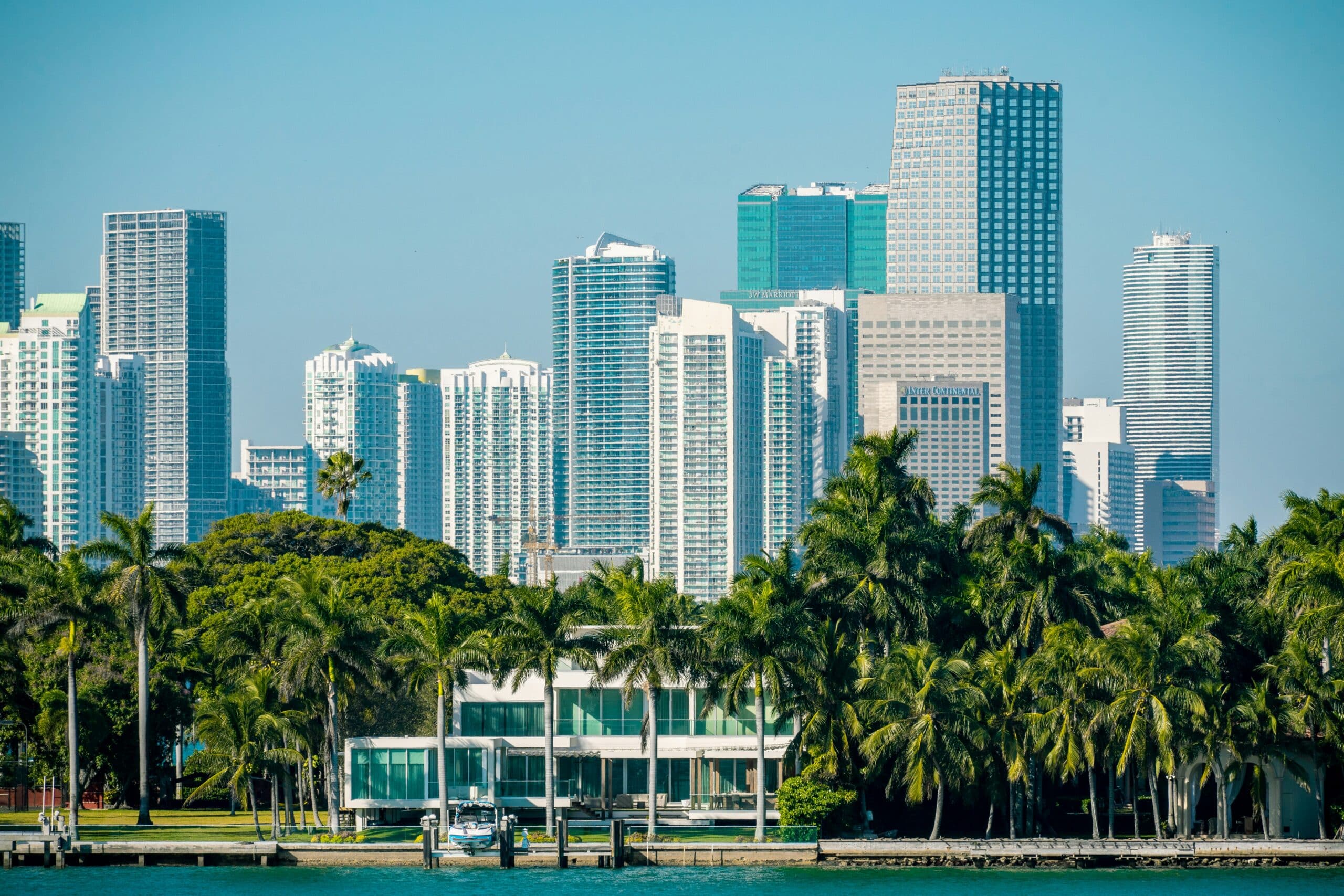
Brickell is Miami’s financial district and the most likely home base for a corporate group. The hotel density is high, the restaurants are polished, and the neighborhood operates on a schedule that corporate visitors recognize: early coffee, working lunches, after-work drinks. Brickell City Centre anchors the retail and dining core. The Metromover runs through the heart of Brickell with multiple stops, which makes it a strong staging area for events that need to move people efficiently.
Downtown Miami sits just north of Brickell and centers on Biscayne Boulevard. Bayfront Park is 32 acres of waterfront green space on Biscayne Bay, home to the amphitheater and the Tina Hills Pavilion. The Kaseya Center (home of the Miami Heat) and Bayside Marketplace are within walking distance. Downtown is more event infrastructure than residential charm, but for large groups that need open space and proximity to transit, it delivers.
Wynwood is the neighborhood that changed Miami’s cultural reputation. What was a warehouse district 15 years ago is now a globally recognized arts district anchored by the Wynwood Walls, murals on every block, and a restaurant scene that has matured well past its early hype. For a post-event dinner or a team outing with genuine visual energy, Wynwood is the answer. KYU is the neighborhood’s anchor restaurant: wood-fired, Asian-inspired, and built for groups. The neighborhood runs late. Do not expect it to be at full energy before 7 PM.
Coconut Grove is Miami’s oldest neighborhood and its most relaxed. Banyan trees, bayfront parks, peacocks wandering residential streets, and a walkable village core with restaurants and boutiques. Regatta Park sits on Biscayne Bay at Dinner Key Marina and functions as a natural anchor point for outdoor events. Vizcaya Museum and Gardens is a 10-acre Italian Renaissance estate on the bay that handles corporate events with a level of visual impact no hotel ballroom can match. For smaller groups or executive retreats, the Grove delivers a quality that downtown cannot.
Coral Gables is south of downtown and built around the vision of George Merrick in the 1920s. Mediterranean Revival architecture, tree-lined boulevards, and a business community that skews toward established wealth and international finance. The Biltmore Hotel is the landmark property and handles corporate events and group accommodations at a scale few Miami hotels can match. Coral Gables is the right zone when the group is senior, the tone needs to be elevated, and the logistics need to be contained within a walkable radius.
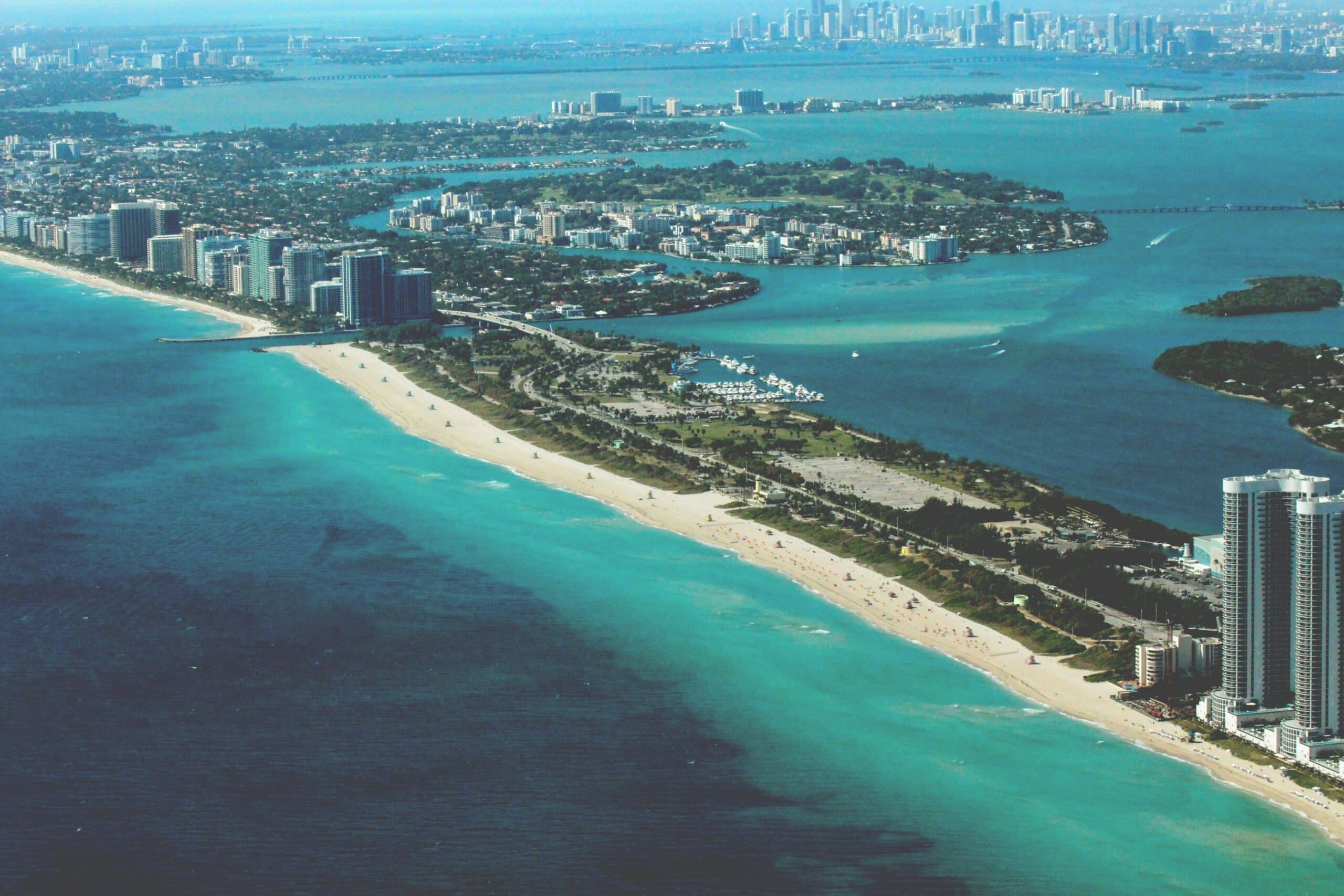
South Beach is the barrier island strip most people picture when they hear “Miami.” The Art Deco Historic District, Ocean Drive, Lincoln Road, and the beach itself. For team building, South Beach works best as a post-event reward, not as a staging area. Causeway traffic getting on and off the island is unpredictable, parking is expensive, and the neighborhood’s energy is built around nightlife and tourism rather than corporate logistics.
Little Havana runs along Calle Ocho (SW 8th Street) west of downtown and is the cultural heart of Miami’s Cuban community. Domino Park, ventanitas (walk-up coffee windows), cigar shops, and Versailles Restaurant: this is the neighborhood that gives Miami its cultural identity. For a team looking for an experience that feels distinctly Miami, Little Havana has genuine texture. It is built for walking and eating, not for staging large-scale events.
The Design District sits between Wynwood and the Upper East Side and has evolved into Miami’s luxury retail and gallery hub. The Institute of Contemporary Art Miami is here, along with flagship stores and upscale restaurants. It reads well for a small executive group but is not suited for large outdoor events.
If you’re planning an outdoor component and need venue-specific guidance, the top outdoor team building venues in Miami, FL covers each location in detail: what kind of group it suits, what the permit situation looks like, and what to watch out for.
The Thing About Miami and Weather
Nobody moves to Miami for mild weather. They move for warm weather, and warm means something specific here.
Summers are intense. June through September brings daily highs in the low 90s with humidity that pushes the heat index well past 100. Afternoon thunderstorms roll in almost daily between 2 PM and 5 PM, often with little warning. These are not light showers. They are heavy, fast-moving storms with lightning, and they end almost as quickly as they arrive. Any outdoor event scheduled during summer needs a rain contingency that can be activated in 15 minutes and a hydration plan that is not optional.
The silver lining is that Miami’s event infrastructure has adapted completely to the climate. Covered patios, climate-controlled tents, and shaded outdoor spaces are standard here. The city knows how to operate in the heat.
Hurricane season runs from June through November, with peak risk between August and October. This does not mean you should avoid those months entirely, but you need to monitor forecasts closely and have cancellation flexibility built into vendor contracts. The National Hurricane Center is headquartered in Miami for a reason.
Winter (December through March) is the call. Temperatures sit in the mid-70s during the day with low humidity, blue skies, and almost no rain. This is Miami’s peak season for tourism and events, which means hotel rates climb and availability tightens. If you have flexibility, January and February deliver the best weather with slightly lower demand than the Art Basel crush of early December or the spring break surge of March.
Spring (April through May) is a strong secondary window. Temperatures are warm but not yet punishing, humidity is building but manageable, and the tourist crowds have thinned from peak season. Late May starts to push into the summer pattern. April is the sweet spot.
Fall (October through November) works if you are past the peak hurricane risk. Late November, after the tropics have quieted and before the winter season ramps up, is genuinely excellent: warm, uncrowded, and affordable.
Getting Around Without Losing People
MIA to Brickell/Downtown: About 20 minutes with no traffic, 35 to 50 minutes during rush hour. The airport expressway (SR 836) connects to I-95 and is the primary route. Rush hour on I-95 through Miami is among the worst in the country.
FLL to Miami: 45 minutes to an hour in normal traffic. During Friday afternoon rush or a holiday weekend, budget 90 minutes. I-95 is the direct route and it is consistently congested.
Causeway traffic: Getting to Miami Beach from the mainland requires crossing one of several causeways (MacArthur, Venetian, Julia Tuttle, or the 195). All of them bottleneck during peak hours, especially on Friday and Saturday evenings. If your event involves South Beach, time the crossings carefully.
Rideshare: Uber and Lyft are reliable throughout Miami proper. Surge pricing spikes during events at the Kaseya Center, during Art Basel, and during any major convention. For groups larger than 8, a chartered shuttle or van service is more cost-effective and dramatically more reliable than coordinating individual rideshares.
Parking: Expensive in Brickell and South Beach, manageable everywhere else. Valet is standard at most Miami restaurants and hotels. For large groups, hotel valet programs or pre-arranged garage access are worth coordinating in advance.
One thing planners consistently underestimate: Miami’s sprawl is deceptive. Neighborhoods look close on a map but the actual drive time, factoring in traffic and causeway congestion, can double what you expect. Build 15 to 20 minutes of buffer into any schedule that involves moving a group between zones.
Where to Eat When the Event Ends
Miami’s restaurant scene is one of the best in the country, and it runs deep across cuisines and price points. The Latin American influence is not a footnote here. It is the foundation.
KYU in Wynwood is the restaurant that earned Miami national culinary credibility. Wood-fired, Asian-inspired, and built for groups. The Korean fried chicken and the beef short rib are the signatures. Reserve early: it fills every night.
Komodo in Brickell is a three-story Southeast Asian restaurant with indoor and outdoor dining that reads as equal parts restaurant and event. It handles large corporate groups well and the energy of the space makes an impression.
Versailles on Calle Ocho is Miami’s most iconic Cuban restaurant and has been since 1971. The portions are massive, the Cuban coffee is strong, and the experience is authentic in a way that no new opening can replicate. For a group lunch that feels genuinely Miami, this is the move.
Elcielo in Brickell is a Michelin-starred Colombian fine dining experience built around a multi-sensory tasting menu. If you need a corporate dinner that will be remembered and talked about, this is the highest-impact option in Brickell.
Glass and Vine in Coconut Grove sits inside Peacock Park with an open-air setting under mature trees. The menu is seasonal American with a Mediterranean lean. For a post-event dinner in the Grove, the location and the atmosphere are the draw.
For a quick group lunch on event day, the food truck rotation at Bayfront Park or the options along Mary Brickell Village work for midday breaks without disrupting flow.
What Miami Does Differently as a Team Building City
Team building in Miami, FL operates on a cultural foundation that most U.S. cities do not have. Miami is the only major American city where the dominant business culture draws as heavily from Latin America as it does from the domestic corporate world. The result is a workforce that is naturally comfortable with intensity, direct communication, and high-energy social dynamics. Corporate groups here show up ready to engage.
That changes how you design the day. Miami teams respond well to competitive formats, but they also bring a social energy that makes collaborative formats land differently than they would in a more reserved city. The city’s geography reinforces this: the compact core of Brickell, the walkable arts district of Wynwood, and the waterfront parks along Biscayne Bay give a city-wide event genuinely different environments within a manageable radius.
A Few Things That Will Save You
The humidity is not a variable. Treat it as a given. Any outdoor event between June and September needs shade infrastructure, water stations, and a schedule that avoids the midday window. This is not a suggestion. It is a requirement. Heat-related illness can develop fast in Miami’s climate, especially for teams flying in from cooler regions.
Don’t underestimate causeway traffic. Every planner who schedules a South Beach dinner for a group staying in Brickell learns this lesson exactly once. The causeways bottleneck, especially on weekend evenings. If your itinerary crosses from mainland to beach, pad the schedule heavily or move the dinner to the mainland.
Check the event calendar before locking dates. Miami is one of the top convention cities in the country. When a major event is running (Art Basel in December, the Miami Open in March, Ultra Music Festival in late March, boat shows in February), hotel availability tightens and prices spike. Verify before you commit.
Don’t try to cover too much geography. An itinerary that hops between Brickell, Wynwood, Coconut Grove, and South Beach looks efficient on paper and breaks down once you are moving 30 people through Miami traffic. Pick one or two zones and build depth within them.
Dress code matters more here than in most cities. Miami corporate culture skews polished. Business casual here is a step above business casual in most other markets. If your event involves a post-event dinner at a Brickell or Coral Gables restaurant, note the dress expectations in your pre-event communication.
Why Adventure Games Inc. Works in Miami
The multicultural energy, the compact waterfront core, the variety of neighborhoods: Miami gives a city-wide team experience the raw material it needs to feel genuinely engaging rather than formulaic.
Adventure Games Inc. designs experiences that fit how Miami actually works: teams moving across defined zones, competing under time pressure, making decisions together that reveal who people actually are when the stakes feel real. The experience scales well for large corporate groups and lands in a city that has the intensity to match it.
If you’re planning a Miami team building event and want something your team will still be talking about at the next all-hands meeting, reach out to Adventure Games Inc.