


Orlando is built to handle groups. No city in the country has more hotel rooms. The convention infrastructure is massive. The restaurant scene runs deep. But the thing most corporate planners get wrong about Orlando is assuming it operates like a resort town. It doesn’t. Underneath the theme parks and tourist corridors, Orlando has a real downtown, distinct neighborhoods with actual character, and a corporate culture shaped by industries that have nothing to do with roller coasters.
This guide is written for the planner who already knows Orlando has options. What you need is a filter.

The City Behind the Theme Parks
Orlando’s identity splits into two worlds that rarely overlap. The tourist corridor runs along International Drive and the resort zones to the southwest, anchored by the Orange County Convention Center, the second largest convention center in the country. That corridor is built for volume: 75 million visitors a year pass through, and the infrastructure reflects it.
Then there is the Orlando that locals actually live in. Downtown Orlando sits northeast of the tourist zone, centered around Lake Eola Park and ringed by neighborhoods that have developed their own identities over the past two decades. This is where the city’s tech sector, defense contractors, healthcare systems, and simulation companies operate. It is where the food scene has matured into something worth flying in for. And it is where most of the best team building experiences happen, because the variety of environments within a tight radius gives a well-designed event room to breathe.
For corporate groups, the distinction matters. An event staged in the tourist corridor will feel like a tourist experience. An event staged in downtown Orlando and its surrounding neighborhoods will feel like something designed for the team, not repurposed from a family vacation.
Getting In
Orlando International Airport (MCO) is the only commercial airport most corporate groups need to know. It handled over 57 million passengers in 2024, making it the busiest airport in Florida and one of the busiest in the country. MCO sits about 20 minutes southeast of downtown Orlando with no traffic, closer to 35 minutes during rush hour on the 408 or I-4.
MCO’s Terminal C opened in 2022 and also houses the Brightline high-speed rail station, connecting Orlando to Miami, Fort Lauderdale, and West Palm Beach. If your group includes team members coming from South Florida, Brightline is a legitimate alternative to flying. The ride from Miami takes about three hours.
Orlando Sanford International Airport (SFB) sits 30 miles north in Sanford and handles mostly low-cost carriers and international charters. It is not a practical option for most corporate groups unless the budget carrier math is compelling and you don’t mind the longer transfer to downtown.
For groups flying private, Orlando Executive Airport is three miles from downtown and exists specifically for general aviation. Corporate charter flights land here regularly.
The Neighborhoods Worth Knowing
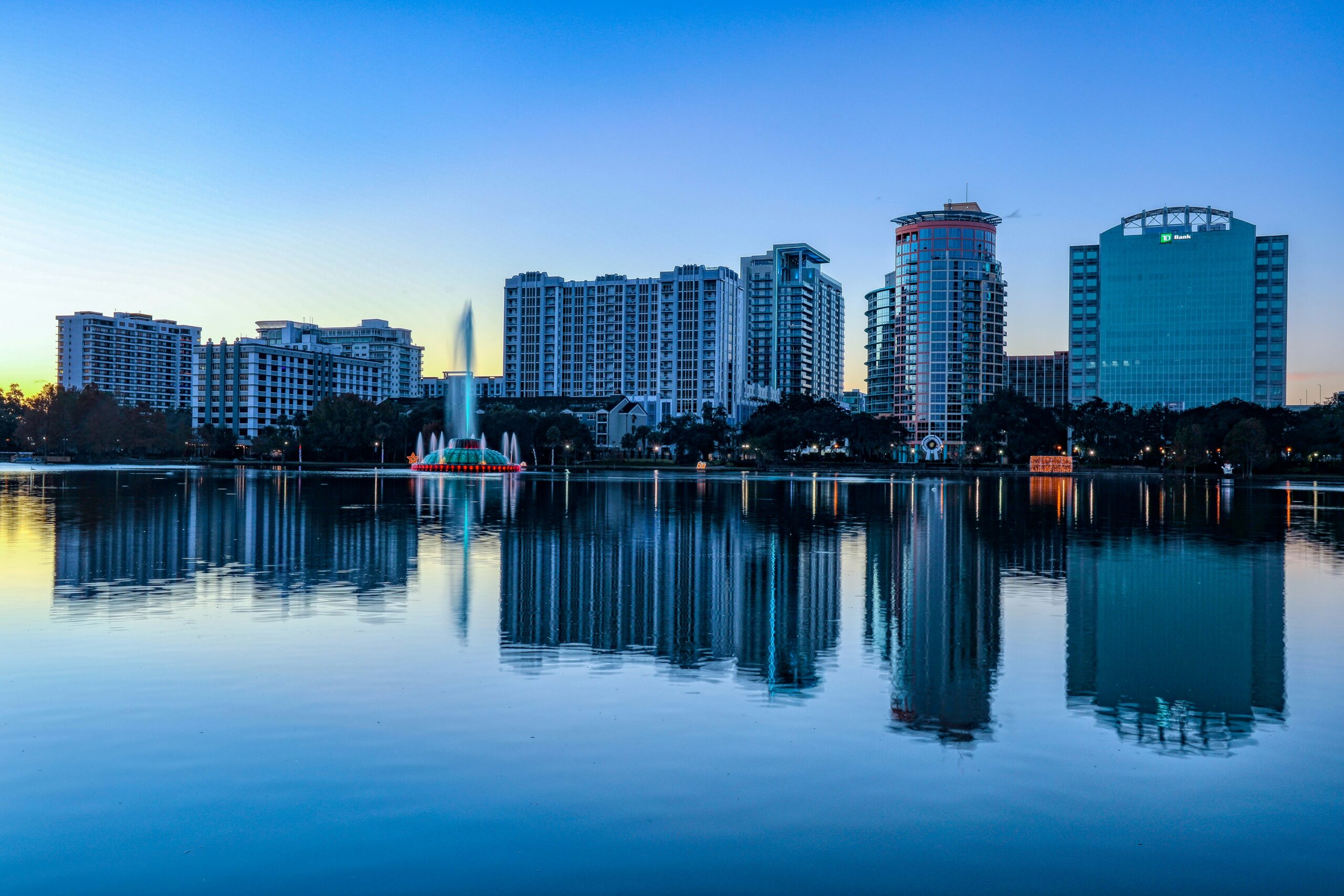
Downtown Orlando is the logistics center for any team event that wants to avoid the tourist corridor. The hotels cluster here, including the Grand Bohemian and the Marriott Downtown. Lake Eola Park sits at the center: a 23-acre urban park with a 0.9-mile walking loop, swan boats, and a fountain that has been an Orlando landmark since 1957. For a team building event, Lake Eola functions as a natural staging area. Groups can start here and fan out into surrounding neighborhoods without needing vehicles.
Thornton Park is immediately east of Lake Eola and reads like a different city from the tourist zone. Brick-lined streets, live oaks draped in Spanish moss, sidewalk restaurants, and a European feel that surprises first-time visitors. For a post-event dinner or a casual group outing, Thornton Park delivers atmosphere that International Drive cannot match. RusTeak handles group dining well and overlooks the lake.
Winter Park is technically its own city, about 15 minutes northeast of downtown, but it functions as Orlando’s upscale neighborhood. Park Avenue is the main corridor: boutiques, restaurants under old oak canopies, and Central Park running the length of the street. For executive teams or client-facing events, Winter Park sets a tone that feels intentional and polished. The Ravenous Pig on Fairbanks Avenue is the restaurant that put Orlando’s independent food scene on the national map, with James Beard nominations and a Michelin Bib Gourmand to prove it. Prato on Park Avenue handles Italian food and group dining with equal competence.
Mills 50 is Orlando’s most culturally diverse neighborhood, centered on Mills Avenue and Colonial Drive northeast of downtown. Vietnamese restaurants, boba shops, murals, and independent businesses define the stretch. Mills 50 is not a traditional corporate event setting, but for a team that wants something unexpected, the neighborhood delivers an energy and authenticity that more polished areas trade away.
The Convention Center District and International Drive is where most out-of-town conference attendees spend their time. The Orange County Convention Center and its connected hotels, including the Hilton Orlando, Hyatt Regency, and Rosen Centre, create a self-contained corridor. If your team is already attending a conference and the event needs to happen within walking distance of the convention center, this district works. For anything else, go downtown.
If you’re narrowing venue options and need specifics on outdoor spaces, the top 5 outdoor team building venues in Orlando FL covers each location in detail: what kind of group it suits, what the permit process looks like, and what to plan for.
Orlando Weather: The Variable That Isn’t Optional
Central Florida weather is predictable in ways that help and in ways that hurt. The patterns are consistent, which means you can plan around them if you take them seriously.
Summer (June through September) is the season that catches planners off guard. Temperatures sit in the low to mid 90s, and humidity pushes the heat index well above 100 on most afternoons. That alone is manageable. What changes the math is the daily thunderstorm cycle. Nearly every summer afternoon between 2 PM and 5 PM, a storm rolls through: heavy rain, lightning, sometimes hail. It builds fast, drops hard, and clears within an hour. Any outdoor event between June and September needs to be scheduled for the morning or built with a covered fallback that can absorb the group on short notice. There is no planning around summer storms. They are a daily certainty.
Fall (late October through November) is the best window. Humidity drops, temperatures settle into the 70s and low 80s, and the afternoon storm cycle breaks. November in Orlando is close to perfect outdoor weather. If you have flexibility on dates, this is the window to target.
Winter (December through February) is mild by national standards, with daytime highs in the 60s and 70s and occasional cold fronts that drop temperatures into the 40s. Orlando does not get ice or snow, but a cold front can arrive fast and make an outdoor event uncomfortable for a group dressed for Florida. Check the forecast the week of your event and include a layering note in your pre-event communication.
Spring (March through May) is strong but has one complication: pollen season. March and April in Central Florida produce some of the highest pollen counts in the country. For outdoor events, this is worth mentioning in your pre-event materials. Aside from that, spring weather is warm, rain is lighter than summer, and the tourist crowds have thinned after spring break.
Getting Around Without Losing Time
MCO to Downtown Orlando: 20 minutes without traffic. 30 to 40 minutes during rush hour, especially on the 408 East-West Expressway or I-4. The stretch of I-4 through downtown Orlando is one of the most congested highway segments in the southeastern United States. Do not underestimate it.
I-4 is the variable. It runs diagonally through Orlando connecting the theme parks in the southwest to downtown and the suburbs to the northeast. Every major destination in the metro touches I-4 at some point. During rush hour, roughly 7 to 9 AM and 4 to 7 PM, it slows to a crawl. Build 15 to 20 minutes of buffer into any schedule that requires moving a group across I-4.
SunRail is a commuter rail that runs north-south through downtown Orlando with 17 stations across four counties. It is useful for getting between downtown and Winter Park without dealing with traffic, but it runs weekdays only and has limited evening service. It is not a reliable option for large group logistics.
Rideshare is dependable in the downtown core and tourist areas. Surge pricing during major conventions and theme park rush hours can be significant. If your event is near the convention center during a large show, pre-arranged shuttle service will save time and budget.
Parking is available and affordable compared to most major metros. Downtown garages run $10 to $20 per day. Surface parking outside the core is plentiful. Valet at hotels works smoothly.
One detail planners consistently miss: the distance between the tourist corridor and downtown Orlando looks short on a map but can take 25 to 35 minutes in traffic. An itinerary that tries to combine International Drive venues with downtown locations in a single day will grind to a halt when the group hits I-4.
Where to Eat After the Event
Orlando’s food scene has outgrown the chain restaurants that dominate the tourist corridor. The independent restaurant culture downtown and in Winter Park is genuinely strong, and out-of-town groups are consistently surprised by the quality.
The Ravenous Pig in Winter Park is the restaurant that earned Orlando serious culinary attention. The gastropub concept is built around seasonal, farm-to-table cooking with a James Beard pedigree. The beer garden works well for corporate groups that want quality without formality. Reserve ahead.
Prato on Park Avenue in Winter Park handles Italian food at a level that reads as intentional, not generic. The space is warm, the pasta is made in house, and the group dining setup works for corporate events that need a polished setting without being stiff.
Kres Chophouse on Church Street downtown occupies a 1930s landmark building and handles the classic steakhouse role well. Prime steaks, seafood, and a wine list built for corporate dinners. The architecture gives the space a character that newer restaurants have to work harder to achieve.
Maxine’s on Shine in the Colonialtown South neighborhood east of Lake Eola is a Michelin-recommended neighborhood restaurant with creative American cooking and a cocktail program that punches well above its weight class. The patio is ideal for smaller groups.
For a lunch option on event day, the East End Market in the Audubon Park neighborhood offers artisanal vendors, counter-service restaurants, and a food hall format that works for a midday break without disrupting the schedule.
What Makes Orlando Different as a Team Building City
Team building in Orlando, FL operates in a city shaped by two forces that most places don’t combine: world-class hospitality infrastructure and a serious corporate sector that exists independently of tourism.
Orlando is one of the top convention cities in the United States. The infrastructure built to support that volume, hotels, event spaces, transportation networks, catering operations, means the logistics of moving a corporate group through a well-designed event are smoother here than in most cities. Things that create friction elsewhere, like venue availability, transportation coordination, and last-minute changes, are standard operating procedure for Orlando’s hospitality ecosystem.
At the same time, Orlando’s corporate base includes defense and simulation companies, healthcare systems, tech firms, and the University of Central Florida, one of the largest universities in the country. Corporate groups here tend to be sharp, curious, and accustomed to structured problem-solving. Competitive formats land well. So do formats that require genuine collaboration and creative thinking.
The city’s layout also creates a natural advantage. Downtown and its surrounding neighborhoods form a compact enough core that teams can move through multiple distinct environments, the lakefront of Lake Eola, the brick streets of Thornton Park, the cultural corridor around Leu Gardens, without needing buses or long transit windows. That variety keeps a team experience from feeling repetitive and gives facilitators real material to work with.
A Few Things That Will Save You
Check the convention calendar before finalizing dates. When the Orange County Convention Center is running a major show, hotel availability tightens across the entire metro, prices spike, and rideshare wait times increase. The OCCC events calendar is worth checking early in your planning process.
Do not schedule outdoor activities between 2 PM and 5 PM in summer. This is not a suggestion. The daily thunderstorm cycle in Central Florida is predictable enough to plan around and severe enough to ruin an event that ignores it.
Keep the geography tight. Orlando spreads out. An event that tries to move a group between downtown, International Drive, and Winter Park in a single day will spend more time in transit than in the experience. Pick one or two zones and commit.
Brief your team on dress code. Orlando’s casual default can clash with a corporate group’s expectations. If your event is in Thornton Park or Winter Park, smart casual reads correctly. If it is at Lake Eola or an outdoor venue, athletic-casual works. Make sure participants know before they pack.
Why Adventure Games Inc. Works in Orlando
The hospitality infrastructure, the compact downtown core, the variety of neighborhoods: Orlando gives a city-wide team experience the kind of raw material that most cities can’t match.
Adventure Games Inc. designs corporate team building experiences built around how Orlando actually operates: teams moving through defined zones, solving challenges under time pressure, making decisions together in environments that change the texture of the experience as the day progresses. The formats are calibrated for corporate groups that want something their team will remember, not something that feels like a theme park add-on.
If you’re planning a team building event in Orlando and want something built for your team specifically, reach out to Adventure Games Inc.