

Houston is massive. That is the first thing every out-of-town planner needs to absorb. The city covers more than 670 square miles with no zoning code, no dominant grid, and no single center that holds everything together. It sprawls in every direction, and the neighborhoods that matter for corporate events are spread across a geography that punishes planners who don’t account for distance.
That’s not a complaint. It’s the operating reality. And the upside is significant: Houston offers more variety in venue types, neighborhoods, and cultural environments than almost any city in the country. The key is knowing which parts of the city to use and which to skip.
This guide is for planners who want specifics. Not a tourism brochure. Not a ranked list. The real details that determine whether your Houston team building event runs clean or falls apart.
Getting In: Two Airports, Two Experiences
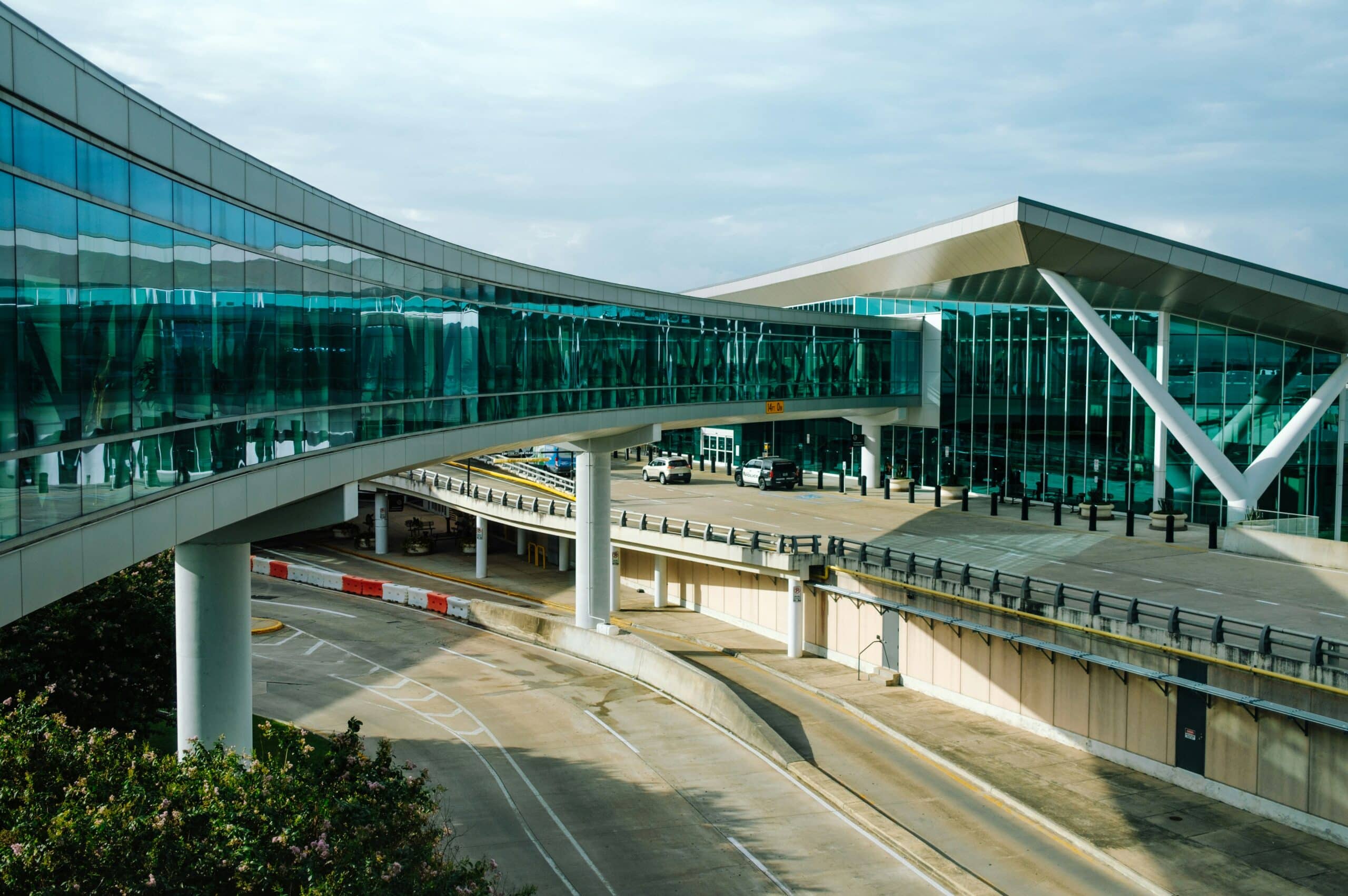
George Bush Intercontinental Airport (IAH) is the primary hub. It handles international traffic and most major domestic carriers. It sits about 23 miles north of downtown, which translates to 30 minutes without traffic and well over an hour during rush. Groups arriving at IAH between 4 and 7 PM on a weekday should budget 60 to 75 minutes to reach downtown. That is not an exaggeration.
William P. Hobby Airport (HOU) is the closer option, roughly 12 miles southeast of downtown. Southwest Airlines dominates here, along with JetBlue and a handful of others. If your team is flying in from multiple domestic cities, check Hobby first. Door-to-door time from gate to a downtown hotel runs 20 to 30 minutes, and the terminal is smaller and faster to navigate.
For groups of 20 or more arriving on different flights, designate a single hotel lobby as the rally point rather than coordinating pickups at the airport. Houston’s airport-to-hotel logistics are smoother when individuals handle their own transport and the group assembles at one location.
The Neighborhoods Worth Knowing
Downtown is the logistical anchor. The George R. Brown Convention Center sits here alongside the two largest convention hotels in the city: the Hilton Americas-Houston and the Marriott Marquis Houston. Discovery Green, a 12-acre public park built directly across from the convention center, functions as the city’s most accessible outdoor gathering point. For groups that need a reliable anchor location in downtown, Discovery Green is the default. It has restrooms, food options, covered pavilions, and a one-acre lake. The Four Seasons Hotel Houston is a few blocks west and handles smaller executive groups well.
Montrose is the neighborhood that changes how visitors think about Houston. West of downtown and south of the Menil Collection, Montrose is walkable by Houston standards, with dense blocks of restaurants, bars, coffee shops, and independent retail. The Pit Room on Richmond Avenue is a Michelin Bib Gourmand barbecue spot with a large patio next door. Montrose has the character and the foot traffic that most of Houston lacks, making it the strongest post-event neighborhood for groups that want something other than a hotel bar.
The Heights sits northwest of downtown and runs along a long stretch of 19th Street and Heights Boulevard. It is the city’s most popular neighborhood for walkable dining and shopping, with a preserved small-town feel that reads as unexpected given the scale of the city around it. Heights Boulevard itself, a tree-lined divided street with a wide esplanade, works well as a gathering point for smaller groups. The restaurant density along White Oak Drive and Yale Street gives planners solid dinner options without needing reservations at a single high-capacity venue.
EaDo (East Downtown) is the neighborhood immediately east of the convention center. It was formally named only in 2008 and has developed rapidly since. The stretch along St. Emanuel Street concentrates breweries, bars, and restaurants within a few walkable blocks. 8th Wonder Brewery anchors the area. For groups staying at the convention center hotels, EaDo is the closest option for a post-event night out that feels meaningfully different from downtown.
The Museum District is a 12-block cluster south of downtown that contains 19 museums, including the Museum of Fine Arts, Houston and the Houston Museum of Natural Science. Hermann Park, a 445-acre green space with gardens, trails, a lake, and the McGovern Centennial Gardens, borders the district. For groups with a half-day event that needs a cultural component before or after, the Museum District delivers without requiring significant travel.
Midtown connects downtown to Montrose and the Museum District. It is Houston’s densest bar and restaurant corridor, centered along Main Street where the METRORail Red Line runs at street level. Midtown is best used for evening plans with a group that wants options within walking distance. It is not a strong daytime venue.
If you need venue-specific guidance for outdoor spaces before picking a neighborhood, the top 5 outdoor team building venues in Houston TX covers each location in detail: what kind of group it suits, permit logistics, and what to plan around.
Weather: The Variable That Overrides Everything
Houston weather is not a footnote in your planning process. It is a structural constraint that determines what kind of event you can run and when.
Summer (June through September) is the defining season. Temperatures sit in the mid-90s daily, but the humidity is what breaks outdoor events. The heat index regularly pushes past 105. Any outdoor activity scheduled between 11 AM and 4 PM during a Houston summer requires shade infrastructure, water stations, and a contingency plan to move indoors. This is not optional. Heat-related illness is a real liability for corporate groups, and the window between comfortable and dangerous closes fast in Houston’s Gulf Coast humidity.
Spring (March through May) is strong but volatile. March and April bring mild temperatures in the 70s, but North Texas and the Gulf Coast share a severe thunderstorm corridor. Spring storms in Houston arrive with heavy rain, lightning, and occasional hail. They pass quickly but can shut down outdoor events with less than an hour of warning. Build a weather contingency into any spring outdoor plan. The National Weather Service Houston/Galveston office is worth checking daily in the week leading up to your event.
Fall (October through November) is the best window. Temperatures drop into the 70s and low 80s. Humidity breaks. The sky clears. If you have any flexibility on dates, this is when to book. November in Houston is as close to perfect outdoor event weather as the city gets.
Winter (December through February) is mild by most standards, averaging in the 50s and 60s, but Houston has one unpredictable winter variable: the rare hard freeze. When an arctic front pushes south, Houston’s infrastructure does not handle it well. Roads ice, pipes freeze, and event logistics unravel quickly. January and February carry the highest risk. Monitor forecasts and have a backup plan that does not require anyone to drive on icy roads.
Getting Around Without Losing Your Group
Houston is a car city. There is no polite way to frame this. The metro area has more than 10,000 lane miles of highway, and most Houstonians orient their daily lives around drive times, not distances. For corporate group logistics, this has direct consequences.
IAH to Downtown: 30 minutes minimum, 60 to 75 during rush hour. The route through I-45 South is the primary path and also one of the most congested corridors in the state.
Hobby to Downtown: 20 to 30 minutes via I-45 North or the Gulf Freeway.
Between Neighborhoods: Distances on a map look manageable. In practice, moving a group from downtown to the Heights (4 miles) can take 20 minutes outside of rush hour and 40 during it. Moving from downtown to the Galleria area (7 miles) can take 15 minutes or an hour depending on when you leave.
METRORail runs three lines through the central city. The Red Line connects downtown to the Museum District, the Texas Medical Center, and NRG Park. It is useful for moving a group between downtown and Hermann Park without vehicles. Beyond that specific route, rail is limited.
Rideshare is reliable in Houston’s inner loop. Outside the loop, wait times and surge pricing increase. For large groups, a charter bus or shuttle service is almost always the better option. Coordinate through the hotel concierge or a local transportation company rather than relying on individual rideshare pickups for 30 or more people.
The one rule: Do not plan an itinerary that requires moving your group between neighborhoods during rush hour (7 to 9 AM or 4 to 7 PM on major corridors). Pick one or two zones and stay there.
Where to Eat When the Event Ends
Houston’s food scene is one of the best in the country. That is not local pride talking. The city earned its first Michelin Guide in 2024, and the diversity of the restaurant landscape reflects a metro area where more than 145 languages are spoken. Your post-event dining options here are significantly stronger than in most cities.
The Pit Room in Montrose is the barbecue option that works for corporate groups. Michelin Bib Gourmand, with a large patio bar next door called The Patio that handles bigger parties. The brisket is Central Texas quality, and the taco program runs deep. If your group wants the quintessential Houston barbecue experience without a long wait, this is the call.
Pappas Bros. Steakhouse is Houston’s answer to the power steakhouse. The downtown location handles corporate groups well, with private dining rooms and a menu built for the occasion. Dry-aged steaks, an extensive wine list, and service that understands what a corporate dinner requires.
The Original Ninfa’s on Navigation in the East End is where Houston fajitas were invented. The building, the history, and the food are all part of the experience. The patio is large, the margaritas are strong, and the group dining setup works smoothly for parties of 20 or more. For out-of-town groups that want a meal that could only happen in Houston, Ninfa’s delivers.
March in Montrose is the right option when the dinner needs to impress at a higher level. Seasonal menu, wine-focused, and a dining room that reads as refined without being stiff. Private dining available for smaller executive groups.
For a quicker lunch option on event day, the Houston Farmers Market at 2520 Airline Drive has food vendors and fresh options that work well for a midday break without pulling the group too far off schedule.
What Makes Houston Different as a Team Building City
Team building in Houston, TX operates inside a corporate culture shaped by three industries: energy, healthcare, and aerospace. Each of these sectors runs on high-stakes problem solving, cross-functional teamwork, and execution under pressure. The corporate groups that come out of Houston’s office towers tend to be direct, results-oriented, and impatient with formats that feel soft or manufactured.
That shapes what works. Houston teams respond well to competitive formats that have clear stakes and measurable outcomes. They engage faster than groups from cities with less pressure-driven corporate cultures. The challenge for a facilitator is not getting Houston teams to participate. It is channeling the intensity into something that produces genuine insight about how the team operates, not just a leaderboard.
Houston’s diversity also matters. This is statistically the most ethnically diverse major city in the United States. Corporate groups here often include people from a wide range of cultural backgrounds, communication styles, and professional norms. Team building formats that rely on a single cultural framework or a narrow definition of “fun” can miss badly. The strongest formats in Houston are the ones flexible enough to let different personality types contribute on their own terms.
The physical geography of the city also creates opportunities. The compact stretch from downtown through EaDo, Midtown, the Museum District, and Montrose gives a city-wide team event genuine variety without requiring long drives. Teams can move through Discovery Green, the street art of EaDo, the cultural institutions of the Museum District, and the restaurant-lined blocks of Montrose in a single half-day format. That kind of environmental range keeps engagement high in a way that a single-venue event cannot match.
A Few Things That Will Save You
Book the hotel block early if OTC, CERA Week, or the Livestock Show and Rodeo are in town. Houston hosts some of the largest trade events in the country, and when they run, downtown hotel inventory tightens fast and rates spike. Check the George R. Brown Convention Center events calendar when setting dates.
Do not fight the heat. Build around it. Any outdoor event between June and September needs morning scheduling, shade, hydration infrastructure, and a clear indoor fallback. Houston locals already know this. Out-of-town planners consistently underestimate it.
Keep the geography tight. The temptation to hit every great neighborhood in one day will grind your schedule. Pick two adjacent areas and commit. Downtown plus EaDo works. Montrose plus the Museum District works. Downtown plus the Galleria does not.
Houston traffic is deceptive. Eight miles can take 50 minutes at the wrong time of day. Rush hour windows are roughly 7 to 9 AM and 4 to 7 PM, but I-45, I-10, US-59, and the 610 Loop can clog outside those windows too. Build 15 to 20 minutes of buffer into any schedule that requires moving a group between areas.
Why Adventure Games Inc. Works in Houston
Houston’s corporate culture, its diversity, its dense inner-loop neighborhoods, and its appetite for competition all create favorable conditions for a city-wide team event. The city gives groups enough environmental variety to keep the experience from feeling repetitive, and the competitive instinct of Houston’s workforce means engagement is rarely a problem.
Adventure Games Inc. designs experiences calibrated for how Houston actually operates: teams moving across a defined zone, solving problems under real time pressure, making decisions together in conditions that reveal how people actually work when stakes are present. The format scales for large corporate groups and lands in a city that takes competition seriously.
If you’re planning a Houston team building event and want something your team talks about long after the debrief, reach out to Adventure Games Inc.