

Not every team needs the same thing. That is the part most team building guides skip over: they give you a list of activities and leave you to figure out which one actually fits your group.
This is a different kind of guide. It is built around one question: what does your team actually need right now? The answer changes what you should book. If you are still working through the broader planning framework first, including airports, neighborhoods, weather, and logistics, this overview of what makes Seattle team building actually work covers the full picture before you get to format selection.
Read the Room Before You Read the Options
The format decision starts with observation, not a brochure. Look at how your team operates today and identify which of these patterns you are seeing.
People are polite but distant. Meetings are efficient but nobody volunteers information beyond their lane. Slack channels are quiet outside of direct requests. Lunch tables split along team lines. This is a connection deficit. It shows up in groups that have grown fast, onboarded remote employees without enough in-person contact, or absorbed people from an acquisition. The team is not dysfunctional. It just has not built the informal trust layer that makes collaboration feel natural rather than transactional.
People are avoiding each other. Decisions stall because nobody wants to be the one to push. Feedback is either absent or delivered through back channels. There is visible tension between departments, between managers and individual contributors, or between legacy employees and newer hires. This is an active friction problem. The team knows each other well enough to have formed opinions, and some of those opinions are getting in the way.
People are good. Maybe too comfortable. The team delivers consistently. Meetings run on time. Performance reviews are positive. But the energy has gone flat. The people who used to push boundaries are coasting. Retention is fine but engagement is drifting. This is a stagnation problem. The team is not broken. It is bored, under-challenged, or beginning to question whether the organization sees them as something worth investing in.
Each of these conditions calls for a fundamentally different kind of experience. Applying the wrong format to the wrong condition is worse than doing nothing, because it confirms whatever negative assumption the team was already carrying.
Formats and Where They Belong
For connection deficits, use city-wide mission formats. The goal is manufactured shared experience in an environment that generates organic conversation. Seattle is built for this. Small groups of four to six people moving through Pioneer Square’s brick alleys, solving time-pressured challenges along the waterfront, regrouping at Gas Works Park or the Olympic Sculpture Park: every transition between neighborhoods creates a new context for interaction. Pike Place Market alone generates more spontaneous conversation in 20 minutes than a conference room icebreaker generates in an hour. The competitive framework gives the experience shape, but the real work is happening in the moments between challenges, when teammates are walking together, making decisions about where to go next, and reacting to a city that keeps offering them new material. For groups with a connection deficit, the city-wide format is the strongest option because it puts people in a real environment and lets the environment do the heavy lifting.
For active friction, use constraint-driven puzzle and collaboration formats. When trust is damaged, the format needs to be tight enough that no one can opt out and structured enough that hierarchy dissolves. Puzzle formats work here because they create a closed system. The group faces a defined problem with limited time and limited information. The only path forward requires contribution from everyone in the room. In that environment, the patterns that poison the team in the office become visible within minutes: the person who dominates every conversation, the person who has stopped contributing because they feel unheard, the two people who operate as a closed loop and exclude everyone else. Making those patterns visible is not comfortable. But it is the prerequisite for changing them. The key in Seattle is that this city’s tech-trained workforce already understands retrospective culture. They are accustomed to examining group dynamics after the fact. Give them a challenge that produces clear behavioral data, and they will engage with the debrief at a level that groups in less analytically oriented cities often do not reach.
For stagnation, elevate the experience itself. A team that already functions well does not need to learn how to collaborate. They need to feel that the organization values them enough to provide something genuinely worth their time. In Seattle, that means the setting and the challenge both need to clear a high bar. A competitive mission that routes through the Olympic Sculpture Park’s waterfront installations, uses the visual drama of the downtown skyline from Kerry Park, and finishes at a venue in Belltown or Capitol Hill: that kind of experience communicates investment. The format still needs real stakes and genuine difficulty. But for this group, the quality of every detail, from challenge design to the post-event dinner reservation, is the message.
For pure morale, go physical and go outside. When the team has no structural problems and the organizer simply wants to reward people and generate energy, physical challenge formats are the right match. Obstacle-style events, competitive field games, and high-energy outdoor formats work well at Seattle’s parks and waterfront spaces from late June through September. Gas Works Park and Magnuson Park both offer the acreage and infrastructure for large groups. Outside the summer window, outdoor physical formats carry too much weather risk. Either move indoors or choose a different format.
What Seattle’s Geography Changes About Format Design
Team building in Seattle, WA operates in a geographic setting that changes how every format plays out. The city is compressed between Puget Sound and Lake Washington with a downtown core that packs five or six distinct neighborhood identities into a radius you can walk in 30 minutes. That compression creates an unusual design asset: a single event can shift its entire visual and atmospheric context multiple times without anyone stepping onto a bus.
Consider the range available on foot from a starting point at Occidental Square in Pioneer Square. Within 15 minutes in any direction, a team can be standing among monumental sculptures overlooking the Sound, navigating the tight vendor corridors of Pike Place Market, crossing the open lawns of the Seattle Center campus beneath the Space Needle, or walking Belltown’s restaurant-lined avenues. Each of those environments changes the energy of the challenge. The brick and cobblestone of Pioneer Square generates a different mood than the art-and-water landscape of the Sculpture Park, which generates a different mood than the organized disorder of the Market. That variety keeps engagement high across a multi-hour event in a way that a single-location venue cannot sustain.
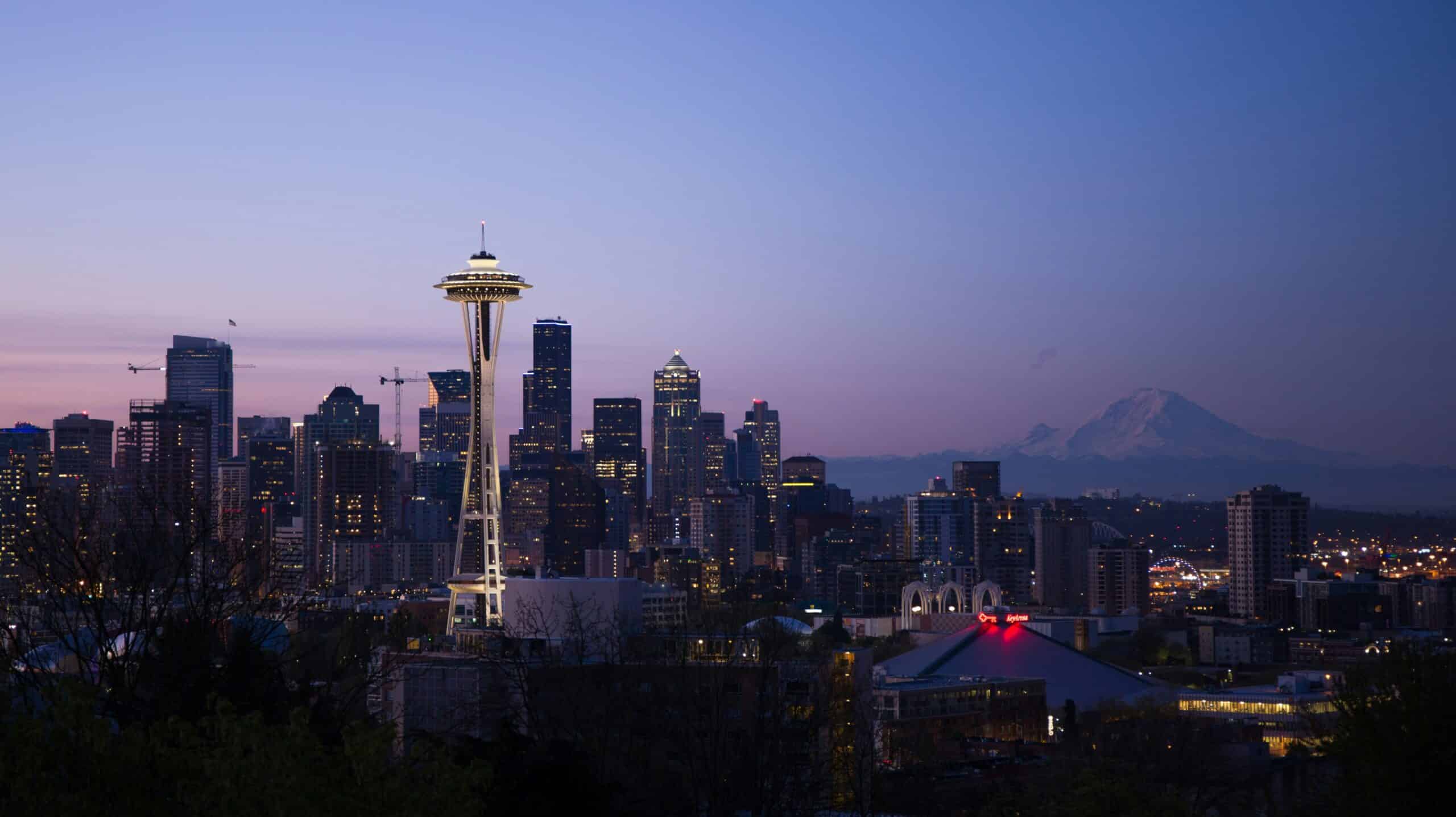
The second geographic factor is visibility. Seattle is one of a handful of American cities where mountains, water, and urban skyline are all visible from the same vantage point. Teams remember what they could see when they solved a problem or made a breakthrough. That visual anchoring turns an event into a memory with a location attached, which is why Seattle groups tend to reference their team building experiences months afterward in ways that indoor-only events do not produce.
The third factor is weather, and it demands honest planning. Late June through September is the reliable outdoor window: dry days, temperatures in the 60s and 70s, and daylight that stretches past 9 PM. Outside that window, Seattle’s persistent drizzle and gray skies make outdoor-dependent formats a gamble. Any event scheduled from October through May needs an indoor backup or a fully indoor format. There is no workaround for this. Plan accordingly.
If you are looking for venue-specific guidance on where to hold an outdoor event, the top outdoor team building venues in Seattle, WA breaks down five locations by what kind of group they suit and what planners need to know.
How Adventure Games Inc. Fits In
Adventure Games Inc. designs challenges that use Seattle’s geography, neighborhoods, and cultural texture as core components of the experience, not as backdrop. The formats are calibrated for the kind of corporate teams this city produces: analytical, collaborative, and difficult to impress with anything that feels mass-produced.
If you know what your team needs and you are ready to figure out what that looks like on the ground in Seattle, start here.