

San Francisco fits an unreasonable amount of city into 49 square miles. That compression is what makes it work for corporate events, and it’s also what trips up planners who treat it like any other West Coast destination. The hills are steep. The fog moves on its own schedule. The neighborhoods change character every six blocks. A group that shows up prepared will have one of the best team building cities in the country at their disposal. A group that wings it will spend half the day regrouping.
This guide covers the operating realities of bringing a corporate team to San Francisco: how to get here, where to put your group, what the weather actually does, how to move people between locations, where to eat afterward, and why the local culture shapes the event in ways that matter.
A Peninsula With Three Sides of Water
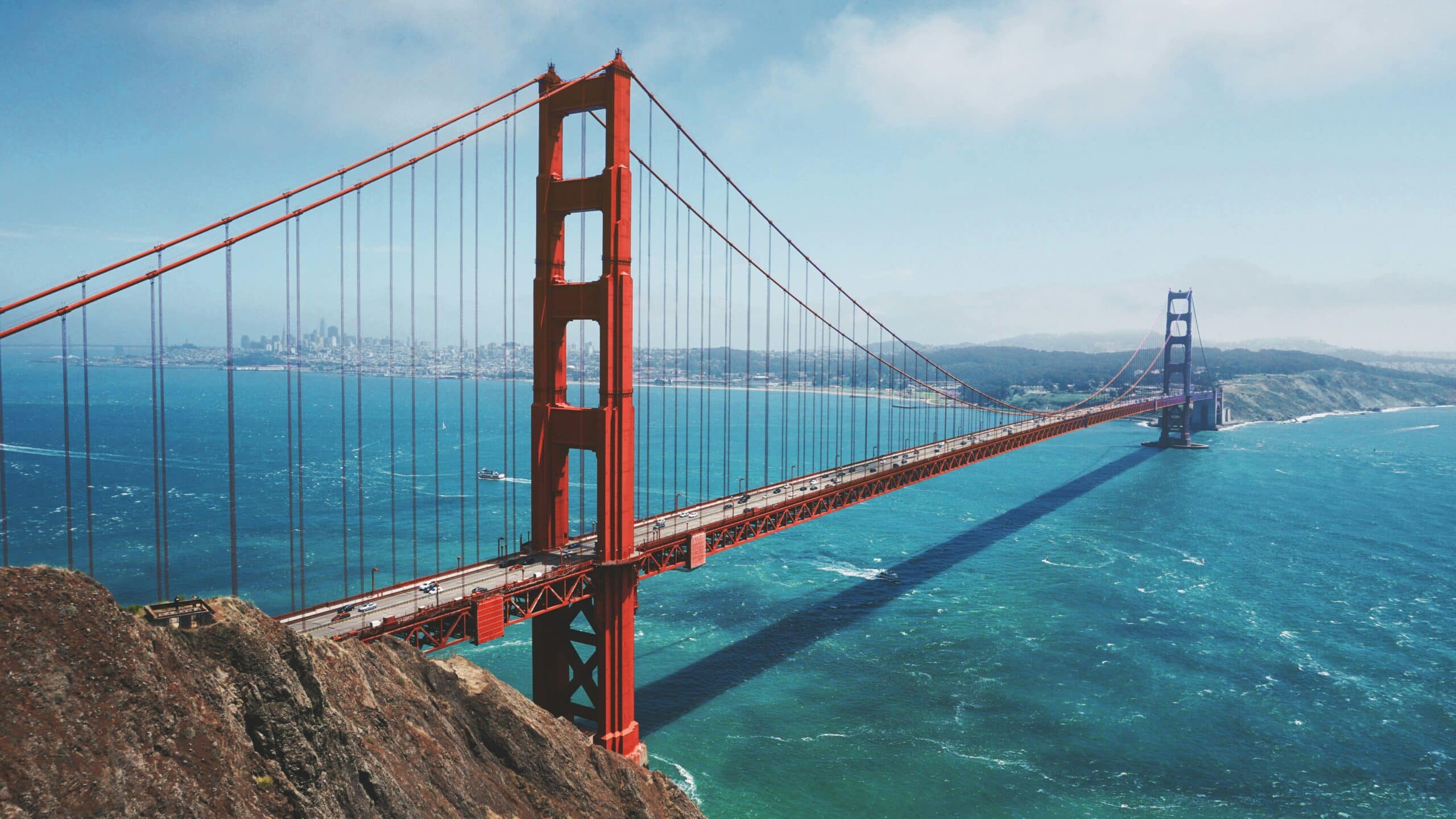
San Francisco sits at the tip of a peninsula, bounded by the Pacific Ocean to the west, the San Francisco Bay to the east, and the Golden Gate strait to the north. That geography creates a city that feels contained in a way most American metros don’t. There is no suburban sprawl bleeding into the next county. The city starts and stops at the water.
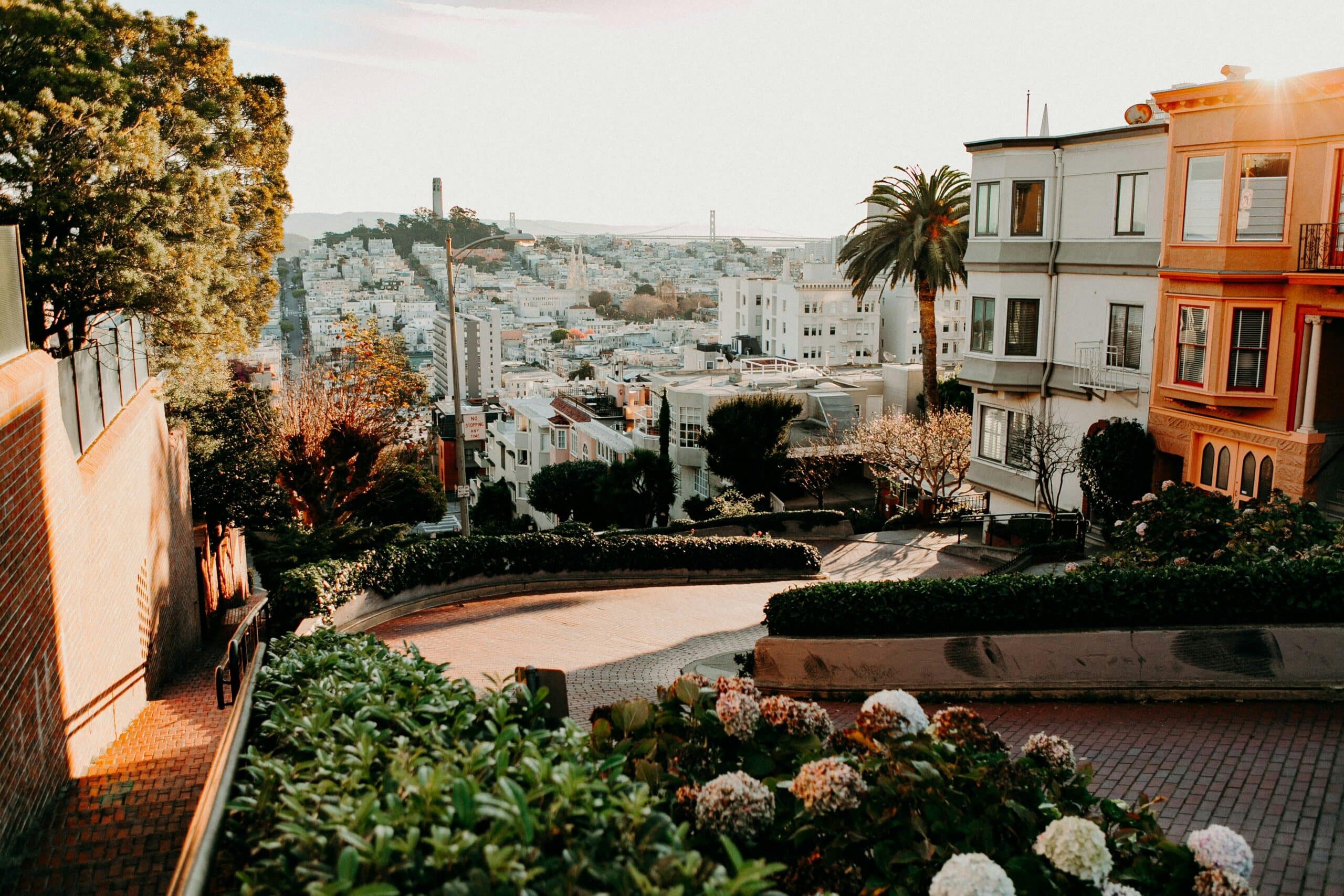
For planners, this means two things. First, nearly everything you need for a corporate event is within a 20-minute drive or a 30-minute transit ride. Second, the terrain between those points is rarely flat. San Francisco has 48 named hills. Some are gentle. Others, like the Filbert Steps on Telegraph Hill or the grade on Jones Street through Nob Hill, will change your group’s energy level in a hurry. Knowing which streets are level and which ones climb matters when you’re routing 50 people between challenge locations.
Two airports serve the region. SFO is the primary hub, about 12 miles south of downtown. BART connects SFO directly to the city center in roughly 25 minutes, making it the most reliable transfer option regardless of traffic. Oakland International (OAK) sits across the bay and handles mostly Southwest and budget carrier flights. BART connects OAK to downtown San Francisco in 35 to 45 minutes with one transfer. If your team is flying in from multiple cities, check both airports. OAK is often cheaper and less congested for domestic flights.
Muni runs the city’s internal transit network: buses, light rail, cable cars, and historic streetcars. For corporate groups, BART handles airport connections and Muni handles short hops within the city. Most groups will default to rideshare for neighborhood-to-neighborhood movement during an event. That works well here. Uber and Lyft coverage is dense in all central areas.
Where the Neighborhoods Land
San Francisco’s neighborhood map reads like a patchwork of small towns compressed into a single zip code. Each one has a distinct identity, and that identity shapes what kind of event component works there.
The Financial District and Union Square sit at the commercial center of the city. Most major hotels cluster here or within walking distance: the Westin St. Francis, Hotel Nikko, the Palace Hotel. The Moscone Center is a short walk south into SoMa. Union Square functions as a clean rally point for groups. It’s central, easy to find, and surrounded by transit connections. This is where most corporate groups will sleep and stage.
The Embarcadero traces the eastern waterfront from Fisherman’s Wharf south past the Bay Bridge. The Ferry Building Marketplace anchors the stretch: artisan food vendors on the ground floor, bay views from every exit, and a Saturday farmers market that locals treat as a weekly ritual. The Embarcadero’s wide promenade and linear layout make it a natural spine for events that involve movement between challenge stations.
North Beach is the city’s Italian quarter, built along Columbus Avenue beneath Telegraph Hill. Cafe culture runs deep here. The bakeries open early, the restaurants stay warm late, and the neighborhood has a social energy that translates well to a post-event dinner with a group that’s earned it. Coit Tower at the top of Telegraph Hill provides one of the best panoramic views in the city.
The Mission District is where San Francisco’s creative engine runs loudest. Murals line Balboa Alley and Clarion Alley. The food ranges from Michelin-recognized to a $5 burrito at La Taqueria that holds its own against anything at ten times the price. Foreign Cinema on Mission Street pairs California-Mediterranean food with films projected in a heated courtyard. The Mission also sits in a microclimate pocket that stays warmer and clearer than the western half of the city, which matters for outdoor event planning.
The Marina and the Presidio occupy the northern waterfront facing the Golden Gate. The Presidio is a 1,491-acre national park site with trails, event lawns, Crissy Field on the water, and direct bridge views. It is the single strongest outdoor event venue zone in the city. The Marina neighborhood next door provides polished restaurants and flat, walkable streets along the waterfront.
SoMa (South of Market) holds the city’s tech and convention infrastructure. Moscone Center is here, along with Yerba Buena Gardens and the San Francisco Museum of Modern Art. SoMa is functional rather than charming, but its proximity to downtown hotels makes it a reliable default for groups that need everything within walking distance.
Hayes Valley runs west of City Hall along Hayes Street. It’s compact, photogenic, and lined with wine bars, boutiques, and small restaurants that handle group dining well. For a smaller executive group that wants quality without noise, Hayes Valley is the right zone.
If you’re evaluating specific outdoor locations for your event, the top 5 outdoor team building venues in San Francisco, CA covers each site in detail: what kind of group it fits, how permits work, and what conditions to expect.
Fog, Microclimates, and the Calendar
San Francisco’s weather operates on rules that contradict everything most visitors expect about California. Understanding those rules is the difference between a smooth outdoor event and one that sends your team scrambling for jackets they didn’t bring.
Summer is fog season. June, July, and August bring the heaviest marine layer. The fog pours through the Golden Gate most afternoons and can drop temperatures 15 to 20 degrees within an hour. A morning that starts at 65 and clear will frequently become 50 and gray by 2 PM on the western side of the city. This is not an occasional weather event. It is the baseline summer pattern.
The saving variable is microclimates. Twin Peaks acts as a fog barrier, and the neighborhoods east of it, the Mission, SoMa, the Embarcadero, routinely stay sunny when the Sunset, Richmond, and Ocean Beach are invisible. For summer outdoor events, site your activity east of Twin Peaks and schedule for the morning.
September and October are the best months. San Francisco’s warmest, clearest weather arrives in early fall. Temperatures reach the 70s, fog pulls back, and the city operates at its visual peak. If you have any flexibility on dates, this window is the answer.
Winter (December through February) brings the rainy season. Storms roll in from the Pacific, and while temperatures rarely drop below the mid-40s, rain can persist for days. Outdoor events need covered backup plans or should move indoors entirely.
Spring (March through May) improves as it goes. March can still be wet. April and May trend clearer, but late May sees the fog cycle start again. Spring mornings are generally reliable for outdoor formats. Afternoons are unpredictable.
The National Weather Service Bay Area office is worth bookmarking. San Francisco microclimates mean a city-wide forecast can be wrong for your specific venue. Check conditions by neighborhood when the event is within 48 hours.
One absolute rule: every pre-event email must tell people to dress in layers. People arriving from warm climates will not believe that 55 degrees with ocean wind requires a real jacket. Tell them. Then tell them again.
Moving People Between Locations
SFO to Downtown: 25 minutes via BART. No transfers, no traffic variables. This is the default recommendation for every arriving team member. Rideshare runs 20 to 40 minutes depending on the time of day, and rush hour on 101 or 280 can push it past an hour.
OAK to Downtown: 35 to 45 minutes via BART with one connection. Rideshare takes roughly the same but adds Bay Bridge traffic during commute hours. BART is the more predictable option.
Between Neighborhoods: San Francisco’s compact size means most trips between central neighborhoods take 10 to 20 minutes by car. Rush hour distorts this on certain corridors, particularly Market Street, Van Ness Avenue, and the approaches to both bridges. Build 10 to 15 minutes of buffer into any event schedule that requires moving a group from one zone to another.
Rideshare: Uber and Lyft are deeply embedded in San Francisco culture. Coverage is strong in all central neighborhoods. Surge pricing during rush hour (7 to 9 AM, 4 to 7 PM) and near Chase Center or Oracle Park on event nights can be significant.
Parking: Avoid it. Street parking is scarce, aggressively enforced, and time-limited everywhere in the city. Garages downtown run $30 to $60 per day. If your group has rental cars, park at the hotel and use rideshare for the event. Do not build a schedule that depends on finding parking in North Beach or the Mission.
The hill factor. Any walking route through Nob Hill, Russian Hill, Pacific Heights, or Telegraph Hill involves serious elevation change. What looks like a short flat walk on a map may be a 200-foot climb. Scout the route before the event or use mapping tools that show elevation profiles. Route your group on level streets where possible, and communicate any steep sections in advance. Comfortable shoes should be in the pre-event email right next to the layers reminder.
Feeding the Group Afterward
San Francisco’s food scene operates at a level that surprises people who haven’t been here before. The city’s per-capita concentration of quality restaurants is among the highest in the country, and the range runs from world-class fine dining to a dim sum spot in the Richmond that costs $15 a person and leaves nobody disappointed.
Hog Island Oyster Co. in the Ferry Building sits directly on the water with views across the bay. The oysters come from the company’s own farm in Tomales Bay. The raw bar handles groups naturally, and the setting is the kind of thing people photograph and send to coworkers who couldn’t make the trip. No reservations, so time your arrival to avoid the weekend peak.
Foreign Cinema in the Mission is the corporate dinner option that doesn’t feel like a corporate dinner. The heated courtyard with films projected on the wall creates an atmosphere nobody in your group will have experienced before. The California-Mediterranean menu has range, and the private dining options accommodate larger groups. Reserve well in advance.
Kokkari Estiatorio on Jackson Street in the Financial District is a refined Greek restaurant built around a wood-fired hearth. The interior is warm, the wine list is serious, and the service calibrates well to a corporate audience. This is the reliable choice when the dinner needs to impress a client or senior leadership.
Tartine Manufactory in the Mission offers the larger sit-down version of the iconic Tartine Bakery. Bright, industrial, communal tables, and California cooking at its most direct. This works for groups that want quality without formality.
Waterbar on the Embarcadero sits on the waterfront with Bay Bridge views. The seafood menu and raw bar are strong, and the private dining room is built for corporate groups. When the dinner needs a view, this is the answer.
For a midday break during the event itself, the Ferry Building Marketplace lets your group scatter among multiple vendors, eat on their own schedule, and regroup in 30 minutes. It’s the fastest and highest-quality lunch option in the city for a corporate group that doesn’t want to sit down at a single restaurant.
How the Bay Area Mindset Changes the Event
Team building in San Francisco, CA lands differently than it does in most American cities because the workforce here is different. The tech industry, biotech, venture capital, and the creative economy have spent decades selecting for people who question default answers, resist scripted processes, and solve problems laterally. That orientation isn’t limited to engineers. It runs through the nonprofit sector, the restaurant world, the design community. It shapes how corporate groups in this city respond to team events.
The practical implication: formats that rely on a facilitator telling the group exactly what to do, step by step, lose this audience fast. What works is giving teams a clear objective, hard constraints, a time limit, and the freedom to figure out their own approach. San Francisco groups engage when the challenge feels like a real problem worth solving, not a manufactured activity. The city’s compact geography and its density of neighborhoods with different energies give a well-designed event the variety to keep that engagement running for a full half-day.
Where Plans Tend to Break Down
Underestimating the fog. Planners who book an outdoor afternoon event in July based on the word “California” learn this lesson the hard way. Any outdoor component between June and August should be sited east of Twin Peaks and scheduled before noon, or have a covered indoor backup.
Ignoring the hills. A route that takes 40 people up the Filbert Steps or across the grade on Broadway through Russian Hill will slow your schedule and tire out half the group before the event starts. Scout for level routes or flag steep sections clearly in advance.
Booking during a Moscone convention. When the Moscone Center runs a major event, downtown hotel availability tightens and prices spike. Check the convention calendar before locking your dates.
Overpacking the geography. An itinerary that tries to hit the Presidio, the Mission, Chinatown, and SoMa in one event sounds efficient and falls apart when you factor in hills, transit gaps, and the speed at which a group of 40 people actually moves. Choose two or three zones and stay deep in them.
Forgetting the layers email. Send it twice. People will still show up in shorts. But the ones who listened will be grateful, and that starts the day on the right note.
Adventure Games Inc. in San Francisco
The neighborhood density, the cultural energy, the visual variety block to block: San Francisco gives a city-wide team experience raw material that most cities cannot offer. Adventure Games Inc. designs formats built around that material: teams competing across defined zones, solving challenges under real time pressure, making decisions together in environments that shift as the day moves forward.
If you’re planning a corporate team event in San Francisco and want something the group will carry back to the office, reach out to Adventure Games Inc.