

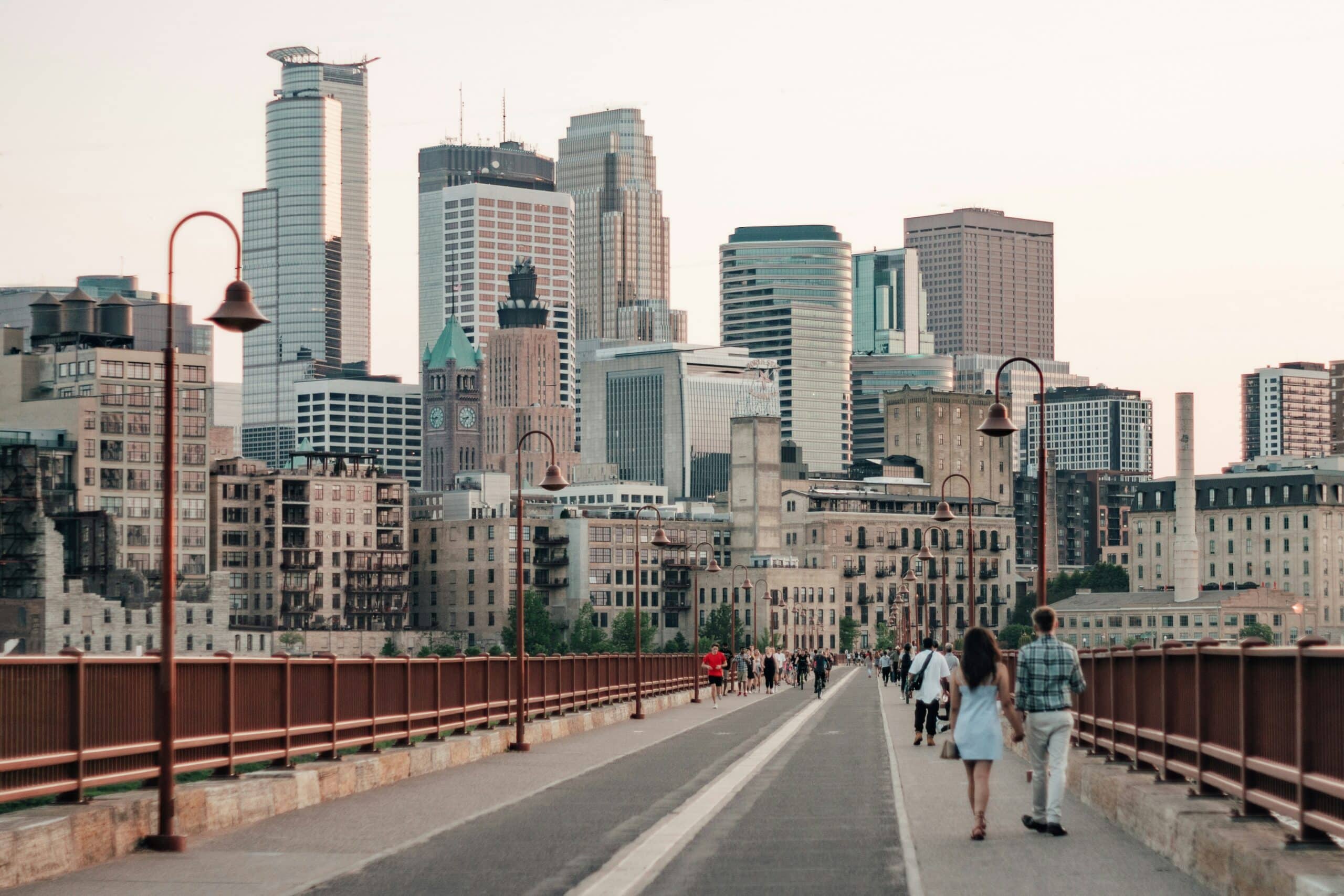
Minneapolis is a city that operates on understatement. The skyline is modest compared to Chicago or Dallas, the people are polite to a fault, and the winters are brutal enough that anyone still living here has made a deliberate choice to stay. That last part matters for corporate event planners. The people who build careers in Minneapolis are resilient, resourceful, and quietly competitive. Understanding that changes how you design a team building event here.
This guide is written for planners who need specifics, not a tourism brochure.
The Airport and Getting Downtown
Minneapolis-St. Paul International Airport sits about 10 miles south of downtown and consistently ranks among the best large airports in the country. Two terminals serve the metro: Terminal 1 (Lindbergh) is the larger hub, anchored by Delta Air Lines. Terminal 2 (Humphrey) handles Sun Country and a handful of other carriers. The terminals are connected by free light rail service, but they sit three miles apart by road, so confirm which terminal your team is flying into before arranging ground transportation.
The Metro Transit Blue Line runs directly from both terminals to downtown Minneapolis. The ride takes roughly 25 minutes to the Nicollet Mall or Government Plaza stations and costs a few dollars. For a corporate group, this is genuinely useful: it works, it is clean, and it runs frequently. Rideshare from MSP to downtown runs 15 to 25 minutes depending on traffic and typically costs $20 to $30.
Rush hour on I-35W and I-94 through the downtown corridor gets congested between 7 and 9 AM and 3:30 to 6:30 PM. The metro sprawls, and commuters from the southern and western suburbs funnel through a small number of highway interchanges. Build buffer time into any schedule that requires moving a group during those windows.
The Neighborhoods Worth Knowing
Downtown is where most corporate groups will be based. The hotel inventory is strong: the Marquette Hotel, the Hyatt Regency Minneapolis, and the Four Seasons Minneapolis all handle corporate groups well. Downtown Minneapolis is connected by the Skyway system, 11 miles of enclosed, climate-controlled pedestrian walkways linking hotels, offices, and restaurants above street level. In January, the Skyway is not a novelty. It is survival infrastructure. For event logistics, it means your group can move between venues without stepping outside, which changes the planning equation entirely during cold months.
The North Loop is the neighborhood most planners should know. Sitting northwest of downtown along Washington Avenue, this former warehouse district has become the city’s most concentrated restaurant and nightlife zone. Spoon and Stable, Bar La Grassa, and Bellecour are all here. The converted brick warehouses give the neighborhood a visual character that feels earned rather than manufactured. The Hewing Hotel, a boutique property built inside a former farm implement warehouse, sits at the center of it. Target Field is on the North Loop’s eastern edge, and game-day traffic can reshape parking and restaurant availability during baseball season.
Northeast Minneapolis is the city’s arts district, locally known as “Nordeast.” Central Avenue is the main corridor, lined with breweries, galleries, studios, and restaurants that reflect the neighborhood’s history as an immigrant community. The Northrup King Building and Solar Arts Building are multi-story studio complexes where hundreds of working artists maintain space. Hai Hai, a Southeast Asian street food restaurant with an excellent patio, and Kramarczuk’s, a third-generation Eastern European deli, capture the neighborhood’s range. For a post-event dinner that feels authentically Minneapolis, Northeast is the call.
The Mill District sits along the Mississippi River on the east side of downtown. This area holds the city’s industrial origin story: the flour mills that made Minneapolis an economic powerhouse in the 19th century. Mill Ruins Park, the Stone Arch Bridge, and Gold Medal Park are all here, along with the Guthrie Theater. The district is compact and walkable, with strong visual identity. It works well as a staging area or rally point for city-wide team events.
Uptown sits south of downtown around the intersection of Hennepin Avenue and Lake Street. It leans younger and more casual than the North Loop or Mill District. The Chain of Lakes (Bde Maka Ska, Lake Harriet, Lake of the Isles) is accessible from here, and the restaurant scene skews eclectic. Uptown is best suited for groups that want a less corporate feel.
If you’re locking in an outdoor venue before settling on a broader event format, the top 5 outdoor team building venues in Minneapolis, MN breaks down what each space suits and what planners need to know before booking.
The Weather Reality
Minneapolis weather is the single biggest variable in event planning. Getting it wrong does not mean mild discomfort. It means a failed event.
Winter (December through February) is serious. Average highs in January hover around 25 degrees Fahrenheit, and subzero lows are routine. Wind chill can push the effective temperature well below minus 20. Outdoor events are not viable during this window. The Skyway system and indoor venue infrastructure exist specifically because the city has adapted to this reality. Winter events work, but they must be designed around indoor venues with contingency for travel disruptions. Flights cancel. Roads ice over. Budget an extra day of flexibility into any winter schedule.
Spring (March through May) is unpredictable. March can feel like winter. May can feel like summer. The transition is not gradual. Plan for wide temperature swings and the possibility of late-season snow through mid-April. Late May is generally safe for outdoor formats but check extended forecasts closely.
Summer (June through August) is when Minneapolis becomes a different city entirely. Average highs sit in the low 80s, daylight stretches past 9 PM, and the population migrates outdoors. The lakes fill with kayaks and paddleboards. Patios open everywhere. This is prime season for outdoor team building, and the city’s park infrastructure supports it exceptionally well. Humidity is moderate by Midwest standards but can spike in July and August. Morning scheduling avoids the worst of it.
Fall (September through October) is the window. Temperatures settle into the 50s and 60s, the tree canopy across the city turns, and the energy level is high without the summer crowds. Late September through mid-October is the best stretch for outdoor corporate events in Minneapolis. The National Weather Service Twin Cities forecast page is worth bookmarking for date-sensitive planning.
Getting Around Without Losing People
Minneapolis has better public transit than most Midwestern cities. The Blue Line and Green Line light rail cover useful routes, and the bus system fills gaps. For most corporate groups, however, rideshare and hotel shuttles will be the primary mode.
Parking downtown is manageable. Ramp parking runs $10 to $25 per day depending on proximity. Street metering is straightforward. The North Loop can get tight on weekends and game days, but during business hours, parking is rarely a problem.
The Skyway system deserves its own mention for winter logistics. It connects most major downtown hotels and office buildings without requiring anyone to step outside. For a team event running between downtown venues in January, routing through the Skyway is not optional. It is the plan.
One note on geography: Minneapolis is more compact than it looks on a map. Downtown to the North Loop is a 10-minute walk. Downtown to Northeast is a 5-minute rideshare. The Mill District is adjacent to downtown. This compression is useful for event planning because it means a city-wide format here does not require long transit legs between locations.
Where to Eat When the Event Ends
The Minneapolis restaurant scene has earned national recognition without the hype cycle that cities like Nashville or Austin tend to generate. The quality is real and the pretension is low.
Spoon and Stable in the North Loop is the restaurant most likely to impress a corporate group. James Beard Award-winning chef Gavin Kaysen runs a French-influenced seasonal menu in a converted 1906 horse stable. The space handles private dining well, and the bar program is strong. Reservations book out at standard dinner times, so plan ahead.
Bar La Grassa sits a few blocks away on Washington Avenue and is the city’s definitive Italian restaurant. The pasta is handmade, the bruschetta is iconic, and the private dining room seats up to 32. For a corporate group that wants to share food and keep the energy high, this is the move.
Manny’s Steakhouse at the Marquette Hotel downtown is the big-occasion steakhouse. It handles expense-account dining with the seriousness that format requires. The portions are enormous.
Hai Hai in Northeast offers Southeast Asian street food in a space that feels alive: colorful interiors, a sprawling patio, and a cocktail menu built around tropical flavors. It is a strong option for groups that want something less formal and more memorable.
Mara at the Four Seasons is Gavin Kaysen’s Mediterranean concept. The dining room is sun-filled and warm, the menu spans coastal influences from 22 countries, and the service matches the hotel’s standard. For executive groups or client dinners, Mara is the polished option.
For a quick lunch on event day, the Graze Food Hall in the North Loop offers multiple food concepts under one roof with enough variety to accommodate a mixed group.