

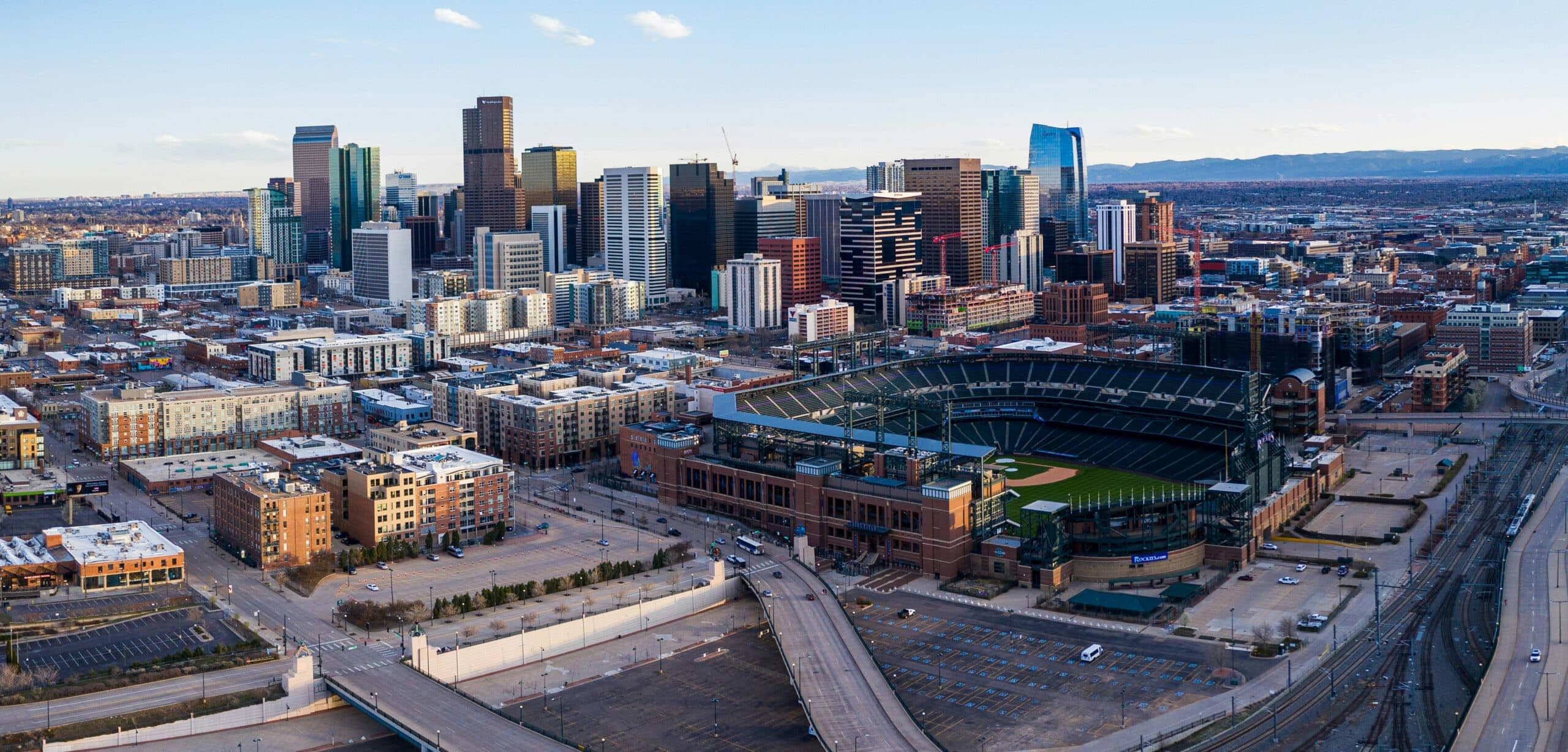
Denver sits a mile above sea level, and the city operates like it. The pace is faster than people expect from a Mountain West city. The corporate footprint is deep, the outdoor culture is aggressive, and the gap between a well-planned team building event and a logistical mess is narrower here than in most cities because of variables that don’t exist at lower elevations.
This guide is built for the planner who needs specifics. Not a list of attractions. Not a pitch. The actual information you need to move a corporate group through Denver without losing time, energy, or people to altitude sickness.
The Airport Situation
Denver International Airport is 25 miles northeast of downtown. That distance is the first thing that surprises planners. DEN is one of the largest airports in North America by land area, and the drive from baggage claim to a downtown hotel takes 35 to 45 minutes depending on traffic. During afternoon rush on I-70 or Pena Boulevard, that number climbs.
The RTD A Line commuter rail connects the airport to Denver Union Station in 37 minutes. Trains run every 15 minutes during peak hours. For corporate groups flying in from multiple cities, the A Line is often more reliable than rideshare because it removes the traffic variable entirely. Union Station sits at the center of downtown, so your team steps off the train and into the city’s logistics hub.
DEN is a major hub for United Airlines, Southwest Airlines, and Frontier Airlines. Direct flights reach most major U.S. cities. If your group is coming from the coasts, nonstop options are plentiful. If they’re coming from smaller markets, connections through DEN are common and the airport handles volume well despite ongoing terminal renovations.
One detail worth flagging: the Jeppesen Terminal is under construction through at least mid-2027. Security checkpoints have moved, airline counters have shifted, and the layout is less intuitive than it was two years ago. Tell your team to arrive two hours early and to check their airline’s current terminal position before heading to the airport.
Altitude Is Not a Footnote
Denver sits at 5,280 feet. That number matters more than most planners realize.
People arriving from sea level will feel it within the first few hours: faster heart rate, quicker fatigue, headaches if they’re not hydrating. Alcohol hits harder at altitude. Physical exertion feels different. A team that flew in from Miami at 8 AM and heads straight into a high-energy outdoor event by noon is going to underperform, and some members may feel genuinely unwell.
The fix is straightforward. Schedule arrival for the day before the event. Push water aggressively in all pre-event communications. If the event involves physical activity, front-load it with a lower intensity warm-up rather than jumping to full speed. Most people acclimate within 24 hours if they stay hydrated. But ignoring altitude in the planning phase is the single most common mistake out-of-state planners make in Denver.
The Neighborhoods That Matter
Downtown and LoDo (Lower Downtown) form the logistics core. Denver Union Station anchors LoDo and functions as much more than a transit hub: the Great Hall has restaurants, bars, and a boutique hotel under one roof. The Colorado Convention Center is a few blocks south. Hotels are dense here, including the Hyatt Regency, the Kimpton Hotel Monaco, and the Crawford. The 16th Street Mall runs through the center of downtown as a pedestrian corridor with a free shuttle bus. For a corporate group, downtown is where you sleep, stage, and regroup.
RiNo (River North Art District) is where Denver’s creative economy lives. Converted warehouses now house breweries, galleries, James Beard-nominated restaurants, and co-working spaces. The murals change monthly. The energy is industrial and authentic in a way that manufactured entertainment districts never achieve. For team events, RiNo provides a completely different environment from the polished downtown core, and the contrast is useful. A group that starts in LoDo and moves into RiNo for challenges or dinner gets two genuinely different versions of Denver in a single day.
LoHi (Lower Highlands) sits across the Platte River from downtown and is accessible by pedestrian bridge. The restaurant density per block rivals any neighborhood in the city. Linger, El Five, and a string of smaller spots line the main corridors. LoHi is the right call for a post-event dinner where the setting needs to feel elevated without being stiff.
Cherry Creek is Denver’s upscale commercial district, about 15 minutes southeast of downtown. It’s polished, quiet, and handles executive retreats well. The neighborhood has high-end dining and a walkable retail core. For groups where the audience is senior leadership, Cherry Creek reads differently than downtown and that’s the point.
Capitol Hill sits just east of downtown and is the city’s densest residential neighborhood. It’s not a typical corporate event zone, but it borders the Denver Art Museum, the Clyfford Still Museum, and Civic Center Park. For events that want a cultural component, Capitol Hill provides the infrastructure.
If you’re narrowing down venue options before you’ve locked in a neighborhood, the top 5 outdoor team building venues in Denver CO covers specific parks and public spaces with permit details and logistics for each.
Denver Weather: The Planning Variable Nobody Gets Right
Denver gets 300 days of sunshine per year. That statistic is real. It’s also misleading.
The sun is intense at altitude, and the weather shifts fast. A morning that starts at 55 degrees and sunny can produce a thunderstorm by 2 PM and be clear again by 4. This is not an exaggeration. It’s the pattern from May through September, and planners who build a full outdoor day without a contingency plan will get caught.
Spring (March through May) is unpredictable. March is actually Denver’s snowiest month. April fluctuates between warm afternoons and surprise freezing mornings. May is when the weather starts cooperating, but afternoon thunderstorms become a daily possibility. If you’re booking a spring event, May is the earliest reliable window, and you still need an indoor backup.
Summer (June through August) brings highs in the mid-80s to low 90s with low humidity. The dry heat is more manageable than what corporate groups experience in Houston or Dallas, but the sun at 5,280 feet is significantly stronger. Sunburn happens fast. Hydration matters double at altitude in summer heat. Afternoon thunderstorms roll through almost daily between 2 and 5 PM, dropping heavy rain for 30 to 60 minutes before clearing. Schedule outdoor activities for the morning.
Fall (September through October) is the window. Temperatures sit in the 60s and 70s, the sky is deep blue, the aspens in the foothills turn gold, and the afternoon storm pattern tapers off. If you have any flexibility on dates, book September or October. The city is at its best and the event logistics are at their simplest.
Winter (November through February) is milder than people expect. Daytime highs in December and January often reach the 40s, and the sun makes it feel warmer. But Denver winter has a volatility problem: a 60-degree Tuesday can be followed by a blizzard on Wednesday. The city handles snow well and roads clear quickly, but flight cancellations during winter storms are real. If your group is flying in, have a weather contingency and don’t schedule tight connections.
The National Weather Service Denver/Boulder forecast office is worth bookmarking if you’re coordinating a date-sensitive event.
Getting Around Without Losing the Group
Airport to downtown: 35 to 45 minutes by car, 37 minutes by A Line rail. Uber and Lyft are reliable at DEN but surge pricing during peak hours and ski season is significant. For groups larger than 10, a shuttle or charter bus from the airport is more predictable.
Downtown movement: The 16th Street Mall Free MallRide runs the length of the pedestrian corridor and connects Union Station to Civic Center Station. RTD light rail serves multiple lines through downtown with stops at the convention center, sports venues, and Union Station. For a group moving between downtown and RiNo, rideshare is the fastest option. The distance is short but the walk crosses industrial stretches that aren’t pedestrian-friendly for a group in business casual.
Parking: Denver has ample garage and surface lot parking by major metro standards. Downtown garages are affordable compared to coastal cities. If your event involves moving a group by car between neighborhoods, parking is rarely the bottleneck.
The distance trap: Denver’s neighborhoods look close on a map. They are close by mileage. But I-25 and I-70 at rush hour, roughly 7 to 9 AM and 3:30 to 6:30 PM, can turn a 10-minute drive into 35. Build buffer into any schedule that moves people between zones during those windows.
Where to Eat When the Event Ends
Denver’s restaurant scene has matured significantly in the last decade. The city now has Michelin-recognized restaurants, a James Beard-deep bench of chefs, and a craft beer infrastructure that is among the strongest in the country. Corporate groups have real options here.
Tavernetta at Union Station is the right call for a polished Italian dinner that impresses without feeling overdone. Handmade pastas, an Italian-focused wine list, and a patio that sits on the old train platform. Michelin Bib Gourmand recognition. Seats groups well with advance planning.
Guard and Grace on California Street is a modern steakhouse with one of the largest patios in downtown Denver. Private dining areas accommodate corporate groups from 10 to 70. The food is serious, the service matches, and the downtown location makes logistics simple.
Work & Class in RiNo is the opposite end of the spectrum: Latin-American and Southern comfort food served family-style in a converted shipping container space. The energy is loud and the food is exceptional. Six-time James Beard nominee Chef Dana Rodriguez built something here that corporate groups respond to because it doesn’t feel like a corporate dinner. No reservations accepted, so plan accordingly.
Rioja on Larimer Square is Chef Jennifer Jasinski’s flagship and one of Denver’s most recognized restaurants. Mediterranean-influenced, seasonal, and consistently excellent. The dining room handles groups well and the Larimer Square location puts your team in the most photogenic block in the city.
For a casual lunch option on event day, the food hall at Denver Union Station itself has quality quick-service options that keep a group fueled without disrupting the schedule.
What Makes Denver Different as a Team Building City
Team building in Denver, CO operates inside a specific cultural framework. Denver was built by mining, ranching, and the railroad, then rebuilt by aerospace, telecom, and tech. The corporate population skews younger than most major metros, draws heavily from the coasts, and chose Denver deliberately for the quality of life. People here work hard and then go climb a fourteener on Saturday. The fitness culture is real, the outdoor orientation is embedded, and corporate groups in Denver tend to arrive with higher baseline energy for physical and competitive formats than groups in many other cities.
That energy is an asset if you design around it. Competitive formats land well because Denver professionals are conditioned to perform under pressure and then talk about it afterward. City-wide team events that move groups through LoDo, RiNo, and Confluence Park give teams physical variety and genuine decision-making under time constraints. The neighborhoods provide enough visual and cultural contrast that the experience builds as the day progresses rather than repeating.
The altitude is the variable that makes Denver team events distinct from any other city on the circuit. It changes how you schedule, how you hydrate, and how you pace. A facilitator who has run events in Denver before knows how to build the day around it. A facilitator who hasn’t will learn the hard way.
A Few Things That Will Save You
Tell your team about altitude before they arrive. Not in a liability disclaimer. In practical terms: drink water on the plane, go easy on alcohol the first night, and don’t skip meals. The groups that arrive prepared perform better on event day.
Don’t fight the afternoon storm pattern. If your event is between May and September, put outdoor activities in the morning and have an indoor option ready for after 2 PM. This isn’t pessimism. It’s how Denver works.
Check the convention calendar. The Colorado Convention Center hosts over 300 events per year. When a large show is in town, hotel rates spike and downtown restaurant availability tightens. Check the calendar when setting dates.
Stay compact. Denver rewards planners who pick one or two neighborhoods and go deep. An itinerary that bounces between downtown, RiNo, Cherry Creek, and LoHi in a single day will spend more time in transit than in the experience. LoDo plus RiNo covers enormous ground for a team event and the two neighborhoods are adjacent.
Why Adventure Games Inc. Works in Denver
The altitude, the competitive culture, the neighborhood variety, and the outdoor infrastructure: Denver gives a city-wide team experience raw material that most cities can’t match. The groups here are ready to compete. The city provides environments that shift the texture of the day as teams move through different districts. The weather cooperates more often than not, and when it doesn’t, the indoor venue infrastructure is strong enough to absorb the pivot.
Adventure Games Inc. designs experiences that fit how Denver actually operates: teams moving through a defined zone, competing under real time pressure, and making decisions together in conditions that reveal something about how people actually work. The format scales for corporate groups of all sizes and lands in a city that has the appetite for it.
If you’re planning a Denver team building event and want something your group will still be referencing at the next quarterly review, reach out to Adventure Games Inc.