

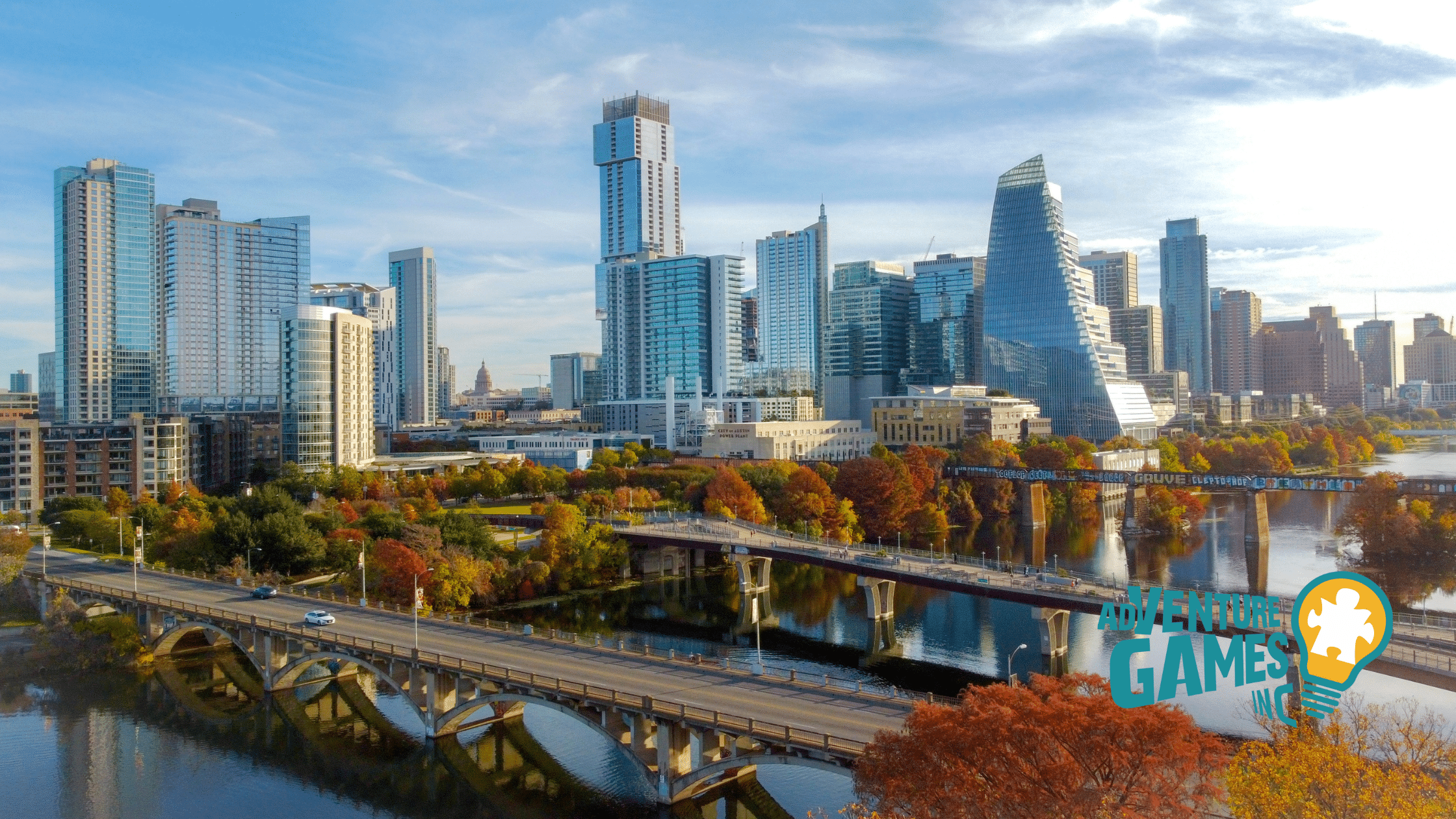
Austin does not hand you a playbook. The skyline keeps changing, the neighborhoods keep shifting, and the city’s identity sits somewhere between tech capital and live music town. That tension is what makes it interesting. It is also what makes planning a corporate event here different from planning one anywhere else in Texas.
This guide is written for planners who want specifics. Not a visitor bureau summary.
Understand What Kind of City You’re Dealing With
Austin is more walkable than most Texas cities but less walkable than most planners assume. Downtown and the immediately surrounding neighborhoods are manageable on foot. Everything beyond that radius requires a car, a rideshare, or a plan.
What Austin offers is variety packed into a tight geography. Within a ten-minute drive of downtown, you can be in a completely different neighborhood with a completely different energy. That matters for team building. It means you have real options that feel genuinely distinct from each other, not just different blocks of the same district.
One airport serves the metro: Austin-Bergstrom International (AUS) sits about eight miles southeast of downtown, roughly 15 to 20 minutes by car depending on traffic. It is one of the fastest-growing airports in the country, with nonstop service to more than 75 domestic and international destinations. Most major airlines operate here, and the terminal itself has an unusually strong food and live music presence that sets the tone before your team even leaves the building.
Capital Metro runs bus and commuter rail service across the city. The MetroRapid routes along Congress Avenue and Lamar Boulevard are the most useful for corporate groups. That said, most groups will rely on rideshare or shuttle services. Uber and Lyft are reliable in central Austin. Budget extra time and surge pricing for events at peak hours or during major festivals.
The Neighborhoods Worth Knowing
Downtown is the logistics center. The major hotels are here: the JW Marriott Austin, the Fairmont Austin, the Hilton Austin, and The Driskill, which has been operating since 1886 and still carries genuine weight as a gathering place. The Palmer Events Center on Barton Springs Road is the primary event venue while the Austin Convention Center undergoes a full-scale expansion through 2029. Downtown Austin is compact enough for a corporate group to navigate on foot between hotels, restaurants, and staging areas without losing people.
South Congress (SoCo) is the neighborhood that most out-of-town visitors picture when they think of Austin. Boutique shops, murals, food trucks, and the Continental Club for live music. The avenue runs south from the Congress Avenue Bridge, which is also the nightly staging ground for Austin’s famous bat colony from March through October. SoCo reads well for a post-event outing or a team dinner with genuine Austin character. The energy is casual and walkable.
Rainey Street is a former residential block of historic bungalows converted into bars, restaurants, and patios. It sits at the southeastern edge of downtown near Lady Bird Lake. Banger’s Sausage House and Beer Garden and Emmer & Rye anchor the street. Rainey works well for corporate groups that want an evening out in a contained, walkable area with enough variety to let people self-select.
East Austin has changed faster than any other part of the city. East Sixth Street and East Cesar Chavez are now dense with restaurants, bars, and creative businesses. Franklin Barbecue is here on East 11th. La Barbecue is on East Cesar Chavez. The neighborhood has a creative energy that corporate groups from tech and media companies respond to naturally. For groups that want something that feels less polished and more authentic, East Austin is the answer.
The Red River Cultural District is Austin’s live music backbone. Venues like Stubb’s BBQ, Mohawk, and Empire Control Room sit within a few blocks of each other just north of Sixth Street. If your team event includes an evening out with live music, this district delivers what Austin’s reputation promises.
Second Street District is a polished mixed-use stretch in the southwest corner of downtown. Restaurants, retail, and the W Austin Hotel are here. It reads as more corporate than Rainey or East Austin but stays walkable and convenient for groups staying at the Fairmont or JW Marriott.
If you are looking for venue-specific guidance before locking in a location, the top 5 outdoor team building venues in Austin TX covers each space in detail: what kind of group it suits, what the permit process looks like, and what to watch out for.
The Thing About Austin and Weather
Austin weather is manageable if you plan around it. It is punishing if you don’t.
Summers are serious. June through September regularly push past 100 degrees, and the heat index with humidity makes it feel worse. If you are planning an outdoor team building event during this window, the rule is simple: morning only. Anything scheduled between 11 AM and 4 PM in an Austin summer needs to be indoors, shaded, or canceled. Heat-related illness is a real risk, not a planning footnote.
The upside is that Austin has adapted. The city has one of the highest concentrations of climate-controlled event spaces and shaded patio venues in Texas. Indoor backup plans are easy to build because the infrastructure already exists.
Spring (March through May) is strong but comes with a caveat: Central Texas thunderstorm season is real. Storms arrive fast with lightning, heavy rain, and occasionally hail. Build a weather contingency into any outdoor spring event. The National Weather Service Austin/San Antonio office is worth bookmarking for date-sensitive planning.
Spring also means SXSW in March, which turns downtown Austin into a different city entirely. Hotel prices spike, restaurants fill up, and traffic patterns change for nearly two weeks. If your event is in March, check the SXSW dates before finalizing anything.
Fall (October through November) is the window. Temperatures drop into the 60s and 70s, the sky opens up, and the city runs at its best. Austin City Limits Music Festival falls in October across two weekends at Zilker Park. Those weekends affect hotel availability and traffic in the Zilker and South Lamar corridors. Plan around them or embrace the energy.
Winter (December through February) is mild, averaging in the 40s and 50s, but Austin winter has one hazard that trips up planners from other states: ice storms. The city does not handle ice well. Roads shut down, flights get canceled, and a forecast that mentions freezing rain can unravel logistics for groups flying in. February is the riskiest month. If you’re booking a winter event, build in contingency days and don’t cut your schedule tight.
Getting Around Without Losing People
AUS to Downtown: About 15 to 20 minutes with normal traffic. During rush hour or a major event, budget 30 to 40 minutes. Interstate 35 through central Austin is consistently one of the worst traffic corridors in Texas.
Rideshare: Uber and Lyft are reliable in the urban core. Outside central Austin, wait times increase and surge pricing becomes a factor during events, Friday evenings, and anything that involves Sixth Street after 10 PM.
Parking: Downtown parking garages are available but not cheap during events. Outside downtown, surface parking is more accessible. For large groups, valet programs at the major hotels work smoothly.
Scooters and bikes: CapMetro Bike operates a bikeshare system across central Austin. Electric scooters from various providers are available on most downtown sidewalks. Both are useful for small groups moving between nearby locations but not practical for moving a corporate group of 30 or more.
One thing planners consistently underestimate: distances between Austin neighborhoods look short on a map and feel longer on the ground during rush hour. MoPac (Loop 1) and I-35 both bottleneck badly between 4 and 7 PM. Build 15 to 20 minutes of buffer into any schedule that involves moving a group between neighborhoods during those hours.
Where to Eat When the Event Ends
Austin takes food as seriously as it takes live music. The restaurant scene has earned Michelin recognition, multiple James Beard awards, and a national reputation that goes well beyond barbecue and Tex-Mex, though both remain excellent.
Franklin Barbecue on East 11th Street is the most recognized barbecue in the country. The brisket earned a James Beard Award and a reputation that still draws lines that start before dawn. For a corporate group, the logistics are challenging unless you arrange a pre-order or private event. The experience is legitimate. The wait is the price of entry.
Terry Black’s BBQ on Barton Springs Road is the more accessible alternative. Shorter lines, comparable quality, and a cafeteria-style setup that handles groups efficiently. If your team has a schedule to keep, this is the move.
Uchi on South Lamar is the restaurant that proved Austin could compete nationally outside of barbecue. James Beard Award-winning chef Tyson Cole’s Japanese-inspired menu is worth the reservation effort for a corporate dinner where the food needs to impress.
Emmer & Rye on Rainey Street holds a Michelin Green Star for sustainability. The menu changes daily. The dim sum cart is a genuine conversation starter. The space handles group dining well and the quality is consistently high.
Loro on South Lamar is a collaboration between the teams behind Franklin Barbecue and Uchi. It fuses Southeast Asian flavors with Texas barbecue technique. Long communal tables, shareable plates, and a casual format make it one of the best options in the city for corporate group dining without the formality.
Odd Duck on South Lamar earned a Michelin Bib Gourmand for its locally sourced, rotating small plates. The patio is one of the best in South Austin. The food is creative without being inaccessible. Strong option for a team dinner that feels intentional.
For a quick lunch option on event day, the food truck parks scattered across East Austin and South Congress offer quality options that keep the schedule moving without sacrificing the Austin experience.
What Austin Does Differently as a Team Building City
Team building in Austin, TX operates on a different cultural foundation than most Texas cities. Austin was built by a combination of state government, the University of Texas, and a tech economy that arrived in waves: Dell in the 1980s, the startup boom in the 2000s, and the Tesla and Apple migration in the 2020s. The result is a city where creative problem-solving and competitive performance coexist in a way that other cities don’t replicate.
Corporate groups here tend to be younger, more casual, and more skeptical of anything that feels like a manufactured team exercise. They respond well to experiences that have texture and specificity. A city-wide format where teams move through South Congress, Rainey Street, and the East Side under time pressure works because it uses Austin itself as the material, not a hotel ballroom.
Austin’s physical layout reinforces this. Lady Bird Lake sits at the center of the city, with downtown on the north shore and South Austin on the south. The Ann and Roy Butler Hike-and-Bike Trail loops 10 miles around the lake and connects the key districts. Zilker Park, the Congress Avenue Bridge, Auditorium Shores, Rainey Street, and East Austin are all within a tight radius. That geography gives a well-designed team event real room to move without requiring a fleet of shuttles.
A Few Things That Will Save You
The heat is not a variable. It is a constraint. Any outdoor event scheduled between June and September needs a backup plan, shade infrastructure, and water stations. These are requirements, not suggestions.
Don’t underestimate I-35. The interstate runs through the center of the city and is under perpetual construction. It is the single biggest variable in Austin traffic. If your schedule involves crossing I-35 during rush hour, add time.
Check the event calendar before you finalize dates. SXSW in March, ACL Fest in October, Formula 1 at Circuit of the Americas in the fall, and UT home football games on Saturdays all change hotel availability, traffic, and pricing across the city. The overlap between your event and one of these can turn a smooth plan into a logistics problem.
Don’t try to cover too much ground. Austin is spread out enough that an itinerary hopping between South Congress, The Domain in North Austin, and East Sixth sounds efficient on paper and falls apart when you’re moving a group of 40. Pick one or two zones and go deep.
Book accommodations early during peak periods. Austin’s hotel inventory downtown is strong but tightens fast during SXSW, ACL, and F1 weekend. Prices during those windows can double or triple.
Why Adventure Games Inc. Works in Austin
The creative culture, the walkable urban core, the diversity of neighborhoods within a compact radius: Austin gives a city-wide team experience the raw material it needs to feel genuinely engaging rather than obligatory.
Adventure Games Inc. designs experiences that fit how Austin actually works: teams moving across defined zones, competing under time pressure, making decisions together that reveal who people actually are when the stakes feel real. The experience scales for large corporate groups and lands in a city that has the appetite for it.
If you’re planning an Austin team building event and want something your team will still be talking about at the next all-hands, reach out to Adventure Games Inc.