

Not every team building event should look the same, because not every team walks in with the same problem. The most expensive, highest-rated activity in Minneapolis will not move the needle for a group that needed something different. The format is the prescription. The team condition is the diagnosis. Getting the order backward is the most common planning mistake, and it is also the easiest one to fix.
If you are still working through the broader question of what makes team building work in Minneapolis, the logistics, the neighborhoods, and the cultural context, this overview of what makes Minneapolis team building actually work covers the full picture before you get to activity selection.
Identify What Your Team Actually Needs
Most corporate groups arriving in Minneapolis for a team building event fall into one of three situations. The right format depends on which one you are dealing with.
Situation one: the team is newly assembled or socially distant. Remote employees meeting in person for the first time. A recently reorganized department. A group where people recognize names on Slack but have never shared a meal. These teams need structured interaction that creates a shared story without putting anyone on the spot. The format should be collaborative but low-stakes: competitive enough to generate energy, loose enough that nobody feels exposed. The goal is a common reference point the team can build on after the event ends.
Situation two: the team has a communication or trust deficit. Decisions take too long. People default to working in silos. Feedback loops are broken. These teams need a format that creates real dependency: a challenge where success requires listening, delegating, and operating outside comfort zones. The structure of the activity needs to force interaction patterns that the normal work environment does not. Puzzle-driven and mission-based formats are designed for this condition because they create pressure that makes old patterns visible and gives people a reason to try new ones.
Situation three: the team is performing well and the event is a strategic investment. Retention is the goal. Recognition is the message. The team does not need repair. It needs an experience that communicates value: something memorable, well-executed, and reflective of the company’s willingness to invest in the people who make it work. For this group, the quality of the experience matters more than the learning outcome. Environment, pacing, and production value drive the impact.
What Each Format Does in Practice
City-wide challenges and mission-based games are the format with the widest applicability across all three situations. Teams move through Minneapolis neighborhoods in small groups, solving problems, making decisions, and competing under time pressure against other teams. The format works because it adapts to the group: teams in situation one use it to break the ice through shared adventure, teams in situation two are forced into real-time collaboration, and teams in situation three engage because the competitive structure and city environment make the event feel substantial rather than obligatory. Minneapolis rewards this format because the downtown core and adjacent neighborhoods create natural variety without long transit gaps.
Escape room and puzzle-driven formats serve situation two most directly. The closed environment, the shared constraint, and the ticking clock remove the social buffers that people rely on in the office. In a puzzle format, you cannot stay in your lane. You cannot defer to hierarchy. The format exposes how the team communicates under pressure, and in Minneapolis, where professionals tend toward polite collaboration, that exposure is often revealing. The debrief after a puzzle challenge often surfaces dynamics the team has been working around for months.
Strategy and leadership formats are built for senior teams or intact groups with a specific development target. These formats are less about physical movement and more about cognitive challenge: resource allocation, negotiation, long-horizon decision-making. Minneapolis has an unusually deep bench of senior corporate talent, and these groups engage most fully when the challenge is pitched at their level.
Outdoor physical challenges serve situation three. Field games, relay formats, and high-energy competitions work as celebration and morale-building. Minneapolis offers strong outdoor settings for these formats from June through October: Theodore Wirth, Minnehaha Regional Park, and the riverfront trail system all provide varied terrain and reliable logistics. Physical formats need to be morning-only in July and August to manage heat and humidity.
What Minneapolis Adds to the Equation
Two features of the city shape how every format plays out here, and planners who account for them get better results.
The first is the season. Minneapolis has a dramatically compressed outdoor window. From roughly May through October, the city operates at full capacity outdoors. The parks fill, the patios open, and the energy level rises. Events scheduled during this window benefit from a population that is genuinely happy to be outside. November through March reverses the equation entirely: outdoor formats are off the table, and the city’s indoor infrastructure (the Skyway system, hotel event spaces, indoor venues) takes over. Knowing which season you are building for changes the format options fundamentally.
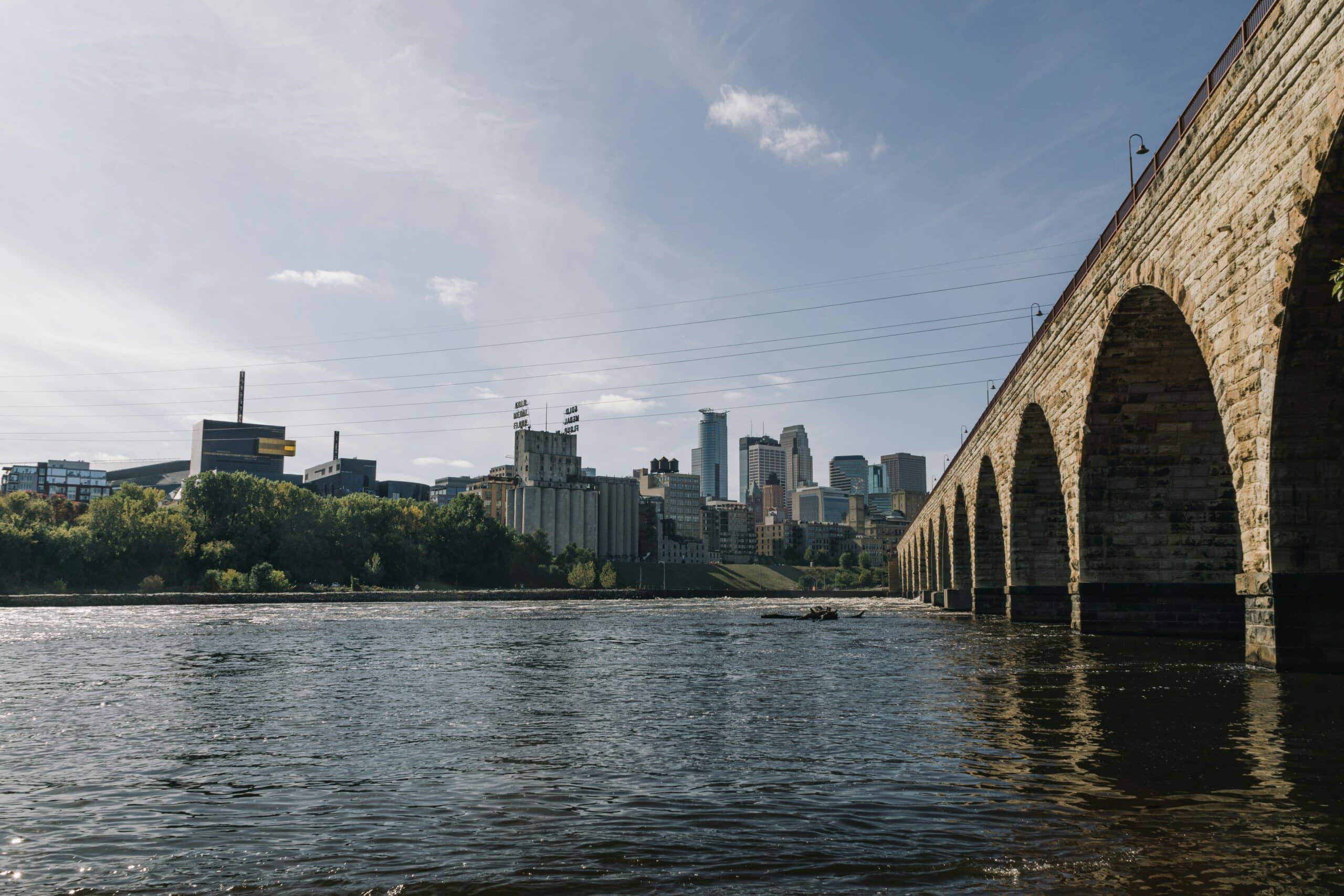
The second is the geography. The North Loop, the Mill District, Northeast, the Sculpture Garden, and Loring Park are all within a compact radius of downtown. A city-wide team event in Minneapolis does not require busing groups between distant neighborhoods. Teams can move on foot or by short rideshare between environments that feel genuinely different from each other. The exposed flour mill ruins along the river, the curated art of the Sculpture Garden, the mural-covered streets of Northeast: these create real texture in a team event. Groups are not moving through variations of the same downtown block. They are moving through neighborhoods with distinct character, and that variety keeps engagement high and decisions interesting.
Two Planning Mistakes That Minneapolis Groups Make
The first is scheduling an outdoor event in a month that cannot support it. Minneapolis winters are not negotiable. An outdoor team building event in January is not a bold choice. It is a failed event. The Skyway system, hotel venues, and indoor format options exist because the city has adapted to five months of cold. Use the season that matches your format.
The second is underestimating what the team already brings. Minneapolis corporate groups tend to arrive ready to engage. They do not need icebreakers, warm-up exercises, or motivational framing. They need a challenge that respects their intelligence and gives them something real to work on. Formats that feel patronizing lose the room quickly in a city where the average corporate professional is competent, experienced, and accustomed to high expectations.
How Adventure Games Inc. Fits In
Adventure Games Inc. builds experiences calibrated for team building in Minneapolis, MN: formats designed around the city’s geography, its seasonal realities, and the collaborative instincts of Midwest corporate teams. The competitive structure is sharp enough to engage high performers and the facilitation is skilled enough to surface the dynamics that make the event worth the investment.
If you know what your team needs and you are ready to match it to a format that works in Minneapolis, get started with Adventure Games Inc.