

New York City does not wait for you to figure it out. The pace hits you the moment you step off the train at Penn Station or clear the terminal at JFK. Everything moves fast. Decisions happen fast. People walk fast. If you are bringing a corporate group to New York City for a team building event, you are working with a city that has no patience for poor planning and limitless upside when you get it right.
This guide is written for planners who want specifics, not a list of attractions from a tourism site.
Understand What Kind of City You’re Dealing With
New York is a walking city. That is both its greatest advantage and its biggest planning variable. Unlike most American metros, you will not need cars. Your team will move on foot, by subway, and occasionally by rideshare. That changes the math on everything from scheduling to venue selection to how tired people are by 3 PM.
The density is the other variable. Manhattan alone packs 1.6 million residents into 23 square miles, and on a weekday the population swells past 4 million with commuters. Sidewalks are full. Restaurants require reservations. Nothing about New York is casual, and that works in your favor if you plan for it. A well-organized team event in this city feels important. A poorly organized one falls apart faster here than anywhere else.
Three airports serve the metro area. JFK is the primary international hub, located in Queens, roughly 60 to 90 minutes from Midtown Manhattan depending on traffic and method. The AirTrain to Jamaica Station and then the LIRR or E train into Penn Station is the most reliable route. LaGuardia handles mostly domestic flights and sits closer to Manhattan, about 30 to 45 minutes by car or rideshare, though the new terminal has improved the arrival experience considerably. Newark Liberty in New Jersey is a viable option, especially for United flights, with AirTrain service connecting to NJ Transit into Penn Station in about 45 minutes total.
If your team is flying in from multiple cities, check all three airports. Price and schedule differences can be significant, and Newark often gets overlooked despite being the fastest door-to-door option for groups heading to Midtown.
The MTA subway system is the backbone of getting around. It runs 24 hours a day, 7 days a week, with 472 stations across four boroughs. For a corporate group, the subway is faster and more reliable than rideshare during business hours. A single ride costs $2.90, and an OMNY tap-to-pay system means your team does not need to buy MetroCards. Just tap a contactless credit card or phone at the turnstile. One planning note: subway service runs on a reduced schedule nights and weekends, and weekend construction reroutes are common. Check the MTA website the week of your event for any planned service changes.
The Neighborhoods Worth Knowing
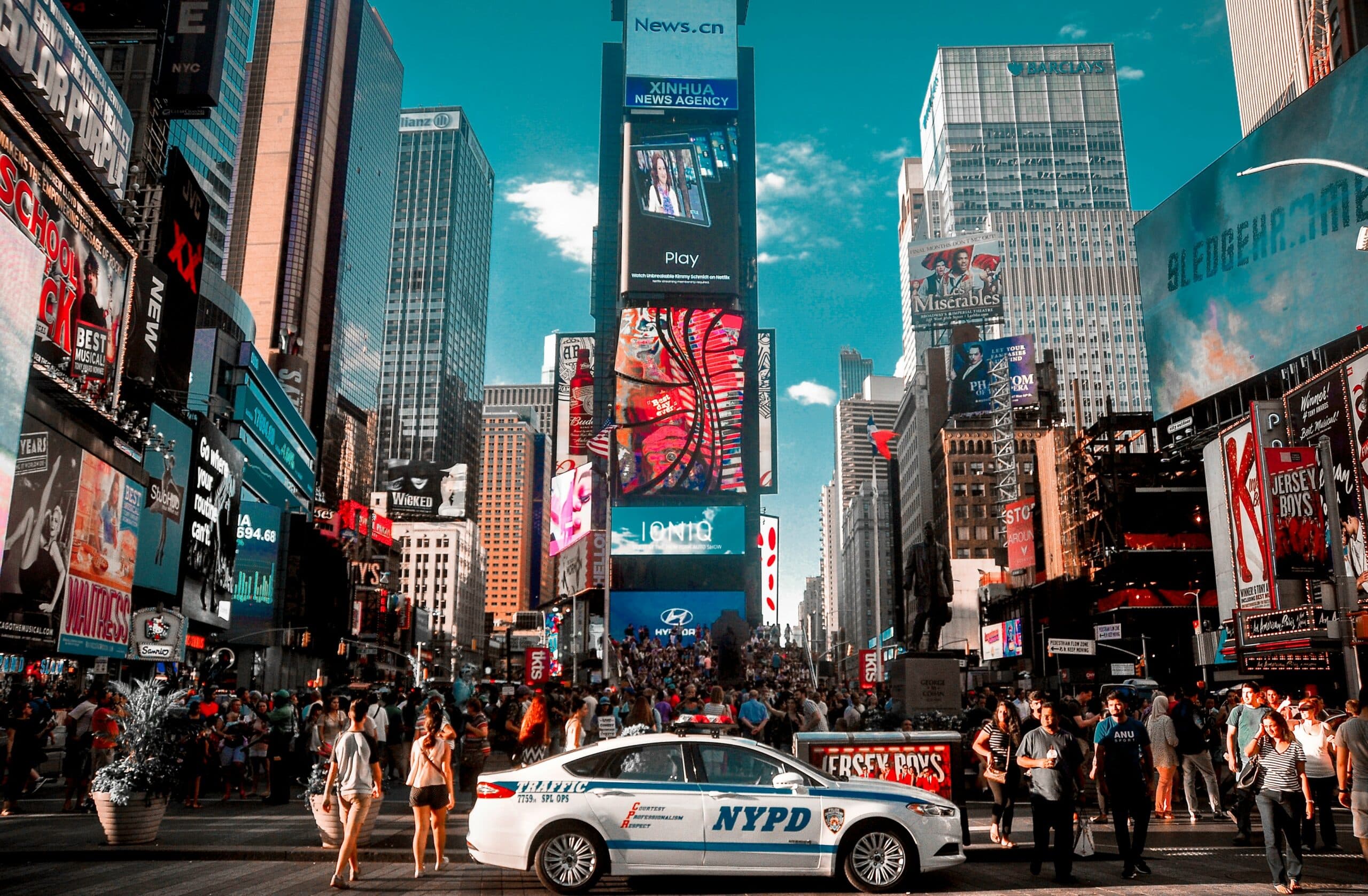
Midtown is the default staging area for most corporate groups. The hotel density is highest here, concentrated between 34th Street and 59th Street, and the area anchors around landmarks your team will recognize: Times Square, Rockefeller Center, Bryant Park. Midtown is loud, crowded, and efficient. It is not charming, but it is functional. For groups staying at midtown hotels like the New York Hilton Midtown or the Lotte New York Palace, this neighborhood puts you within walking distance of Central Park, Grand Central Terminal, and multiple subway lines that connect to every other part of the city.
Lower Manhattan and the Financial District is where the city’s corporate history lives. Wall Street, the 9/11 Memorial, Battery Park, and the ferry terminals to Governors Island and the Statue of Liberty are all here. The neighborhood has changed dramatically over the past two decades, adding residential density, restaurants, and a waterfront that is genuinely useful for team events. For groups that want a professional setting with historical weight, FiDi delivers that without the tourist density of Midtown.
Chelsea and the Meatpacking District sit on Manhattan’s west side between roughly 14th and 30th Streets. This is where the High Line runs, an elevated park built on a former freight rail line that has become one of the most recognized public spaces in the world. Chelsea also houses Chelsea Market, a food hall and retail complex that handles group dining well, and the gallery district west of Tenth Avenue. For team events with a design, art, or food component, this neighborhood provides natural texture that Midtown cannot match.
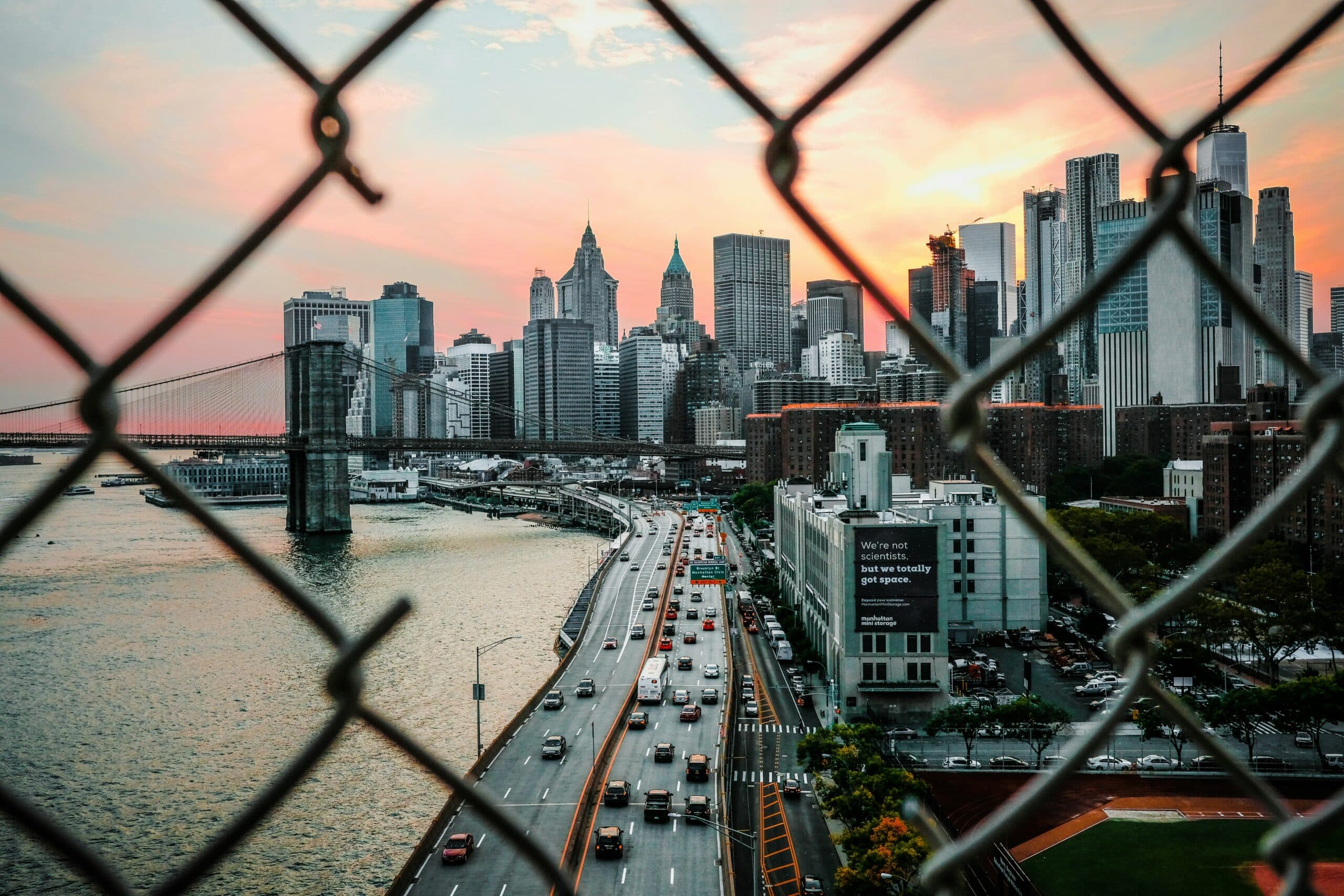
DUMBO and Brooklyn Heights sit on the Brooklyn side of the East River, directly across from Lower Manhattan. DUMBO, which stands for Down Under the Manhattan Bridge Overpass, has evolved from industrial warehouses into one of the city’s most photogenic neighborhoods. Brooklyn Bridge Park stretches along the waterfront here, offering 85 acres of piers, lawns, sports courts, and unobstructed views of the Manhattan skyline. For a team event that needs to feel different from a standard corporate outing, crossing into Brooklyn changes the energy immediately.
SoHo and the West Village occupy the stretch of lower Manhattan between Houston Street and Canal Street (SoHo) and west of Sixth Avenue below 14th Street (West Village). These are walkable neighborhoods with cobblestone streets, independent restaurants, and an atmosphere that slows the pace just enough to feel like a different city. For a post-event dinner or a smaller executive team outing, the West Village is one of the best dining neighborhoods in America. Just know that restaurant capacity here tends to be small. Book well in advance for groups over eight.
Hudson Yards is the newest addition to Manhattan’s west side, built on a platform over the rail yards that feed Penn Station. The neighborhood includes high-end retail, corporate office towers, and event space. It sits at the northern end of the High Line and adjacent to the Javits Center, the city’s primary convention venue. If your team is already in town for a conference, Hudson Yards provides a self-contained environment that can accommodate large groups without requiring a long transit commute.
If you are planning an outdoor component and need venue-specific guidance, the top 5 outdoor team building venues in New York City NY covers each location in detail: what kind of group it suits, what the permit process looks like, and what to watch out for.
The Thing About New York City and Weather
New York has four real seasons, and every one of them affects event planning.
Summer (June through August) is hot and humid. July and August regularly hit the upper 80s and low 90s, and the humidity that builds between buildings makes the air feel heavier than the temperature suggests. Outdoor events in midsummer need to be scheduled for morning or late afternoon. Midday activities between 11 AM and 3 PM should be indoors or heavily shaded. The good news is that New York has some of the best indoor event infrastructure in the world. Air-conditioned venues are everywhere, and the city knows how to handle heat.
Fall (September through November) is the window. Temperatures settle into the 50s and 60s, the light turns golden, and the city runs at its best. October is the single best month for outdoor team events in New York. The parks are at peak color, the air is crisp, and the tourist crowds thin after Labor Day. If you have any flexibility on dates, fall is the answer.
Winter (December through February) is cold and occasionally brutal. January and February average in the low 30s, with wind chill that can drop into the teens or single digits. Snow happens but rarely shuts the city down. New York keeps moving in winter. That said, outdoor team events in January require serious contingency planning. Indoor formats are the safer call. December has the added complexity of holiday crowds and elevated hotel pricing, particularly the first three weeks of the month.
Spring (March through May) is the second-best window, but it comes with an asterisk. March is still cold, often in the 40s. April is unpredictable, with rain that arrives without much warning. May is excellent: warm, manageable, and green. If you are booking a spring event, target mid-April through May and build a weather backup into the plan. The National Weather Service New York forecast office is worth bookmarking if you are coordinating date-sensitive logistics.
Getting Around Without Losing People
JFK to Midtown Manhattan: 60 to 90 minutes by car depending on traffic. The AirTrain to Jamaica Station, then the LIRR to Penn Station, is often faster and more predictable, running about 50 minutes total. Rush hour on the Van Wyck Expressway and the BQE is genuinely bad. If your team is arriving between 4 and 7 PM on a weekday, do not rely on car service.
LaGuardia to Midtown: 30 to 45 minutes by car. No rail connection yet, though that is under construction. Rideshare is the standard option. Budget extra time during peak hours.
Newark to Midtown: AirTrain to NJ Transit into Penn Station, about 45 minutes total. Often the fastest option, particularly for teams connecting from the west or south.
Subway: The fastest way to move a group across Manhattan or between boroughs during business hours. The 1/2/3 runs up the west side. The 4/5/6 runs up the east side. The N/R/Q/W, B/D/F/M, and crosstown shuttles handle lateral movement. Download the MTA app or use Google Maps transit directions. Trains arrive every 3 to 8 minutes during peak hours. Late-night service is less frequent.
Rideshare: Uber and Lyft work in New York, but surge pricing during rush hour and bad weather can be significant. For groups larger than four, splitting into multiple vehicles adds cost and coordination complexity. The subway is almost always the better option for groups moving through Manhattan.
Walking: New York is a 20-block-per-mile city. Most corporate groups can comfortably walk 10 to 15 blocks between activities. Build walking time into your schedule rather than relying on vehicles for short distances. The sidewalk is faster.
One thing planners consistently underestimate: transit between Manhattan and the outer boroughs looks short on a map and takes longer than expected. Brooklyn is close, but transferring subway lines or waiting for a train adds time. Build 15 to 20 minutes of buffer into any schedule that involves moving a group between boroughs.
Where to Eat When the Event Ends
New York City has more than 27,000 restaurants. The challenge is not finding options. The challenge is finding the right option for a corporate group.
Keens Steakhouse in Midtown has been operating since 1885. The mutton chop is the signature, the scotch list is one of the deepest in the country, and the private dining rooms handle corporate groups of 20 to 80 with the kind of service that makes the dinner feel like part of the event. This is the right call when the food needs to impress and the setting needs to feel substantial.
Carbone in Greenwich Village is Italian-American food served in a space that operates more like a performance than a restaurant. Reservations are difficult to get, but for a small executive group of 6 to 10, a table here is a statement. The spicy rigatoni vodka is the dish everyone orders, and it delivers.
Peter Luger Steak House in Williamsburg, Brooklyn has served dry-aged porterhouse since 1887. The experience is old-school: no credit cards, brisk service, and a dining room that has not changed in decades. For a group that wants a genuine New York institution without the polish of a Midtown restaurant, Luger’s is the move. Book for lunch if you want a shorter wait.
Chelsea Market on Ninth Avenue between 15th and 16th Streets functions as a food hall with more than 35 vendors. For a midday break during a team event, this is the most efficient way to feed a group with diverse tastes. Everyone can choose their own lunch without coordination overhead. The space handles foot traffic well and sits directly beneath the High Line.
For a post-event dinner that skews more casual, the restaurants along Smith Street in Brooklyn or along Bedford Avenue in Williamsburg offer density and quality without the reservation pressure of Manhattan fine dining.
What New York City Does Differently as a Team Building City
Team building in New York City, NY operates on a set of conditions that no other American city replicates. The density, the pace, and the sheer variety of environments within walking distance create a natural stage for team events that feel consequential.
The city’s professional culture is direct, competitive, and intolerant of anything that wastes time. Corporate groups in New York tend to engage quickly, compete seriously, and remember events that challenged them. They also dismiss anything that feels like filler. The design challenge is matching that energy: creating an experience that moves at the speed of the city and rewards teams that communicate well under pressure.
The physical layout creates structural advantages for city-wide team events. Manhattan’s grid system means teams can spread out across distinct neighborhoods and regroup efficiently. A team that starts in Bryant Park can be in the West Village 30 minutes later and in DUMBO an hour after that, moving through genuinely different environments at each stage. That variety of settings, from the glass towers of Midtown to the cobblestone streets of SoHo to the waterfront of Brooklyn Bridge Park, gives a single team event visual range and psychological shifts that a conference room or a single outdoor venue cannot replicate.
A Few Things That Will Save You
Do not fight the grid. Use it. Manhattan’s street layout is one of the most navigable in the world. Avenues run north-south, streets run east-west, and the numbering system means a person who has never been to New York can find their way within ten minutes. Build your event around this. Clear meeting points, specific addresses, and timed checkpoints work in New York better than almost anywhere because the grid makes navigation simple.
Book restaurants early. Popular group dining spots in Manhattan fill up two to four weeks in advance, and private dining rooms often require 30 days or more. Do not leave this to the last week.
Check for major events at the Javits Center. The Javits Center events calendar is worth reviewing when you set your dates. When a large convention is running, hotel availability tightens across Midtown and pricing reflects it. New York Comic Con in October and the auto show in spring are the biggest draws, but midweek trade shows can also affect room blocks.
Do not try to cover too much geography. New York is enormous. An itinerary that puts your team in Central Park at 9 AM, Governors Island at noon, and Williamsburg at 3 PM sounds efficient on a map and grinds to a halt when you account for subway transfers, ferry schedules, and walking time. Pick one or two zones and go deep.
Carry a backup plan for rain. New York does not shut down for weather, but outdoor team events get significantly harder in rain. Every outdoor itinerary needs an indoor fallback that is close to the original venue. The city has enough covered public spaces, food halls, and indoor options that this is easy to arrange if you think about it in advance.
Why Adventure Games Inc. Works in New York City
The density, the grid, the variety of neighborhoods, the competitive professional culture: New York gives a city-wide team experience raw material that no other city in the country can match. The challenge is designing something that meets the city at its own speed.
Adventure Games Inc. designs experiences built for how New York actually operates: teams moving across a defined zone of the city, competing under time pressure, making decisions together that reveal how people actually work when the stakes feel real. The formats scale for large corporate groups and land in a city where people do not tolerate anything that wastes their time.
If you are planning a New York City team building event and want something your team will still be talking about at the next all-hands meeting, reach out to Adventure Games Inc.