

Choosing the right outdoor venue is half the battle when you’re planning a corporate event in Miami. The city puts waterfront parks, cultural plazas, and tropical gardens all within a short drive of the financial district. Picking the right team building in Miami, FL venue is not just about finding open space. It is about matching the environment to your team’s energy, your event’s format, and your group’s size. These five venues each have a distinct character, and the right one depends on what you are actually trying to accomplish. If you are still working through the broader logistics of planning a Miami corporate event before locking in a venue, this insider planning guide for Miami team building events covers airports, neighborhoods, weather windows, and getting around the city.
1. Bayfront Park
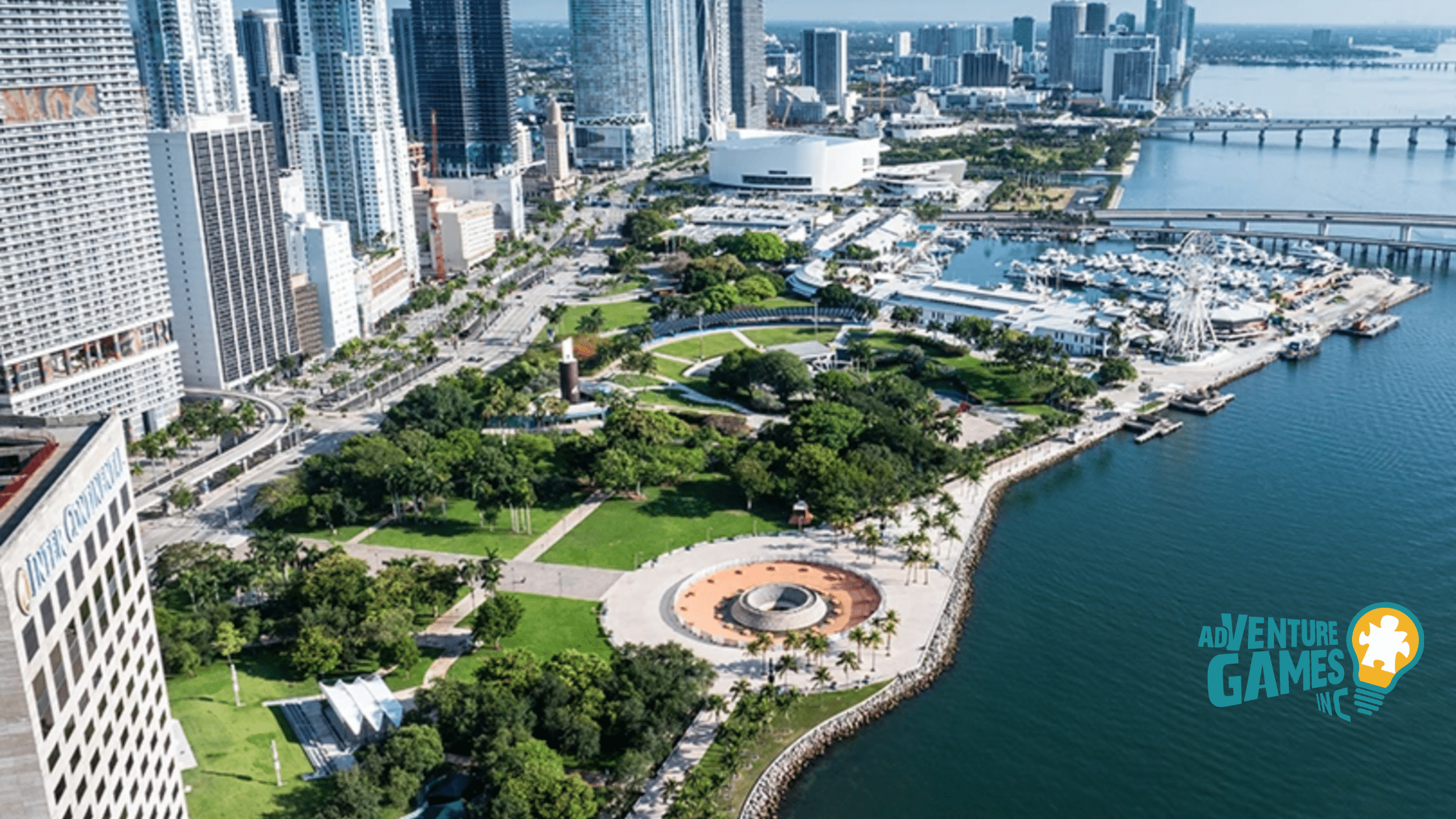
Bayfront Park is 32 acres of waterfront green space on Biscayne Bay in the heart of downtown Miami. Designed by the legendary landscape architect Isamu Noguchi, the park features open lawns, shaded walkways, a tropical rock garden, a sandy beach area, and two performance venues: the FPL Solar Amphitheater and the Tina Hills Pavilion. The Metromover has three stops within walking distance, making it the most transit-accessible outdoor venue in the city.
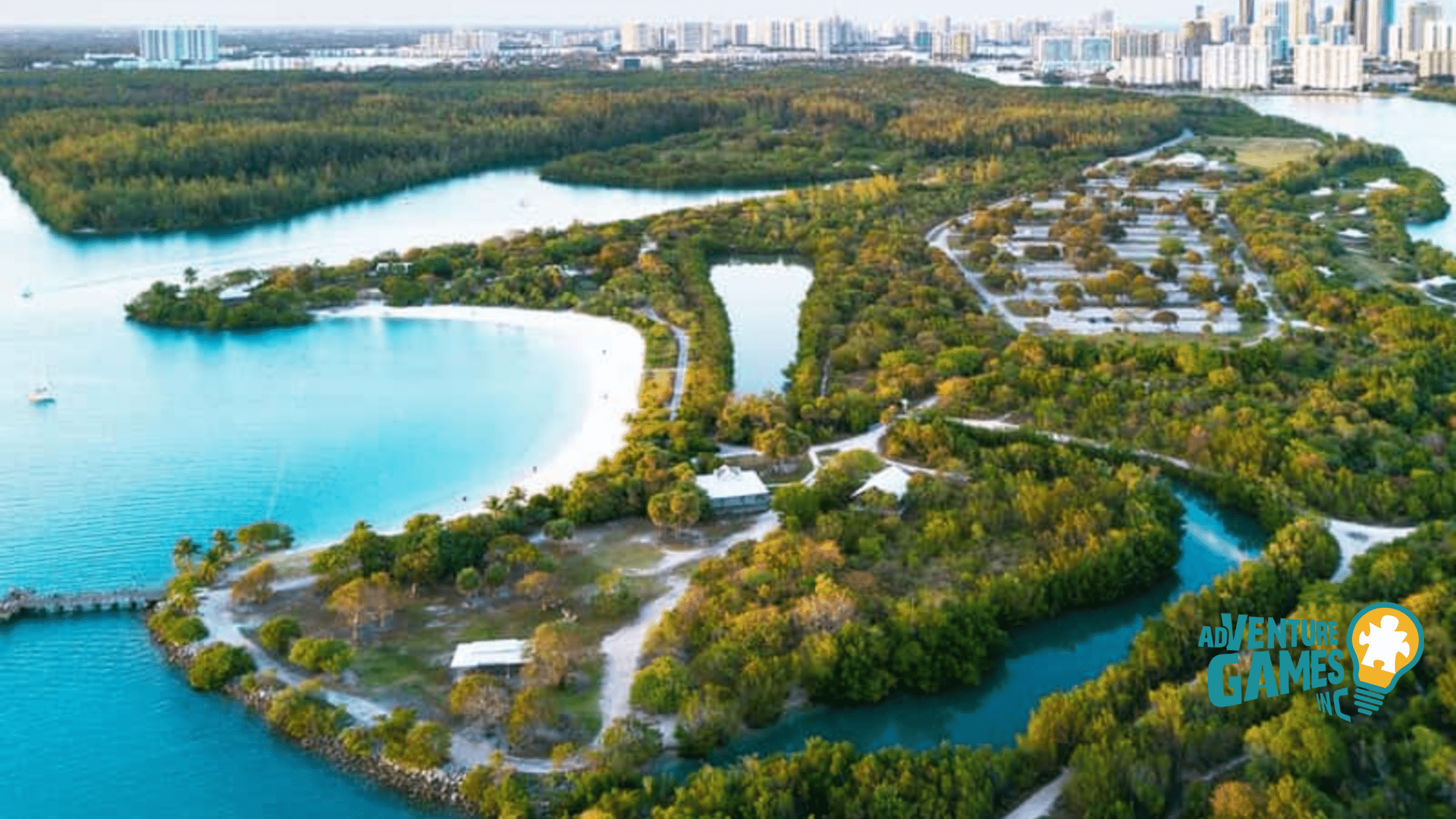
This venue works best for large groups that need a central staging area with room to spread out. Bayfront Park functions as a natural rally point for city-wide events. Teams can disperse into the surrounding downtown and Brickell districts for challenges and return here to regroup. The open lawn accommodates groups well past 100 participants without feeling cramped, and the bay views provide a visual backdrop that photographs well for post-event recaps.
What to know: Event permits are handled through the Bayfront Park Management Trust. The park hosts major events throughout the year, including Ultra Music Festival in late March, which takes over the entire park for weeks of setup and teardown. Check the event calendar well in advance. Schedule outdoor activities for morning or late afternoon during summer months. Midday heat on an exposed lawn next to the bay is a logistics problem, not a minor inconvenience. The Tina Hills Pavilion provides covered space for briefings and debriefs.
2. Wynwood Arts District
The Wynwood neighborhood is not a single venue. It is a walkable outdoor environment that functions as one. The district spans roughly 50 blocks anchored by the Wynwood Walls, the world’s largest outdoor street art museum, with murals covering nearly every building facade on the surrounding streets. Restaurants, galleries, and open plazas fill the gaps between the art. The entire district operates as a visual experience that requires no setup and no permits for street-level movement.
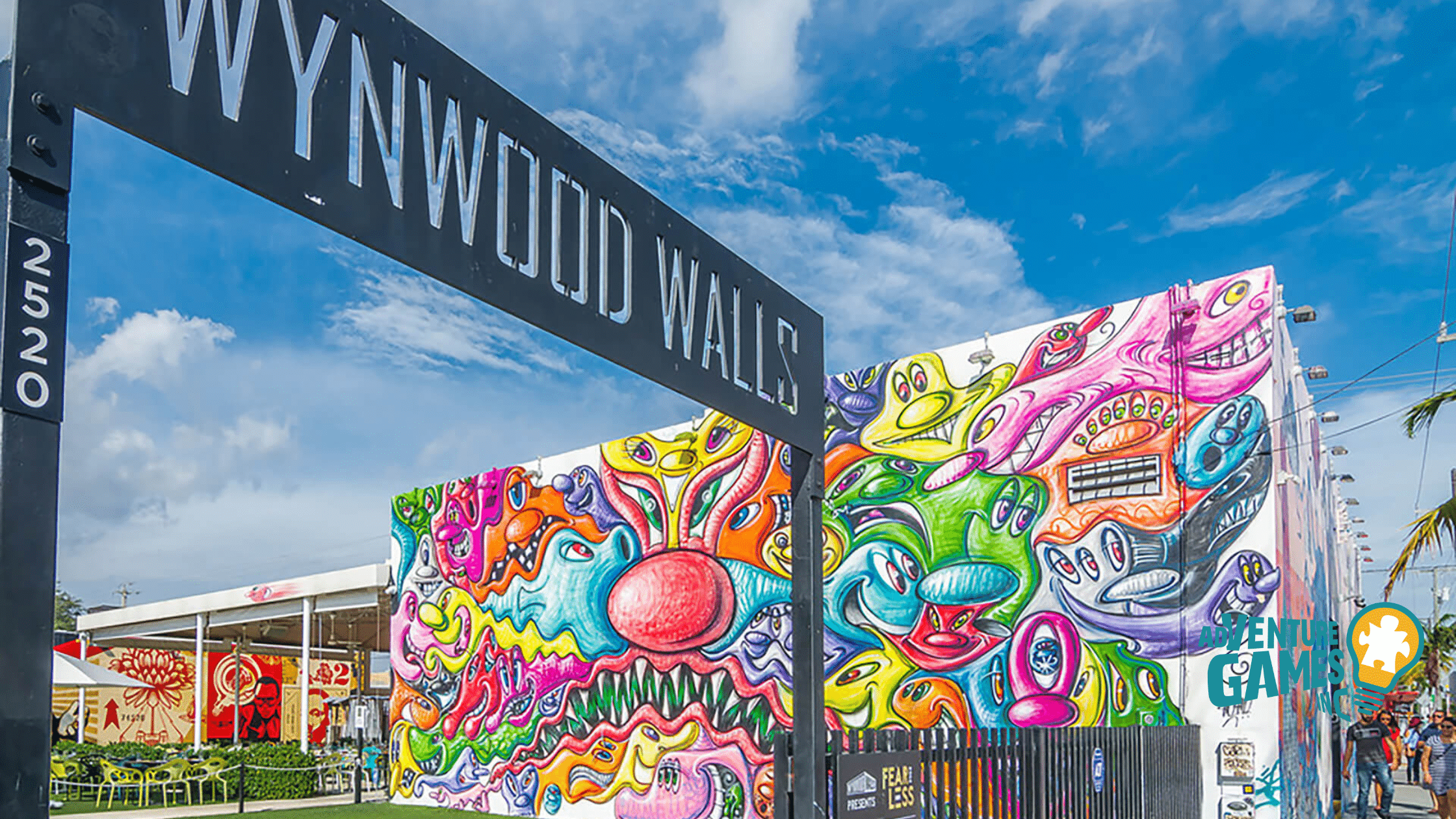
This venue works best for groups where the event format involves movement, problem-solving, and environmental engagement. A scavenger hunt or mission-based format in Wynwood has built-in visual variety that keeps teams engaged without artificial staging. The neighborhood’s density means teams can cover meaningful ground on foot without anyone getting lost in sprawl. The restaurant infrastructure also means you can transition directly from an outdoor event to a group dinner without changing locations.
What to know: Wynwood is a pedestrian-friendly district, but it is not fully shaded. During summer, the heat radiating off concrete and painted walls intensifies the ambient temperature. Morning events are the call from June through September. The Wynwood Walls itself is a ticketed attraction with capacity limits, so coordinate in advance if your event includes an interior visit. Street-level murals outside the walls are free and unrestricted. Parking is limited and expensive. Use rideshare or shuttle drop-offs at designated points along NW 2nd Avenue.
3. Maurice A. Ferré Park
Maurice A. Ferré Park (formerly Museum Park) is 30 acres of bayfront green space just north of Bayfront Park, home to the Pérez Art Museum Miami (PAMM) and the Phillip and Patricia Frost Museum of Science. The park sits directly on Biscayne Bay with unobstructed views of the water, the port, and the Miami skyline. Open lawns, walking paths, and the Spanish Navy Plaza provide multiple staging areas within a single connected space.
This venue works best for groups where client impression matters or where the event needs to feel elevated without being formal. The combination of the art museum, the science museum, and the waterfront park creates options for multi-stage experiences that move between indoor and outdoor settings. An executive team that would disengage from a generic park event will respond to the cultural context here. PAMM’s covered terrace overlooking the bay is one of the most striking event spaces in the city.
What to know: Park use is managed through the Bayfront Park Management Trust. PAMM and Frost Museum both offer private event rentals and corporate packages, but these require advance booking and coordination with each institution’s events team. The park is largely open and exposed to sun and wind off the bay. Wind can be a factor for any tented or signage-heavy setup. The park is accessible via Metromover (Museum Park station) and is within walking distance of downtown hotels.
4. Vizcaya Museum and Gardens
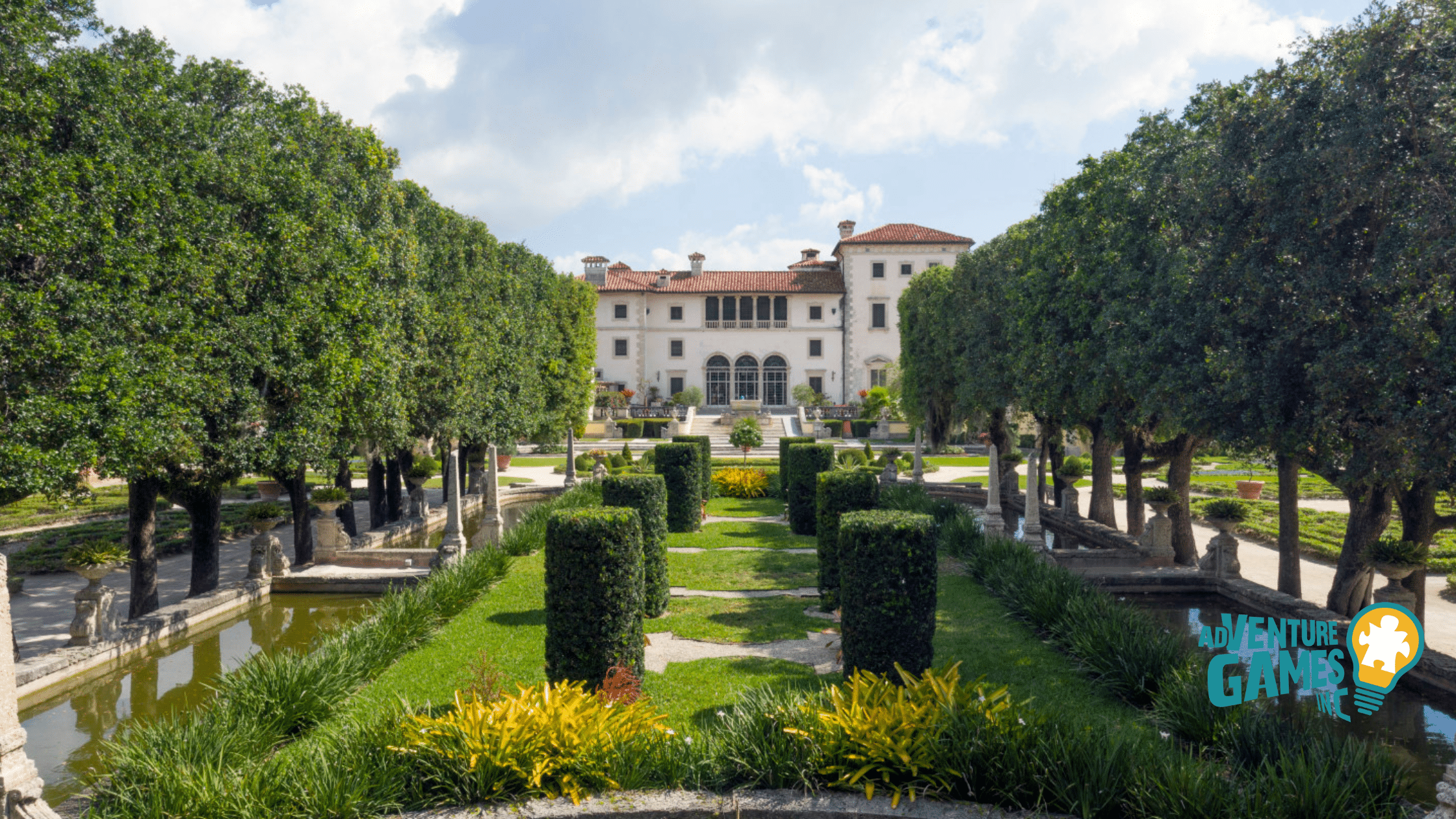
Vizcaya Museum and Gardens is a 10-acre Italian Renaissance estate on Biscayne Bay in Coconut Grove. The property features a 34-room historic main house, formal gardens with geometric hedges and classical sculptures, a native rockland hammock, and waterfront views across the bay. It is a National Historic Landmark and handles corporate events with a level of visual impact and atmosphere that no modern event space in Miami can replicate.
This venue works best for smaller groups, executive retreats, and events where the experience needs to feel like a genuine investment in the team rather than a logistical exercise. The gardens provide multiple distinct environments within a compact footprint: the formal parterre, the garden mound with its panoramic bay view, the shaded native forest, and the waterfront terrace. A well-designed event here moves a team through genuinely different spaces without ever leaving the property. The effect is immersive in a way that a park or plaza cannot achieve.
What to know: Vizcaya handles private events through its own events team and requires advance booking. The venue works with pre-approved caterers and vendors. Capacity for outdoor events in the gardens accommodates groups up to several hundred, but the property’s character is best suited to groups of 80 or fewer where participants can absorb the environment rather than crowd it. The estate is closed on Tuesdays. Arrive via South Miami Avenue; the Vizcaya Metrorail station is nearby for guests using transit.
5. Crandon Park (Key Biscayne)
Crandon Park is 808 acres on the northern end of Key Biscayne, accessible via the Rickenbacker Causeway from Brickell. The park features two miles of Atlantic beachfront, a coastal hammock nature trail, open picnic pavilions, and the former Crandon Park Zoo site (now a gardens area). It is the most physically removed venue on this list, and that separation from the city is exactly the point.
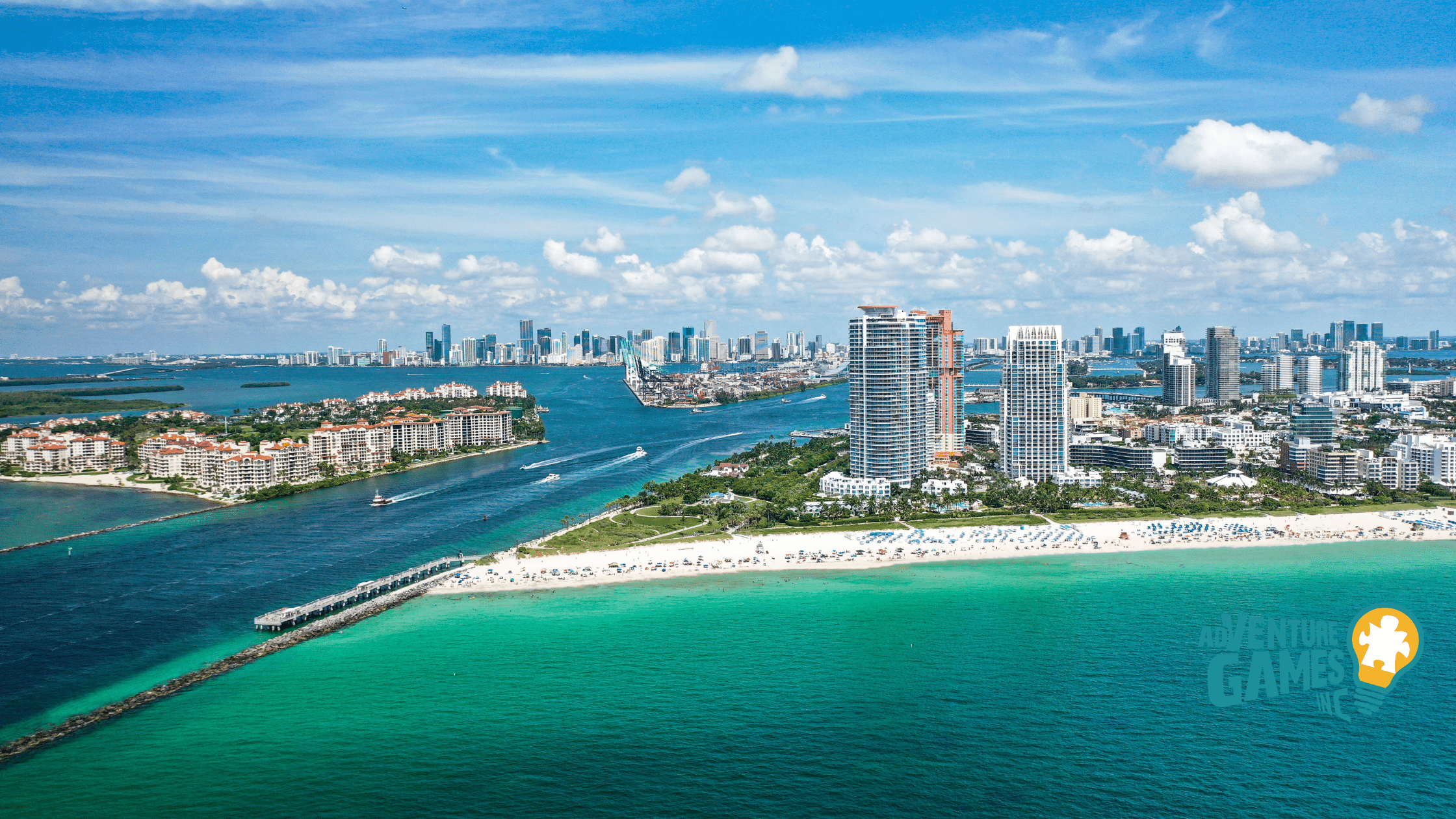
This venue works best for groups where the goal is a genuine reset from the office environment. The 20-minute causeway crossing from Brickell creates a psychological break that closer venues cannot replicate. Teams arrive on an island, surrounded by water and native vegetation, in a setting that feels nothing like the meeting room they left. Beach-adjacent formats, relay-style challenges along the shoreline, and nature trail segments all work here. For groups coming off a difficult stretch or leadership teams that need space to reset, Crandon Park delivers.
What to know: Obtain a group use permit from Miami-Dade Parks at least two to three weeks before your event. The Rickenbacker Causeway charges a toll ($2.25 per vehicle as of this writing), and traffic onto Key Biscayne can back up on weekends. Weekday events avoid this entirely. There is ample parking at the park, but coordinate designated areas for your group in advance. The beach pavilions provide shade, but open sand and water exposure mean sunscreen and hydration guidance in your pre-event communication is not optional. Morning sessions catch the ocean breeze and cooler sand temperatures.
Frequently Asked Questions
What is the best time of year for outdoor team building in Miami? Winter, specifically December through March, is the clear answer. Temperatures are in the mid-70s, humidity is low, and rain is rare. Spring works through April. Summer outdoor events need morning scheduling and serious heat and hydration planning. Fall works well from late October through November once hurricane season risk has passed.
How far in advance should I book? Two to four weeks for most park permits. Vizcaya requires longer lead time for private events. Bayfront Park events during fall and winter weekends book out quickly. If your event date falls between December and March, start the process early.
Do all these venues require permits? Bayfront Park, Maurice A. Ferré Park, and Crandon Park all require permits for group use. Vizcaya requires private event booking through its events team. The Wynwood Arts District does not require permits for street-level pedestrian activities, though the Wynwood Walls interior is a ticketed venue.
Can Adventure Games Inc. run events at these locations? Yes. Adventure Games Inc. designs experiences specifically for the Miami environment, including city-wide formats that use multiple outdoor venues in a single event. If you are planning a team event at any of these locations, see what Adventure Games Inc. brings to team building in Miami, FL.