

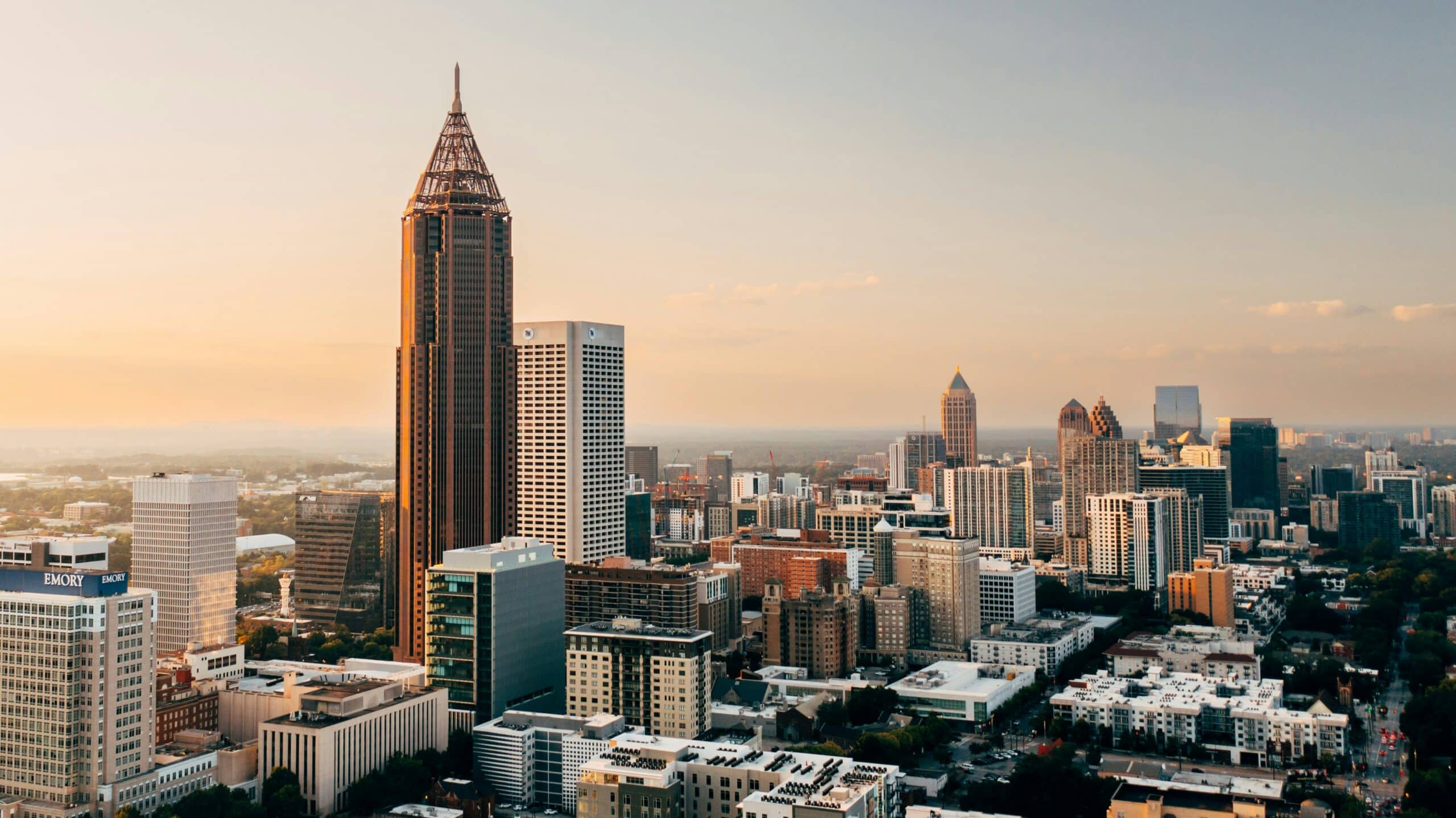
Atlanta moves at its own speed. It’s a city that grew outward instead of upward, spreading through a canopy of trees so thick you can fly into Hartsfield-Jackson and not see the skyline until you’re almost on top of it. That sprawl is the first thing planners need to understand: this is not a city you can wing. If you’re bringing a corporate group here for a team building event, you need a plan that accounts for distance, traffic, and the specific character of each neighborhood you’ll be working in.
This guide is written for planners who want real details, not a list of attractions pulled from a tourism brochure.
Understand What Kind of City You’re Dealing With
Atlanta is a car city. It was built around the highway interchange where I-75, I-85, and I-20 converge, and that infrastructure shaped everything that came after. The metro area covers over 8,000 square miles across nearly 30 counties. You don’t need to worry about most of that. What matters for a corporate event is the intown core: roughly a five-mile radius from downtown that covers the neighborhoods where 90% of team events take place.
Inside that core, Atlanta is more walkable than people expect. Midtown, the Old Fourth Ward, and the areas around the Atlanta BeltLine have genuine pedestrian energy. Step outside that core, and you’re back in traffic.
One airport serves the metro: Hartsfield-Jackson Atlanta International Airport, the busiest airport in the world by passenger volume, located about 10 miles south of downtown. It is a Delta Air Lines hub with nonstop service to more than 150 domestic destinations and 70 international ones. Getting from the airport to a downtown hotel takes 15 to 25 minutes without traffic, 40 to 60 minutes during rush hour on the connector (the local name for where I-75 and I-85 merge through the city center).
The better option: MARTA, Atlanta’s rail transit system, runs a direct line from the airport to downtown, Midtown, and Buckhead. The ride from the airport to Peachtree Center station takes about 20 minutes, costs $2.50, and avoids every minute of traffic. If your team is flying in, MARTA from baggage claim to hotel is the play.
The Neighborhoods Worth Knowing
Downtown is the convention and event hub. The Georgia World Congress Center, Centennial Olympic Park, Mercedes-Benz Stadium, State Farm Arena, the Georgia Aquarium, and the World of Coca-Cola are all within a few blocks of each other. Hotels here include the Omni Atlanta Hotel at Centennial Park, the Signia by Hilton, the Hilton Atlanta, and the Marriott Marquis. Downtown handles large groups and convention overflow well. It gets quieter at night than you’d expect for a city this size, but that’s changing with new development around the Centennial Park District.
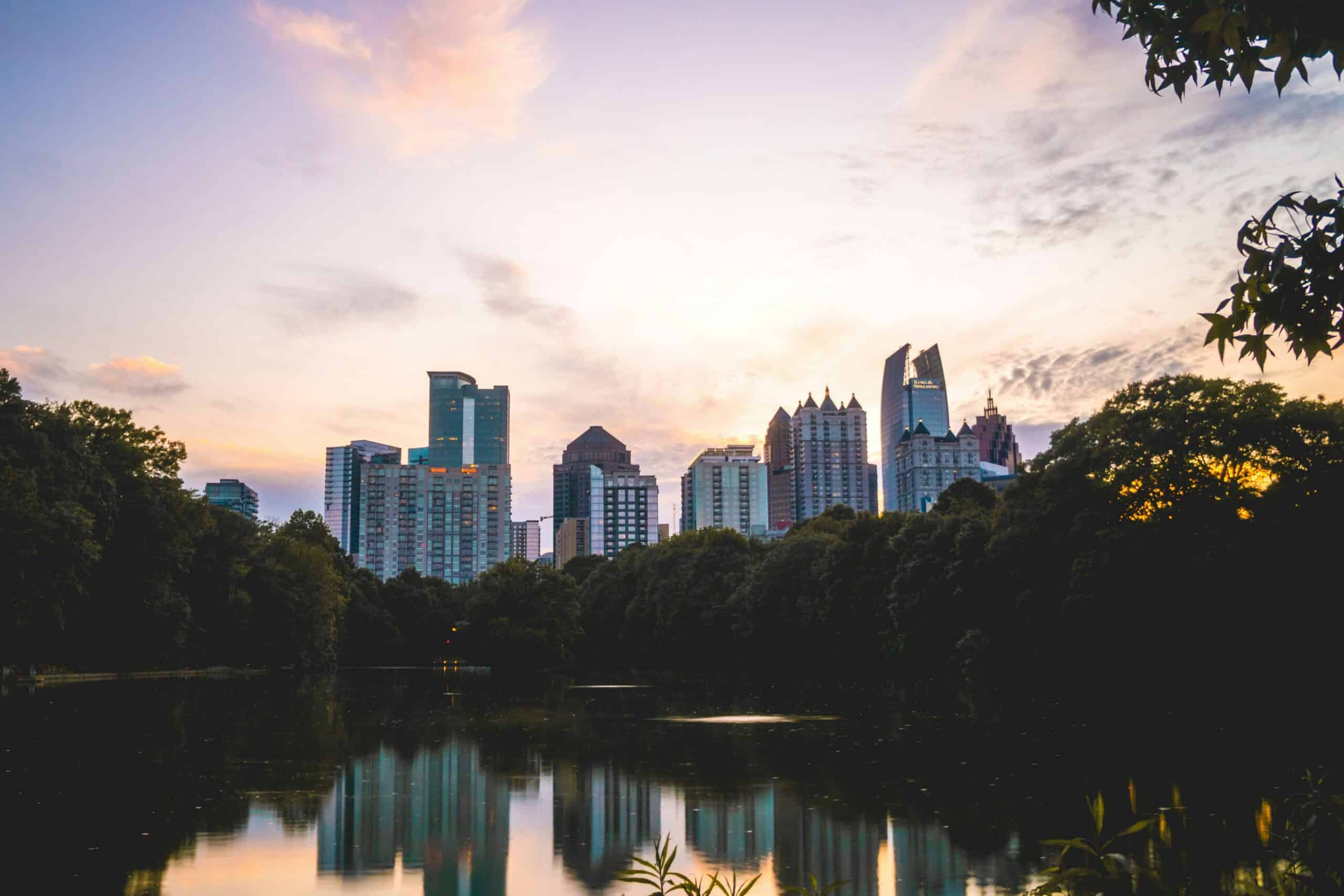
Midtown is where the energy shifts. This is Atlanta’s cultural and creative center: the High Museum of Art, the Fox Theatre, Colony Square, and the green anchor of Piedmont Park, 189 acres of open lawns, Lake Clara Meer, and skyline views. Midtown is more walkable than downtown, denser with restaurants and bars, and directly connected to MARTA via the Midtown and Arts Center stations. For a corporate group that wants to be in the middle of things without the convention center atmosphere, Midtown is the best base.
Old Fourth Ward and Inman Park sit along the Atlanta BeltLine Eastside Trail and have become two of the most dynamic neighborhoods in the city. Ponce City Market, a massive mixed-use development in a former Sears building, anchors the area with a food hall, retail, and a rooftop amusement park. Krog Street Market in Inman Park offers a similar draw in a converted 1920s warehouse. Historic Fourth Ward Park, 17 acres of green space with a stormwater retention pond and amphitheater, connects to the BeltLine and provides a natural staging area for team events in this part of the city. These neighborhoods reward groups willing to walk or move on foot along the trail.
Buckhead is the upscale district, about six miles north of downtown. High-end hotels including the St. Regis Atlanta, The Whitley, and the Waldorf Astoria sit here alongside Lenox Square and Phipps Plaza. Buckhead handles executive retreats and client-facing events well. It’s polished, well-serviced, and slightly detached from the rest of intown Atlanta. MARTA serves Buckhead directly.
West Midtown is Atlanta’s most rapidly evolving neighborhood. Former industrial warehouses along Howell Mill Road and Huff Road have been converted into restaurants, breweries, galleries, and creative office spaces. The Works, a 70-acre mixed-use development, is adding to the density. West Midtown has a gritty, creative energy that reads differently than the polish of Buckhead or the cultural weight of Midtown. For groups that want to feel like they’re seeing the real Atlanta, this neighborhood delivers.
Decatur is an independent city five miles east of downtown, connected by MARTA’s Blue Line. The town square is walkable, filled with independent restaurants and bookshops, and has a small-town atmosphere that contrasts sharply with the scale of the rest of the metro. For smaller groups or off-site dinners, Decatur is a strong choice.
If you’re planning an outdoor component and need venue-specific guidance, the top 5 outdoor team building venues in Atlanta GA covers each location in detail: what kind of group it suits, what the permit process looks like, and what to watch out for.
The Thing About Atlanta and Weather
Atlanta’s weather is more variable than people assume. This is not coastal Florida. Atlanta sits at 1,050 feet elevation in the foothills of the Appalachian Piedmont, and that changes the climate in ways that matter for event planning.
Summers are hot and humid. June through August brings consistent highs in the upper 80s to mid 90s, with humidity that makes the heat index feel significantly higher. Afternoon thunderstorms are common, sometimes daily, and they arrive fast. Any outdoor event between June and early September needs a morning start time or a climate-controlled backup plan. Hydration stations and shade infrastructure are required, not optional.
Spring (March through May) is Atlanta’s best season for events, with one significant asterisk. Temperatures are ideal: 60s to low 80s with dogwoods and azaleas in bloom. The asterisk is severe weather. North Georgia sits in a corridor for strong thunderstorms and occasional tornadoes, particularly in March and April. Build a weather contingency into any outdoor spring event. The National Weather Service Peachtree City office covers metro Atlanta and is worth bookmarking for date-sensitive planning.
Fall (October through November) is the other prime window. Temperatures settle into the 60s and 70s, humidity drops, and the tree canopy turns. Atlanta in October is genuinely beautiful. If you have flexibility on dates, this is the window. Note that fall also brings Georgia football season, college and NFL, which tightens hotel availability on weekends.
Winter (December through February) is mild compared to the Northeast or Midwest, averaging highs in the 40s to 50s. The risk is ice. Atlanta does not handle ice events well. When freezing rain hits, highways shut down, flights get canceled, and the city largely stops moving. January and February are the highest-risk months. If you’re booking a winter event, build in contingency time for travel disruptions.
Getting Around Without Losing People
Airport to Downtown: 15 to 25 minutes by car without traffic. 40 to 60 minutes during rush hour. MARTA rail takes 20 minutes and avoids all of it.
MARTA Rail: Four lines (Red, Gold, Blue, Green) converge at Five Points station downtown. Useful stations for event planners include Airport, Peachtree Center (downtown), Midtown, Arts Center, and Buckhead. A single ride is $2.50. For groups staying near a rail line, MARTA eliminates the need for shuttles or rideshare coordination.
Rideshare: Uber and Lyft are reliable inside the I-285 perimeter. Outside the perimeter, wait times increase and availability drops. For events in intown neighborhoods, rideshare is straightforward.
Traffic: Atlanta consistently ranks among the worst traffic cities in the country. The connector (I-75/I-85 through downtown) is the bottleneck. Rush hour runs roughly 7 to 9:30 AM and 4 to 7:30 PM. Do not schedule group movements across the city during these windows. What looks like a 10-minute drive on a map can take 45 minutes at 5:30 PM on a Tuesday.
The BeltLine: The Atlanta BeltLine is a 22-mile loop of multi-use trails connecting 45 neighborhoods. The Eastside Trail, running from Piedmont Park through Old Fourth Ward and Inman Park, is the most complete and most useful segment for team events. Groups can walk or bike between Ponce City Market, Historic Fourth Ward Park, Krog Street Market, and surrounding neighborhoods without ever getting in a car. For team building formats that involve movement through the city, the BeltLine is a genuine asset.
Parking: Downtown garages are available but expensive during events at the GWCC or Mercedes-Benz Stadium. Midtown and BeltLine-adjacent neighborhoods have limited street parking that fills quickly. For groups of 20 or more, plan transportation rather than relying on individual parking.
Where to Eat When the Event Ends
Atlanta’s food scene is one of the best in the Southeast. It runs deep in Southern tradition and wide in international range, and corporate groups are consistently impressed by the quality.
Fox Bros Bar-B-Q in Little Five Points is Atlanta’s most beloved barbecue spot. Texas-style brisket, ribs, and smoked wings in a setting that works for groups without requiring a reservation weeks out. The West Midtown location at The Works is the easier option for larger parties.
Staplehouse in Old Fourth Ward is one of Atlanta’s most acclaimed restaurants. The seasonal menu changes regularly, and the relaxed counter-service format and garden patio make it approachable for corporate groups that want quality without the stiffness of a formal dining room. Walk-ins are welcome.
Ponce City Market and Krog Street Market are both food hall environments where a group can split up, eat what they want, and regroup. The variety at each is strong. For a post-event meal where dietary restrictions and personal preferences vary widely, these are the most practical options in the city.
Marcel in West Midtown handles corporate dinners with real polish. The steakhouse format works for groups, the private dining options are well-designed, and the food delivers at the level a client dinner requires.
South City Kitchen has locations in Midtown and Buckhead and does elevated Southern food with consistency that makes it a reliable pick for out-of-town groups. The shrimp and grits is a strong first impression of the city.
For a casual lunch on event day, the food stalls at Ponce City Market or a quick stop at Slutty Vegan in Old Fourth Ward (plant-based burgers with a following that defies the category) will keep the energy up without slowing the schedule.
What Atlanta Does Differently as a Team Building City
Team building in Atlanta, GA benefits from a combination of factors that most cities can only partially match. Atlanta is a legitimate corporate headquarters city. Coca-Cola, Delta Air Lines, Home Depot, UPS, and a deep roster of Fortune 500 companies are based here. Corporate groups in Atlanta understand competitive formats and engage with them at a level that reflects the professional culture of the city.
The BeltLine changes the geometry of what a city-wide team event can look like. Instead of shuttling groups between disconnected locations, teams can move on foot through genuinely different neighborhoods, each with its own energy, architecture, and street-level texture. The Eastside Trail alone passes through Old Fourth Ward, Inman Park, and connects to Piedmont Park, all within a walkable corridor. That kind of variety in a single contiguous route is rare.
Atlanta’s history adds another layer. This is a city that shaped the civil rights movement, hosted the 1996 Olympics, and continues to define itself through reinvention. Corporate groups working through competitive challenges in neighborhoods that carry that weight tend to engage differently than they do in a hotel ballroom. The city becomes part of the experience.
A Few Things That Will Save You
Respect the traffic. Plan every group movement outside the 7 to 9:30 AM and 4 to 7:30 PM windows. Build 15 to 20 minutes of buffer into any schedule that requires moving people between neighborhoods.
Use MARTA from the airport. It is faster, cheaper, and more reliable than any car option during peak hours.
Check the convention calendar. Atlanta is one of the top convention cities in the country. When a major show is at the Georgia World Congress Center, downtown hotel availability tightens fast and rates climb. Check the GWCCA events calendar when setting dates.
Don’t spread across too many neighborhoods. Pick one or two zones and go deep. An itinerary that hops between Buckhead, Midtown, Old Fourth Ward, and downtown sounds efficient on paper and falls apart in practice when you’re moving 40 people through Atlanta traffic.
Plan for summer heat with the same seriousness you’d plan for winter in Chicago. Hydration, shade, morning scheduling, and indoor backup plans are all required for any outdoor event between June and September.
Why Adventure Games Inc. Works in Atlanta
The BeltLine corridor, the competitive corporate culture, the neighborhood diversity: Atlanta gives a city-wide team experience the raw material it needs to feel genuinely engaging rather than corporate and forgettable.
Adventure Games Inc. designs experiences that fit how Atlanta actually works: teams moving through defined zones, competing under time pressure, making decisions together in environments that shift as the city changes around them. The format scales for large corporate groups and lands in a city that has the appetite for real competition with real stakes.
If you’re planning an Atlanta team building event and want something your team will still be talking about at the next quarterly meeting, reach out to Adventure Games Inc.