

Choosing the right outdoor venue for a corporate event in Atlanta requires more than finding a patch of grass and hoping for good weather. The city sits at the intersection of dense urban infrastructure and genuine green space, which means your options range from a downtown Olympic plaza surrounded by stadiums and museums to a 131-acre Victorian-era park with rolling hills and a mature tree canopy. Picking the right team building in Atlanta, GA venue is about matching the environment to your team’s size, the format you’re running, and the kind of energy you want the day to carry. If you’re still working through the broader logistics of planning an Atlanta corporate event before locking in a venue, this insider planning guide for Atlanta team building events covers airports, neighborhoods, weather windows, and getting around the city.
1. Piedmont Park
Piedmont Park occupies 189 acres in the heart of Midtown, about one mile northeast of downtown. Lake Clara Meer sits at the park’s southern end with the Midtown skyline rising directly behind it. Walking trails, open meadows, an active oval with fitness equipment, and a farmers market on Saturday mornings give the park a lived-in energy that convention center green space cannot replicate. The park connects to the Atlanta BeltLine Eastside Trail at its southeastern corner, which means teams staged here can extend their footprint into Old Fourth Ward without transportation.
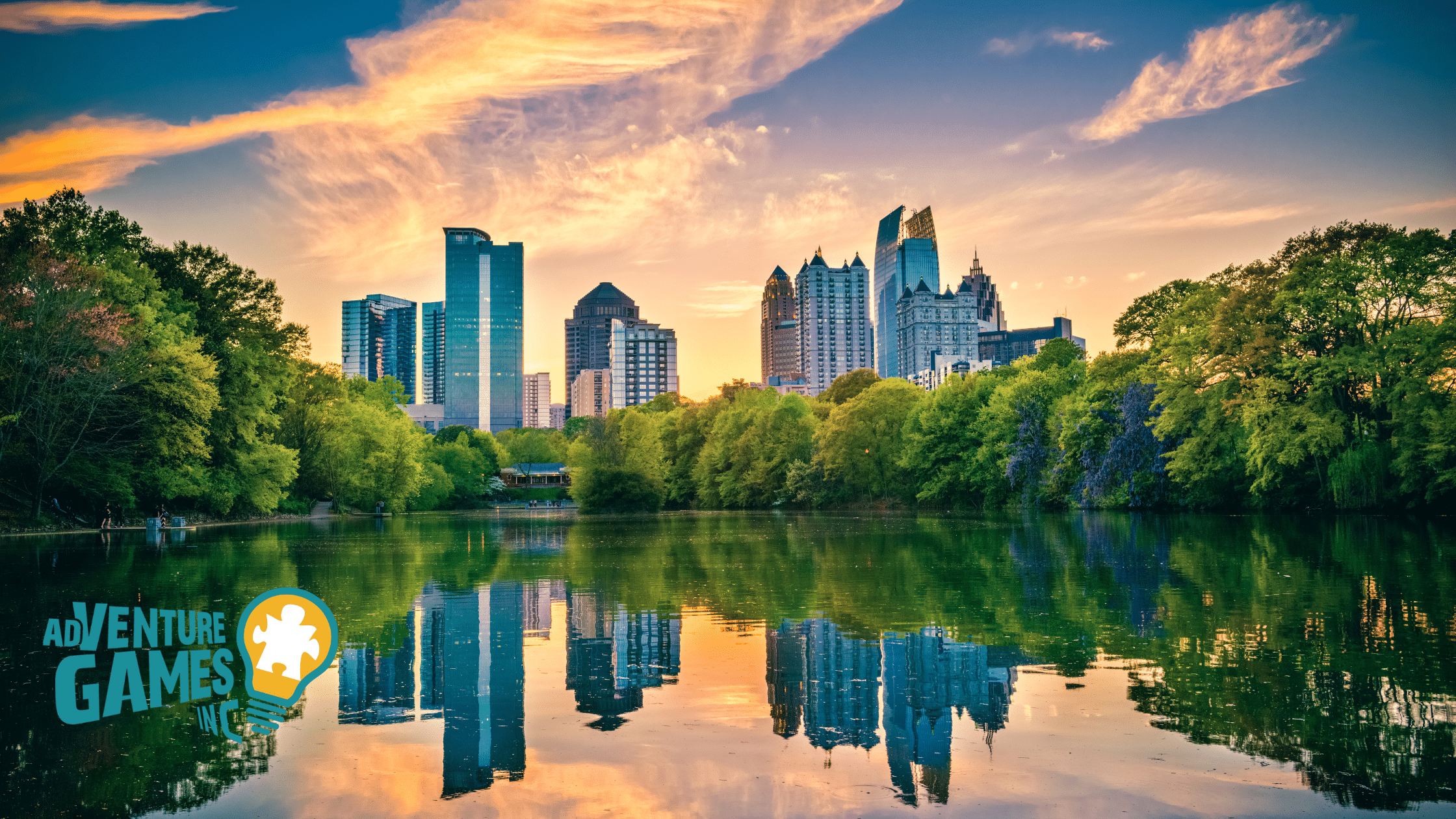
This venue works best for large groups that need a recognizable, central staging area with room to spread out. The open meadow west of Lake Clara Meer handles 100-plus participants without crowding. The variety of terrain, flat lawns, shaded paths, waterfront walkways, gives facilitators multiple zones to rotate groups through during a multi-stage event. Piedmont Park is also the most photogenic venue on this list, which matters for corporate communications teams documenting the day.
What to know: Event permits for groups are handled through the City of Atlanta’s Office of Parks. Secure your permit at least three weeks in advance for dates between September and November, when the park hosts major festivals and demand for group space peaks. The Midtown MARTA station is about a half-mile walk from the park’s western edge. A paid parking garage sits at the center of the park off Monroe Drive, but it fills quickly on weekends. Morning sessions avoid the heaviest foot traffic and the worst of summer heat.
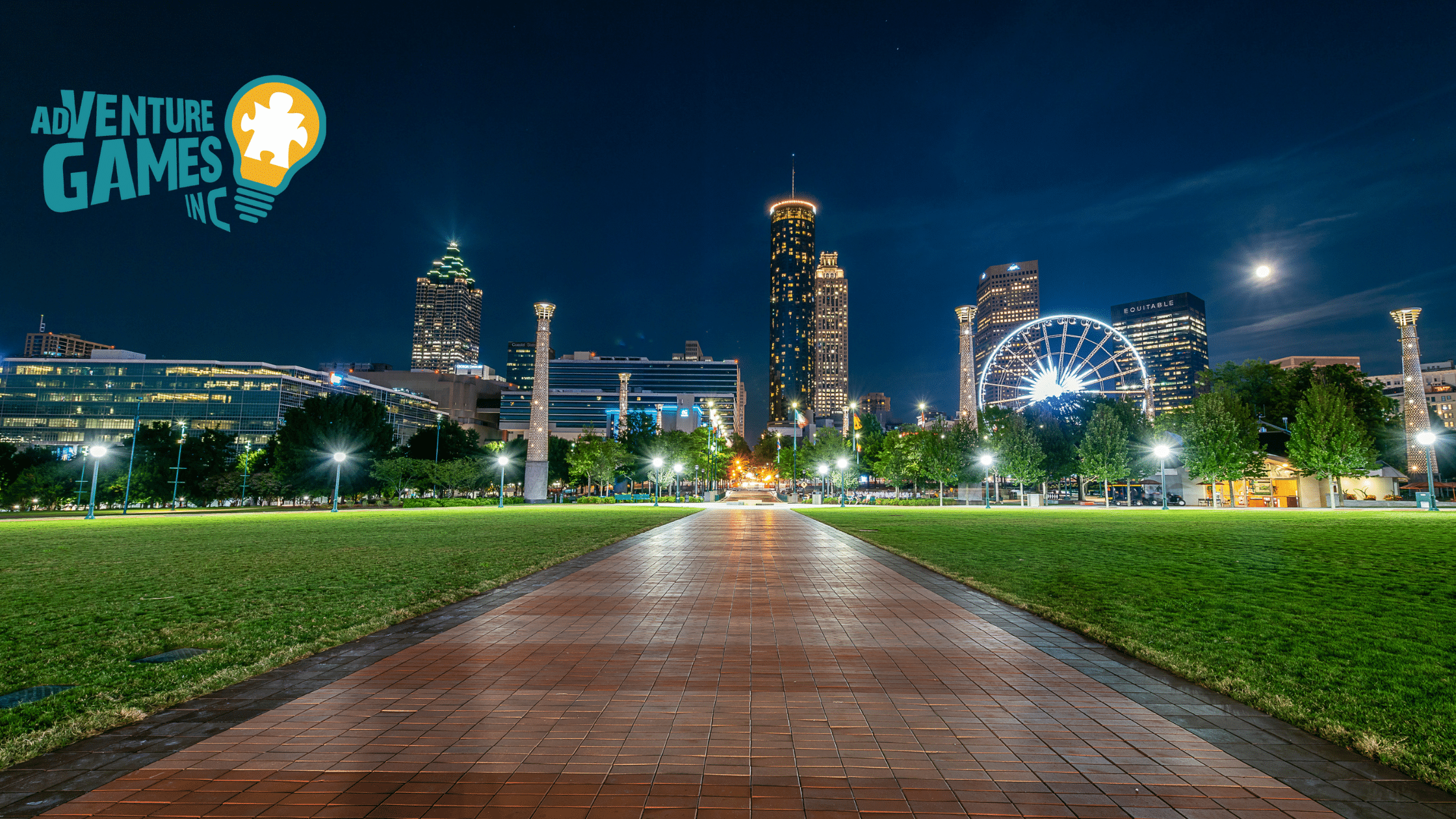
2. Centennial Olympic Park
Centennial Olympic Park is 22 acres of plazas, monuments, open lawns, and the Fountain of Rings in the center of downtown Atlanta. Built as the gathering hub for the 1996 Summer Olympics, the park is surrounded by the Georgia Aquarium, the World of Coca-Cola, the National Center for Civil and Human Rights, and Mercedes-Benz Stadium. The Georgia World Congress Center sits immediately adjacent. The park is managed by the GWCCA and is open daily from 7 AM to 11 PM.
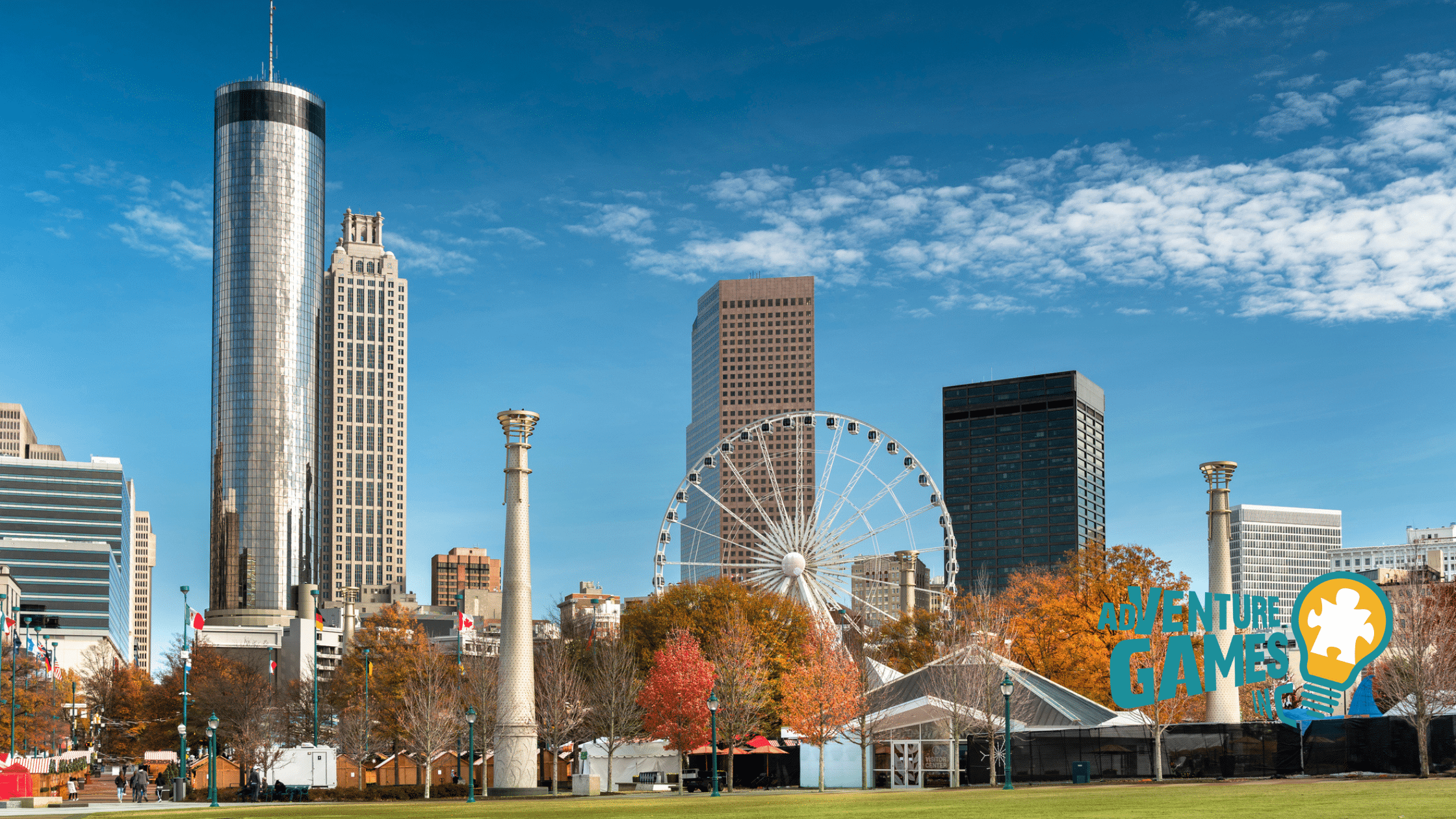
This venue works best for corporate groups already based in downtown hotels, particularly those attending conventions at the GWCC. The concentration of landmarks within walking distance gives a skilled facilitator multiple anchor points for competitive, location-based challenges without requiring any transportation between sites. Everything is accessible on foot within a few blocks.
What to know: Event permits are coordinated through the GWCCA. The park is reachable via MARTA at the Peachtree Center station (Red/Gold lines) or the SEC District station (Blue/Green lines), both within a 10-minute walk. Pavilion reservations fill quickly during convention season and football weekends. The park is largely open and sun-exposed, so shade planning and hydration support are required for any event between April and October. The Fountain of Rings show times are at noon, 2:30 PM, 6:30 PM, and 9:00 PM. Schedule around them or use them as a natural pause point.
3. Atlanta BeltLine Eastside Trail
The Atlanta BeltLine Eastside Trail runs approximately 2.5 miles of paved, car-free path from Piedmont Park south through Old Fourth Ward and into Inman Park. Along the way it passes Ponce City Market, Historic Fourth Ward Park, the Krog Street Tunnel (covered in rotating murals), and Krog Street Market. Public art installations, native plantings, and neighborhood access points line the entire route.
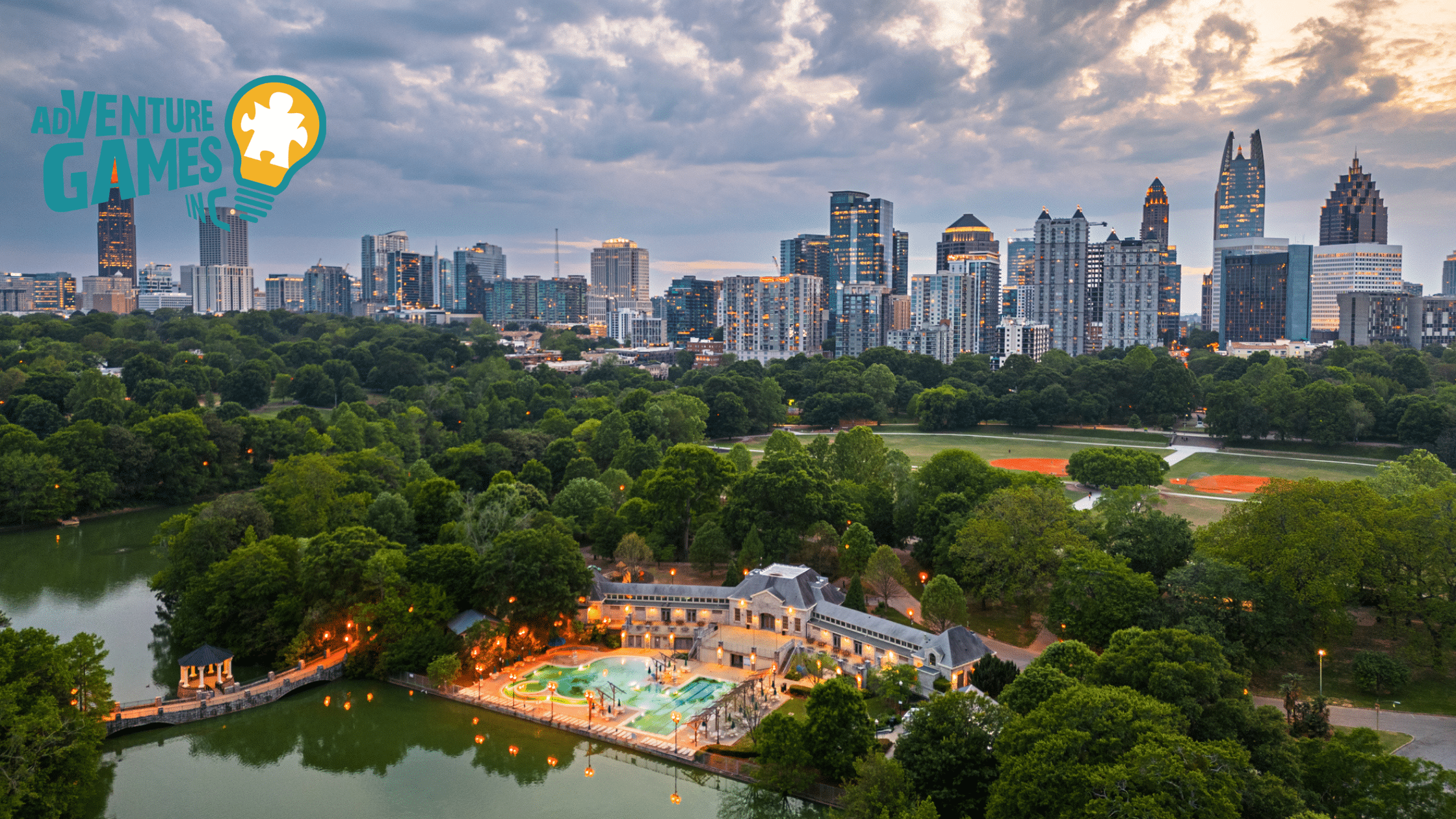
This is the venue for team events built around movement. Relay-style challenges, pop-up problem-solving stations, walking strategy sessions, and city-wide competitive missions that use the trail as a connecting thread between neighborhoods all work well on this corridor. A team starting at Piedmont Park and finishing at Krog Street Market has covered three distinct neighborhoods and passed through half a dozen landmarks without ever needing a car or a shuttle. The linear design creates natural checkpoints and forces teams to make route and timing decisions under pressure.
What to know: The BeltLine is a public trail and does not require a permit for general use. If you are staging equipment or materials at multiple access points, coordinate logistics and drop-off timing in advance. The trail sees heavy pedestrian and cycling traffic on weekend afternoons, particularly Saturdays between March and November. Weekday mornings are significantly quieter and give facilitators more physical room to operate. For team events involving 30 or more people, weekday scheduling is strongly recommended.
4. Historic Fourth Ward Park
Historic Fourth Ward Park is 17 acres of green space in the Old Fourth Ward, built around a two-acre stormwater retention pond with a walking path and a grass amphitheater. The park includes a playground, a splash pad (open May through October), and Atlanta’s first public skatepark. Ponce City Market sits directly to the north. The park connects to the BeltLine Eastside Trail and was the first major green space created as part of the BeltLine project.
This venue works best for mid-sized groups of 20 to 80 who need a defined staging area with direct access to the BeltLine corridor. The amphitheater provides a natural space for briefings and debriefs. The pond path accommodates small-group breakout activities. The proximity to both Ponce City Market and the BeltLine trail means facilitators can extend the event footprint without adding transportation logistics. The setting reads as more intimate and neighborhood-scaled than Piedmont Park, which suits teams working on communication and trust rather than large-group competition.
What to know: Amphitheater reservations and group event permits are handled through the City of Atlanta’s Office of Parks. The park does not have a dedicated parking lot. Street parking is available along Angier Avenue and Morgan Street but fills quickly. The best approach for groups is MARTA to the King Memorial station (about a 15-minute walk) or rideshare drop-off at Ponce City Market. Morning sessions are quieter and the pond is at its most photogenic before midday.
5. Grant Park
Grant Park is 131 acres of rolling hills, mature oak canopy, and open meadows in one of Atlanta’s oldest neighborhoods, about two miles southeast of downtown. Established in 1883, it is the oldest city park in Atlanta. The park’s Olmsted Brothers design is visible in the curving paths and naturalistic plantings that give it a character the city’s newer parks don’t share. Zoo Atlanta occupies the park’s southwestern section. The surrounding neighborhood is a walkable grid of Victorian homes, independent restaurants, and a Saturday farmers market on the boulevard.
This venue works best for groups that want genuine separation from the corporate environment. The tree cover, the elevation changes, and the physical distance from downtown create a psychological shift that closer-in venues cannot achieve. Leadership retreats, executive teams, and groups coming off a difficult stretch respond well to the change of setting. The open meadows near the park’s center handle field-style activities and team challenges for groups up to 100.
What to know: Group event permits are required through Atlanta Parks and Recreation. Book at least two weeks out. The park is not directly served by MARTA rail, so plan for rideshare or shuttle service from downtown hotels. The Cherokee Avenue entrance provides the best access to the open meadow areas. Zoo Atlanta draws weekend foot traffic to the park’s southern portion, so weekday bookings give your group more room. Fall is ideal for this venue: the oak canopy turns and temperatures settle into the 60s and 70s.
Frequently Asked Questions
What’s the best time of year for outdoor team events in Atlanta? Fall, specifically October through mid-November, is the best window. Temperatures sit in the 60s and 70s, humidity drops, and the tree canopy turns. Spring (March through May) is also strong but requires a weather contingency for afternoon thunderstorms. Summer outdoor events need morning scheduling and serious heat mitigation.
How far in advance should I book? Two to four weeks for most venues. Piedmont Park and Centennial Olympic Park require more lead time during fall festival season and convention periods. Grant Park and Historic Fourth Ward Park are generally easier to secure on shorter notice.
Do all these venues require permits? Piedmont Park, Centennial Olympic Park, Historic Fourth Ward Park, and Grant Park all require permits or reservations for organized group events. The Atlanta BeltLine Eastside Trail does not require a permit for general use but requires advance coordination if you are staging equipment.
Can Adventure Games Inc. run events at these locations? Yes. Adventure Games Inc. designs experiences specifically for the Atlanta environment, including city-wide formats that use multiple outdoor venues in a single event. If you’re planning a team event at any of these locations, see what Adventure Games Inc. brings to team building in Atlanta, GA.